Results by title

11 books match the query 'Metamorphosis'
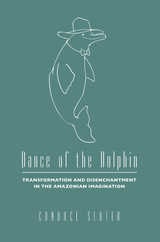
cover of Dance of the Dolphin: Transformation and Disenchantment in the Amazonian Imagination

Dance of the Dolphin

Transformation and Disenchantment in the Amazonian Imagination

Candace Slater

University of Chicago Press, 1994

In folktales told throughout much of the Brazilian Amazon, dolphins take human form, attend raucous dances and festivals, seduce men and women, and carry them away to a city beneath the river. They are encantados, or Enchanted Beings, capable of provoking death or madness, but also called upon to help shamanic healers. Male dolphins—accomplished dancers who appear dressed in dapper straw hats, white suits, and with shiny black shoes—reportedly father numerous children. The females are said to lure away solitary fishermen. Both sinister and charming, these characters resist definition and thus domination; greedy and lascivious outsiders, they are increasingly symbolic of a distinctly Amazonian culture politically, socially, economically, and environmentally under seige.

Candace Slater examines these stories in Dance of the Dolphin, both as folk narratives and as representations of culture and conflict in Amazonia. Her engaging study discusses the tales from the viewpoints of genre, performance, and gender, but centers on them as responses to the great changes sweeping the Amazon today. According to Slater, these surprisingly widespread tales reflect Amazonians' own mixed reactions to the ongoing destruction of the rainforest and the resulting transformations in the social as well as physical landscape. Offering an informed view of Brazilian culture, this book crosses the boundaries of folklore, literature, anthropology, and Latin American studies. It is one of the very few studies to offer an overview of the changes taking place in Amazonia through the eyes of ordinary people.

"This book is a rich collection of stories about the transformation of dolphins in the city of enchantment. . . . The joy in this book is not just its vibrant analysis and careful relating of tradition and lore, but also its uncanny accurateness in capturing the very essence of Amazonia."-Darrell Posey, Journal of Latin American Studies
"Slater's fluid prose reads like a novel for those interested in Amazonian culture and folklore, while her integrated approach makes this a must read for those interested in innovative methodology."-Lisa Gabbert, Western Folklore

[more]
cover of Malraux, the Absolute Agnostic; or, Metamorphosis as Universal Law

Malraux, the Absolute Agnostic; or, Metamorphosis as Universal Law

Claude Tannery

University of Chicago Press, 1991

Moving beyond merely biographical or textual interpretation, Claude Tannery traces the philosophy of life and art developed by André Malraux. With both sensitivity and expert interpretation he defines the issues—personal and artistic as well as political—that underlie Malraux's writings—including early as well as late works, novels, speeches, and essays. The result is a new and subtle portrait of Malraux.
[more]
cover of Matters of Gravity: Special Effects and Supermen in the 20th Century

Matters of Gravity

Special Effects and Supermen in the 20th Century

Scott Bukatman

Duke University Press, 2003

The headlong rush, the rapid montage, the soaring superhero, the plunging roller coaster—Matters of Gravity focuses on the experience of technological spectacle in American popular culture over the past century. In these essays, leading media and cultural theorist Scott Bukatman reveals how popular culture tames the threats posed by technology and urban modernity by immersing people in delirious kinetic environments like those traversed by Plastic Man, Superman, and the careening astronauts of 2001: A Space Odyssey and The Right Stuff. He argues that as advanced technologies have proliferated, popular culture has turned the attendant fear of instability into the thrill of topsy-turvydom, often by presenting images and experiences of weightless escape from controlled space.

Considering theme parks, cyberspace, cinematic special effects, superhero comics, and musical films, Matters of Gravity highlights phenomena that make technology spectacular, permit unfettered flights of fantasy, and free us momentarily from the weight of gravity and history, of past and present. Bukatman delves into the dynamic ways pop culture imagines that apotheosis of modernity: the urban metropolis. He points to two genres, musical films and superhero comics, that turn the city into a unique site of transformative power. Leaping in single bounds from lively descriptions to sharp theoretical insights, Matters of Gravity is a deft, exhilarating celebration of the liberatory effects of popular culture.
[more]
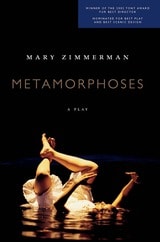
cover of Metamorphoses: A Play

Metamorphoses

A Play

Mary Zimmerman

Northwestern University Press, 2002

A beautiful and deeply humane reanimation of Ovid's myths 

Called by Time the "theater event of the year," Mary Zimmerman's Metamorphoses brings Ovid's tales to stunning visual life. Set in and around a large pool of water onstage, Metamorphoses juxtaposes the ancient and the contemporary in both language and image to reflect the variety and persistence of narrative in the face of inevitable change. Nominated for three 2002 Tony Awards, including "Best Play," Metamorphoses earned Zimmerman a Tony for "Best Direction of a Play."
 

[more]
cover of Metamorphosis in Russian Modernism

Metamorphosis in Russian Modernism

Peter I. Barta

Central European University Press, 2000
Modern Russia has been shaped by Peter the Great's sudden attempt to transform it into a European country. Since shapeshifting and identity are so closely linked in Russian history, it is hardly surprising that metamorphosis is a prevalent - albeit hitherto neglected - theme in Russian literature. Metamorphoses in Russian Modernism provides the first detailed account of metamorphosis as a Russian theme, structuring principle, and source of artistic identity. Barta examines how the magical transformations depicted in the ancient classics and in the oral epic heritage resonate in Russian literature and film at the fin de siècle and the early decades of the twentieth century - a period of dynamic change in Russian culture. Two hundred years after Peter's forceful westernization and facing its second crucial transformation in 1917, Russia witnessed the decay of classic realism and positivism and the rise of irrational philosophies, psychoanalysis, artistic experimentation, Marxism, as well as the birth of the new genre of film. This in-depth volume examines metamorphosis in the works of prominent representatives of the divided Russian intelligentsia: the Symbolists; the most famous émigré writer, Nabokov; Olesha, the 'fellow traveller' attempting to find his place in the Soviet state; the enthusiastic poet of the Bolshevik movement, Maiakovskii; and finally, Russia's greatest film director, Sergei Eisenstein. The volume directs attention to the fact that Russia itself is a metamorph. The shapeshifter always retains features of previous identities and is sometimes capable of returning into previous forms; whether today's Russia will want to, or be able to do so, remains to be seen. It is futile to attempt to try to understand this civilisation - let alone predict its future - without considering the intellectual, social and emotional reasons why it is not at rest with itself. It is to this end that this volume hopes to make a contribution.
[more]
cover of Metamorphosis of Language in Apuleius: A Study of Allusion in the Novel

Metamorphosis of Language in Apuleius

A Study of Allusion in the Novel

Ellen D. Finkelpearl

University of Michigan Press, 1998

Ellen D. Finkelpearl's Metamorphosis of Language in Apuleius studies the use of literary allusion by the Roman author Apuleius, in his second century C.E. novel the Metamorphoses, popularly known as The Golden Ass. Apuleius' work is enticing yet frustrating because of its enigmatic mixture of the comic and serious; a young man is transformed into a donkey, but eventually finds salvation with the goddess Isis. Finkelpearl's book represents the first attempt to place Apuleius' allusive practices within a consideration of the development of the ancient novel.
When Apuleius wrote his Metamorphoses, the novel--indeed the very concept of fiction in prose--was new. This study argues that Apuleius' repeated allusions to earlier Latin authors such as Vergil, Ovid, and Seneca represent an exploration on his part of the relationship between the novel and more established genres of the era. Apuleius' struggle with this tradition, Finkelpearl maintains, parallels the protagonist's move from an acceptance of the dominance of traditional forms to a sense of arrival and self- discovery.
An introductory chapter includes general discussion of the theory and practice of allusion. Finkelpearl then revisits the issues of parody in Apuleius. She also includes discussion of Apuleius' use of Vergil's Sinon, the Charite episode in relation to Apuleius' African origins, and the stepmother episode. Finally a new reading of Isis is offered, which emphasizes her associations with writing and matches the multiformity of the goddess with the novel's many voices.
This book will be of interest to scholars of literature and the origins of the novel, multiculturalism, and classical literature.
Ellen D. Finkelpearl is Associate Professor of Classics at Scripps College, Claremont, California.

[more]
cover of Metamorphosis: Studies in Social and Political Change in Myanmar

Metamorphosis

Studies in Social and Political Change in Myanmar

Edited by Renaud Egreteau and François Robinne

National University of Singapore Press, 2015

With a young population of more than 52 million, an ambitious roadmap for political reform, and on the cusp of rapid economic development, since 2010 the world’s attention has been drawn to Myanmar or Burma.


   But underlying recent political transitions are other wrenching social changes and shocks, a set of transformations less clearly mapped out. Relations between ethnic and religious groups, in the context of Burma’s political model of a state composed of ethnic groups, are a particularly important “unsolved equation”.


         The editors use the notion of metamorphosis to look at Myanmar today and tomorrow—a term that accommodates linear change, stubborn persistence and the possibility of dramatic transformation. Divided into four sections, on politics, identity and ethnic relations, social change in fields like education and medicine, and the evolutions of religious institutions, the volume takes a broad view, combining an anthropological approach with views from political scientists and historians. This volume is an essential guide to the political and social challenges ahead for Myanmar.
[more]
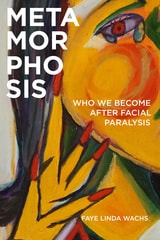
cover of Metamorphosis: Who We Become after Facial Paralysis

Metamorphosis

Who We Become after Facial Paralysis

Faye Linda Wachs

Rutgers University Press, 2023

Losing her smile to synkinesis after unresolved Bell’s palsy changed how Faye Linda Wachs was seen by others and her internal experience of self. In Metamorphosis, interviewing over one hundred people with acquired facial difference challenged her presumptions about identity, disability, and lived experience. Participants described microaggressions, internalizations, and minimalizations and their impact on identity. Heartbreakingly, synkinesis disrupts the ability to have shared moments.  When one experiences spontaneous emotion, wrong nerves trigger misfeel and misperception by others. One is misread by others and receives confusing internal information. Communication of and to the self is irrevocably damaged. Wachs describes the experience as a social disability. People found a host of creative ways to reinvigorate their sense of self and self-expression. Like so many she interviewed, Wachs experiences a process of change and growth as she is challenged to think more deeply about ableism, identity, and who she wants to be.
[more]
cover of Plastic Materialities: Politics, Legality, and Metamorphosis in the Work of Catherine Malabou

Plastic Materialities

Politics, Legality, and Metamorphosis in the Work of Catherine Malabou

Brenna Bhandar and Jonathan Goldberg-Hiller, editors

Duke University Press, 2015

Catherine Malabou's concept of plasticity has influenced and inspired scholars from across disciplines. The contributors to Plastic Materialities—whose fields include political philosophy, critical legal studies, social theory, literature, and philosophy—use Malabou's innovative combination of post-structuralism and neuroscience to evaluate the political implications of her work. They address, among other things, subjectivity, science, war, the malleability of sexuality, neoliberalism and economic theory, indigenous and racial politics, and the relationship between the human and non-human. Plastic Materialities also includes three essays by Malabou and an interview with her, all of which bring her work into conversation with issues of sovereignty, justice, and social order for the first time.

Contributors. Brenna Bhandar, Silvana Carotenuto, Jonathan Goldberg-Hiller, Jairus Victor Grove, Catherine Kellogg, Catherine Malabou, Renisa Mawani, Fred Moten, Alain Pottage, Michael J. Shapiro, Alberto Toscano

[more]
cover of Rival Praises: Ovid and the Metamorphosis of the Hymnic Tradition

Rival Praises

Ovid and the Metamorphosis of the Hymnic Tradition

Celia M. Campbell

University of Wisconsin Press, 2024
The Metamorphoses, written by the Roman poet Ovid, has fascinated readers ever since it was written in the first century CE, and here Celia M. Campbell offers a bold new interpretive approach. Reasserting the significance of the ancient hymnic tradition, she argues that the first pentad of Ovid’s Metamorphoses draws a programmatic strain of influence from hymns to the gods, in particular conversation—and competition—with the work of the Alexandrian poet Callimachus, a favored source of inspiration to Augustan writers. She suggests that Ovid read Callimachus’ six hymns as a self-conscious set—and reading the first five books of the Metamorphoses through Callimachus’ hymnic collection allows us to pierce the occasionally opaque and seemingly idiosyncratic mythology Ovid constructs. Through careful, innovative close readings, Campbell illustrates that Callimachus and the hymnic tradition provide a kind of interpretative key to unlocking the dynamic landscape of divine power in Ovid’s poetic cosmos.
[more]
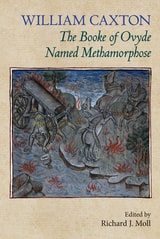
cover of The Booke of Ovyde Named Methamorphose

The Booke of Ovyde Named Methamorphose

William Caxton

Bodleian Library Publishing, 2013

[more]