Results by title
49 books match the query 'Metaphor'
A War of Words in the Discourse of Trade
The Rhetorical Constitution of MetaphorPhilip Eubanks
Southern Illinois University Press, 2000
This study by Phillip Eubanks challenges traditional accounts of metaphor and significantly expands theories of "conceptual" metaphor by examining Trade Is War metaphor as it occurs in concrete discourse.
Although scholarly interest in metaphor as an aesthetic, linguistic, and cognitive phenomenon has long endured, Eubanks is among the first to consider metaphor in its sociohistorical role. Questioning major accounts of metaphor from Aristotle to the present, Eubanks argues that metaphor is not just influenced by but actually is constituted by its concrete operation.
Far-reaching in its implications for our understanding of metaphor, Eubanks’s premise enables us to see metaphor as a sweeping rhetorical entity even as it accounts for the more localized operations of metaphor of interest to linguists, philosophers of language, and cognitive scientists. Providing a new model of metaphoric functioning, Eubanks reconsiders the most promising account of metaphor to date, the notion of "conceptual metaphor.”
Eubanks focuses on the conceptual metaphor Trade Is War—a metaphor found wherever people discuss business and commerce—to develop his rhetorical model of metaphor. He analyzes Trade Is War as it occurs in the print news media, on television discussion shows, in academic works, in popular nonfiction and novels, in historic economic commentary, and in focus group talk. While these examples do reveal a rich variety in the make-up of Trade Is War, much more than mere variety is at stake.
Trade Is War is implicated in an extended and rhetorically complex conversation with other metaphors and literal concepts: trade is peace, Trade Is a Game, Trade Is Friendship, Trade is a Journey, and Markets Are Containers. The recognition and analysis of this constituting conversation furthers a reevaluation theory. What also emerges, however, is a valuable portrait of the discourse of trade itself, a discourse that depends importantly upon a responsive interchange of metaphors.
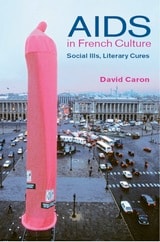
AIDS in French Culture
Social Ills, Literary CuresDavid Caron
University of Wisconsin Press, 2001
The deluge of metaphors triggered in 1981 in France by the first public reports of what would turn out to be the AIDS epidemic spread with far greater speed and efficiency than the virus itself. To understand why it took France so long to react to the AIDS crisis, AIDS in French Culture analyzes the intersections of three discourses—the literary, the medical, and the political—and traces the origin of French attitudes about AIDS back to nineteenth-century anxieties about nationhood, masculinity, and sexuality.
Basque Violence
Metaphor And SacramentJoseba Zulaika
University of Nevada Press, 2000

Burek
A Culinary MetaphorJernej Mlekuz
Central European University Press, 2015

Cannibal Democracy
Race and Representation in the Literature of the AmericasZita Nunes
University of Minnesota Press, 2008
Zita Nunes argues that the prevailing narratives of identity formation throughout the Americas share a dependence on metaphors of incorporation and, often, of cannibalism. From the position of the incorporating body, the construction of a national and racial identity through a process of assimilation presupposes a remainder, a residue.
Nunes addresses works by writers and artists who explore what is left behind in the formation of national identities and speak to the limits of the contemporary discourse of democracy. Cannibal Democracy tracks its central metaphor’s circulation through the work of writers such as Mário de Andrade, W. E. B. Du Bois, and Toni Morrison and journalists of the black press, as well as work by visual artists including Magdalena Campos-Pons and Keith Piper, and reveals how exclusion-understood in terms of what is left out-can be fruitfully understood in terms of what is left over from a process of unification or incorporation.
Nunes shows that while this remainder can be deferred into the future-lurking as a threat to the desired stability of the present-the residue haunts discourses of national unity, undermining the ideologies of democracy that claim to resolve issues of race.
Zita Nunes is associate professor of English at the University of Maryland, College Park.
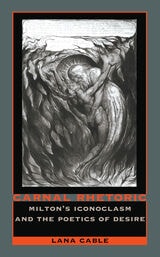
Carnal Rhetoric
Milton’s Iconoclasm and the Poetics of DesireLana Cable
Duke University Press, 1995
Cable traces the development of Milton’s iconoclastic poetics from its roots in the antiprelatical tracts, through the divorce tracts and Areopagitica, to its fullest dramatic representation in Eikonoklastes and Samson Agonistes. Arguing that, like every creative act, metaphor is by nature a radical and self-transgressing agent of change, she explores the site where metaphoric language and imaginative desire merge. Examining the demands Milton places on metaphor, particularly his emphasis on language as a vehicle for mortal redemption, Cable demonstrates the ways in which metaphor acts for him as that creative and radical agent of change. In the process, she reveals Milton’s engagement, at the deepest levels of linguistic creativity, with the early modern commitment to an imaginative and historic remaking of the world.
An insightful and synthetic book, Carnal Rhetoric will appeal to scholars of English literature, Milton, and the Renaissance, as well as to those with an interest in the theory of affective stylistics as it pertains to reader-response criticism, semantics, epistemology, and the philosophy and psychology of language.
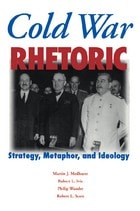
Cold War Rhetoric
Strategy, Metaphor, and IdeologyMartin J. Medhurst
Michigan State University Press, 1997
Cold War Rhetoric is the first book in over twenty years to bring a sustained rhetorical critique to bear on central texts of the Cold War. The rhetorical texts that are the subject of this book include speeches by Presidents Eisenhower and Kennedy, the Murrow- McCarthy confrontation on CBS, the speeches and writings of peace advocates, and the recurring theme of unAmericanism as it has been expressed in various media throughout the Cold War years. Each of the authors brings to his texts a particular approach to rhetorical criticism—strategic, metaphorical, or ideological. Each provides an introductory chapter on methodology that explains the assumptions and strengths of their particular approach.
Conceptual Structure, Discourse and Language
Edited by Adele Goldberg
CSLI, 1996
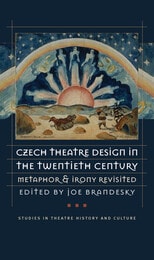
Czech Theatre Design in the Twentieth Century
Metaphor and Irony RevisitedJoe Brandesky
University of Iowa Press, 2007
Essays by Vera Ptacková, Dennis Christilles, Delbert Unruh, and, Marie Zdenková their full texts restored and reedited for this volume since their initial publication in exhibit catalogs, provide historical and linguistic insights into contemporary Czech scenography as well as comparisons to the major art movements affecting the designers. Brandesky’s informative introductory essay contextualizes the shifting tenets of Czech theatre design. Also included are biographies of the designers, a bibliography, and thirty black-and-white photographs.
The accompanying CD provides access to the vibrant and sophisticated images of the Czech theatrical world: 138 richly colorful paintings and drawings of costumes, models, and set designs and in situ photos of exhibited designs plus 27 color and black-and-white photos of the designers. The CD also includes the full text of the book with links to all the art and to the designers’ biographies. Book and CD together showcase the Czech Republic as a center of international stage design.

Epigenetic Landscapes
Drawings as MetaphorSusan Merrill Squier
Duke University Press, 2017
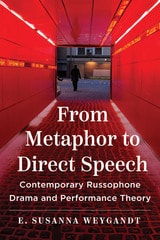
From Metaphor to Direct Speech
Contemporary Russophone Drama and Performance TheoryE. Susanna Weygandt
University of Wisconsin Press, 2025
As a result, the Russophone New Dramatists speak dissent and dramatize resistance. Ultimately, they shift theatrical productions from something constrained and limited, in both place and time, to an ephemeral but unbounded gateway for social activism. The sonic stage thus effectively functions as a social forum, transposing action from the actors to the audience. From Metaphor to Direct Speech therefore contributes to cultural as well as performance studies, offering a compelling look not just at developments in theatrical modes but also at dissent and cultural aesthetics in Russia today.
Literary Diseases
Theme and Metaphor in the Italian NovelBy Gian-Paolo Biasin
University of Texas Press, 1975
Disease—real or imagined, physical or mental—is a common theme in Western literature and is often a symbol of modern alienation. In Literary Diseases, a comprehensive analysis of the metaphorical and symbolic force of disease in modern Italian literature, Gian-Paolo Biasin expands the geography of the discussion of this important theme. Using as a backdrop the perspective of European experiences of the previous hundred years, Biasin analyzes the theme of disease as a reflection of certain sociological and historical phenomena in modern European novels, as a metaphor for the world visions of selected Italian novelists, and especially as a vehicle for understanding the nature and function of fiction itself.
The core of Biasin’s study is found in his discussion of the works of four major Italian writers. In his criticism of the novels of Giovanni Verga, who stood at the center of many complex developments in the nineteenth century, he examines the antecedents of modern Italian prose. He then scrutinizes the works of Italo Svevo and Luigi Pirandello, who together inaugurated the modern novel in Italy. Of particular interest is his exploration of their critical use of psychoanalysis and madness climaxed by apocalyptic visions. He then discusses the prose of Carlo Emilio Gadda, which epitomizes the problems of the avant-garde in its experimentalism and expressionism.
Biasin utilizes a broad spectrum of critical approaches—from sociology, psychoanalysis, and different trends in modern French, American, and Italian literary criticism—in shaping his own methodology, which is a thematic and structural symbolism. He concludes that disease in literature should be considered as a metaphor for writing (écriture) and as a cognitive instrument that calls into question the anthropocentric values of Western culture. The book, with its textual comparisons and unusual supporting examples, constitutes a significant methodological contribution as well as a major survey of modern Italian prose, and will allow the reader to see traditional landmarks in European fiction in a new light.
Making Truth
Metaphor in ScienceTheodore L. Brown
University of Illinois Press, 2002
To illustrate the roles of metaphor in science, Brown presents a series of studies of scientific systems. These range from the atom, historically one of the most important ideas in science, through models in chemistry and biology, including current “hot” topics such as protein folding, chaperone proteins, and global warming. The case studies in Making Truth illustrate the deeply metaphorical nature of scientific reasoning and communication. They provide the basis for far-reaching conclusions about science as an intellectual and social practice and about the nature of scientific truth.
Mark Twain and Metaphor
John Bird
University of Missouri Press, 2007
Metaphor theory, observes John Bird, is like Mark Twain: both seem simple upon first introduction. Now, in the most complete study to date of Twain’s use of figurative language, a veteran Twain scholar tackles the core of his writing and explores it with theoretical approaches that have rarely been applied to Twain, providing new insights into how he imagined his world—and the singular ways in which he expressed himself.
From “The Jumping Frog” to the late dream narratives, Bird considers Twain’s metaphoric construction over his complete career and especially sheds new light on his central texts: Roughing It; The Adventures of Tom Sawyer; Adventures of Huckleberry Finn; A Connecticut Yankee in King Arthur’s Court; Pudd’nhead Wilson; and No. 44,The Mysterious Stranger. He reconsiders “Old Times on the Mississippi” as the most purely metaphorical of Twain’s writings, goes on to look at how Twain used metaphor and talked about it in a variety of works and genres, and even argues that Clemens’s pseudonym is not so much an alter ego as a metaphorized self.
By offering insight into how Twain handled figurative language during the composing process, Bird reveals not only hidden facets of his artistry but also new aspects of works that we think we know well—including some entirely new ideas regarding Huck Finn that draw on the recent discovery of the first half of the manuscript. In addition to dealing with issues currently central to Twain studies, such as race and gender, he also links metaphor to humor and dream theory to further illuminate topics central to his work.
More than a study of Twain’s language, the book delves into the psychological aspects of metaphor to reveal the writer’s attitudes and thoughts, showing how using metaphor as a guide to Twain reveals much about his composition process. Applying the insights of metaphor theorists such as Roman Jakobson and Colin M. Turbayne, Bird offers readers not only new insights into Twain but also an introduction to this interdisciplinary field.
In lively prose, Mark Twain and Metaphor provides a vital way to read Twain’s entire corpus, allowing readers to better appreciate his style, humor, and obsession with dreams. It opens new ground and makes old ground fresh again, offering ways to see and resee this essential American writer.
Metaphor and Musical Thought
Michael Spitzer
University of Chicago Press, 2004
The experience of music is an abstract and elusive one, enough so that we're often forced to describe it using analogies to other forms and sensations: we say that music moves or rises like a physical form; that it contains the imagery of paintings or the grammar of language. In these and countless other ways, our discussions of music take the form of metaphor, attempting to describe music's abstractions by referencing more concrete and familiar experiences.
Michael Spitzer's Metaphor and Musical Thought uses this process to create a unique and insightful history of our relationship with music—the first ever book-length study of musical metaphor in any language. Treating issues of language, aesthetics, semiotics, and cognition, Spitzer offers an evaluation, a comprehensive history, and an original theory of the ways our cultural values have informed the metaphors we use to address music. And as he brings these discussions to bear on specific works of music and follows them through current debates on how music's meaning might be considered, what emerges is a clear and engaging guide to both the philosophy of musical thought and the history of musical analysis, from the seventeenth century to the present day. Spitzer writes engagingly for students of philosophy and aesthetics, as well as for music theorists and historians.
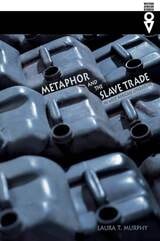
Metaphor and the Slave Trade in West African Literature
Laura T. Murphy
Ohio University Press, 2012
Metaphor and the Slave Trade provides compelling evidence of the hidden but unmistakable traces of the transatlantic slave trade that persist in West African discourse. Through an examination of metaphors that describe the trauma, loss, and suffering associated with the commerce in human lives, this book shows how the horrors of slavery are communicated from generation to generation.
Laura T. Murphy’s insightful new readings of canonical West African fiction, autobiography, drama, and poetry explore the relationship between memory and metaphor and emphasize how repressed or otherwise marginalized memories can be transmitted through images, tropes, rumors, and fears. By analyzing the unique codes through which West Africans have represented the slave trade, this work foregrounds African literary contributions to Black Atlantic discourse and draws attention to the archive that metaphor unlocks for scholars of all disciplines and fields of study.
Metaphor in American Sign Language
Phyllis Perrin Wilcox
Gallaudet University Press, 2001
Only recently have linguists ceased to regard metaphors as mere frills on the periphery of language and begun to recognize them as cornerstones of discourse. Phyllis Wilcox takes this innovation one step further in her fascinating study of metaphors in American Sign Language (ASL).
Such an inquiry has long been obscured by, as Wilcox calls it, “the shroud of iconicity.” ASL’s iconic nature once discouraged people from recognizing it as a language; more recently it has served to confuse linguists examining its metaphors. Wilcox, however, presents methods for distinguishing between icon and metaphor, allowing the former to clarify, not cloud, the latter. “If the iconic influence that surrounds metaphor is set aside, the results will be greater understanding, and interpretations that are less opaque.”
Wilcox concludes her study with a close analysis of the ASL poem, “The Dogs,” by Ella Mae Lentz. In presenting Deaf Americans’, Deaf Germans’, and Deaf Italians’ reactions to the poem, Wilcox manages not only to demonstrate the influence of culture upon metaphors, but also to illuminate the sources of sociopolitical division within the American Deaf community. Metaphor in American Sign Language proves an engrossing read for those interested in linguistics and Deaf culture alike.
Metaphor, Morality, and the Spirit in Romans 8
1-17William E. W. Robinson
SBL Press, 2016
Engage compelling arguments that challenge prominent positions in Pauline studies
In this innovative book, William E. W. Robinson takes the reader on a journey through Romans 8:1–17 using Conceptual Metaphor Theory and Conceptual Integration Theory. Robinson delineates the underlying cognitive metaphors, their structure, their function, what they mean, and how Paul’s audiences then and now are able to comprehend their meaning. He examines each metaphor in the light of relevant aspects of the Greco-Roman world and Paul’s Jewish background. Robinson contends that Paul portrays the Spirit as the principal agent in the religious-ethical life of believers. At the same time, his analysis demonstrates that the conceptual metaphors in Romans 8:1–17 convey the integral role of believers in ethical conduct. In the process, he addresses thorny theological issues such as whether Spirit and flesh signal an internal battle within believers or two conflicting ways of life. Finally, Robinson shows how this study is relevant to related Pauline passages and challenges scholars to incorporate these methods into their own investigation of biblical texts.
Features:
- Sustained argument that sheds new light on how Paul communicates with his audiences
- Substantial contribution to current debates about central theological concepts
- Conceptual Metaphor Theory and Conceptual Integration Theory applied to the metaphors in Romans 8:1-17
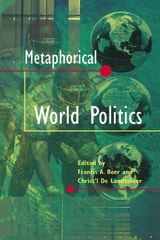
Metaphorical World Politics
Francis A. Beer
Michigan State University Press, 2004
Metaphorical World Politics argues that language and metaphor are important parts of international political reality. Metaphors and world politics have appeared together many times in recent history. The blended space that results is metaphorical world politics, a real- world game for political and scientific actors. This collection picks up the challenge to unravel the game, to examine its rules, to clarify the mixture of images and facts that is so real in politics but so exceptional in science. Scholars have studied metaphor mostly from a linguistic or a literary point of view. This work forces those primarily interested in metaphors to think about applications and implications beyond the text. Others concerned mainly with world politics may consider how metaphors may help to energize and structure international political thought and action.
Scholars have most often studied world politics embedded in so-called "facts." Metaphorical World Politics shows that facts are misleading in their compactness, that facts are often meaningless, that metaphors in contrast are energetic processors of meaning, and that facts in world politics are nothing more than weak emulsions of metaphor. This work outlines the general place of metaphor on the map of politics and highlights the location of specific metaphors on the political terrain.
Metaphors Dead and Alive, Sleeping and Waking
A Dynamic ViewCornelia Müller
University of Chicago Press, 2008
To build this model, Müller presents an overview of notions of metaphor from the classical period to the present; studies in detail how metaphors function in speech, text, gesture, and images; and examines the way mixed metaphors sometimes make sense and sometimes do not. This analysis leads her to conclude that metaphors may oscillate between various degrees of sleeping and waking as their status changes depending on context and intention. Bridging the gap between conceptual metaphor theory and more traditional linguistic theories, this book is a major advance for the field and will be vital to novices and initiates alike.
Metaphors We Live By
George Lakoff and Mark Johnson
University of Chicago Press, 1981
In this updated edition of Lakoff and Johnson's influential book, the authors supply an afterword surveying how their theory of metaphor has developed within the cognitive sciences to become central to the contemporary understanding of how we think and how we express our thoughts in language.
Michael Osborn on Metaphor and Style
Michael Osborn
Michigan State University Press, 2018

Moorings and Metaphors
Figures of Culture and Gender in Black Women's LiteratureKarla F. Holloway
Rutgers University Press, 1991
Proceeding from a consideration of the imaginative textual languages of contemporary African-American and West African writers, Holloway asserts the intertextuality of black women's literature across two continents. She argues the subtext of culture as the source of metaphor and language, analyzes narrative structures and linguistic processes, and develops a combined theoretical/critical apparatus and vocabulary for interpreting these writers' works. The cultural sources and spiritual considerations that inhere in these textual languages are discussed within the framework Holloway employs of patterns of revision, (re)membrance, and recursion--all of which are vehicles for expressive modes inscribed at the narrative level. Her critical reading of contemporary black women's writing in the United States and West Africa is unique, radical, and sure to be controversial.
More than Cool Reason
A Field Guide to Poetic MetaphorGeorge Lakoff and Mark Turner
University of Chicago Press, 1989
We usually think of the language of poetry, the metaphors that poets use to express their intentions, as far removed from ordinary life. But in More than Cool Reason, George Lakoff and Mark Turner show how understanding how metaphor works in poetry, the tasks it takes on and the ways it shapes our patterns of thought, can be hugely helpful to seeing and understanding how we think in all manner of other fields and areas of life. Metaphor, they show, is a tool so familiar, so everyday, that we fail to notice it. Lakoff and Turner correct that failure here, helping us see how richly metaphorical our language and thought are, and what that means for not only reading and enjoying poetry and literature, but also for linguistics, philosophy, psychology, anthropology, cognitive science, and more.

Morning Dew and Roses
Nuance, Metaphor, and Meaning in FolksongsBarre Toelken
University of Illinois Press, 1995
"Toelken's insights . . . are unique. His study broadens and deepens scholarly appreciation of how folksong metaphors carry their own semantic weight. . . . One of the best expressions of the power of music in folksong that I have seen in recent years." -- James Porter, author of The Traditional Music of Britain and Ireland
In this lively exploration of folksongs and their meanings, Barre Toelken looks closely at riddle songs and other ambiguous folksongs, as well as the various "ballad commonplaces." Ranging through metaphors such as weaving, plowing, plucking flowers, and walking in the dew, Toelken shows how each contributes to meaning in vernacular song. He includes comparisons to German folksongs, medieval poetry, Italian folk lyrics, and a wide range of Euro-American vernacular expression.
Music as Metaphor
The Elements of ExpressionDonald N. Ferguson
University of Minnesota Press, 1960
Music as Metaphor was first published in 1960. Minnesota Archive Editions uses digital technology to make long-unavailable books once again accessible, and are published unaltered from the original University of Minnesota Press editions.
A professor of music for many years, Mr. Ferguson here sets forth his theories on how music conveys meaning to its listeners. He identifies and discusses the elements of musical expression - tonal stress and rhythm - and correlates them with the nervous tensions and motor impulses which characterize human emotion. Through this correlation, he shows how music portrays universally understood emotional states and ideas. He relates these principles to music criticism, proposing a new system for such criticism.
On Metaphor
Edited by Sheldon Sacks
University of Chicago Press, 1979
Because of its comprehensive scope, the volume is useful both as a resource for those interested in contemporary philosophy and theories of language and as a text for courses in such areas as the philosophy of language, critical theory, and the philosophy of knowledge. Originally published as a special issue of Critical Inquiry, the present collection includes two new contributions by Max Black and Nelson Goodman, along with a comprehensive index to the work.
Paradox at Play
Metaphor in Meister Eckhart's Sermons: with previously unpublished sermonsClint Johnson
Catholic University of America Press, 2022
Paul as Infant and Nursing Mother
Metaphor, Rhetoric, and Identity in 1 ThessaJennifer Houston McNeel
SBL Press, 2014
Explore the significance of maternal metaphors in the writings of a first-century male missionary and theologian
Paul employed metaphors of childbirth or breastfeeding in four out of the seven undisputed epistles. In this book, McNeel uses cognitive metaphor theory and social identity analysis to examine the meaning and function of these maternal metaphors. She asserts that metaphors carry cognitive content and that they are central to how humans process information, construct reality, and shape group identity.
Features:
- A focus on “identity” as the way in which people understand themselves in relation to one another, to society, and to those perceived as outsiders
- Examination of metaphor as part of Paul’s rhetorical strategy
- Integration of the work of philosopher Max Black with the work of cognitive linguists George Lakoff and Mark Johnson
Philosophical Perspectives on Metaphor
Mark Johnson, Editor
University of Minnesota Press, 1981
Philosophical Perspectives on Metaphor was first published in 1981. Minnesota Archive Editions uses digital technology to make long-unavailable books once again accessible, and are published unaltered from the original University of Minnesota Press editions.
"We are," says Mark Johnson, "in the midst of metaphormania." The past few years have seen an explosion of interest in metaphor as a vehicle for exploring the relations between language and thought. While a number of recent books have dealt with metaphor from the standpoints of several disciplines, there is no collection that shows the best of the work that has been done in the field of philosophy. Mark Johnson has brought together essays that define the central issues of the discussion in this field.
His introductory essay offers a critical survey of historically influential treatments of figurative language (including those of Aristotle, Hobbes, Locke, Kant, and Nietzsche) and sets forth the nature of various issues that have been of interest to philosophers. Thus, it provides a context in which to understand the motivations, influences, and significance of the collected essays. An annotated bibliography serves as a catalog of all relevant literature.
Philosophical Perspectives on Metaphor provides an entry point into the philosophical exploration of metaphor for students, philosophers, linguists, psychologists, artists, critics, or anyone interested in language and its relation to understanding and experience.
Plotinus
Myth, Metaphor, and Philosophical PracticeStephen R. L. Clark
University of Chicago Press, 2016
Clark examines a variety of Plotinus’s myths and metaphors within the cultural and philosophical context of his time, asking probing questions about their contemplative effects. What is it, for example, to “think away the spatiality” of material things? What state of mind is Plotinus recommending when he speaks of love, or drunkenness, or nakedness? What star-like consciousness is intended when he declares that we were once stars or are stars eternally? What does it mean to say that the soul goes around God? And how are we supposed to “bring the god in us back to the god in all”? Through these rich images and structures, Clark casts Plotinus as a philosopher deeply concerned with philosophy as a way of life.
Reading Cusanus
Metaphor and Dialectic in a Conjectural UniverseClyde Lee Miller
Catholic University of America Press, 2019
Realizing Metaphors
Alexander Pushkin and the Life of the PoetDavid M. Bethea
University of Wisconsin Press, 1998
Readers often have regarded with curiosity the creative life of the poet. In this passionate and authoritative new study, David Bethea illustrates the relation between the art and life of nineteenth-century poet Alexander Pushkin, the central figure in Russian thought and culture. Bethea shows how Pushkin, on the eve of his two-hundredth birthday, still speaks to our time. He indicates how we as modern readers might "realize"— that is, not only grasp cognitively, but feel, experience—the promethean metaphors central to the poet's intensely "sculpted" life. The Pushkin who emerges from Bethea's portrait is one who, long unknown to English-language readers, closely resembles the original both psychologically and artistically.
Bethea begins by addressing the influential thinkers Freud, Bloom, Jakobson, and Lotman to show that their premises do not, by themselves, adequately account for Pushkin's psychology of creation or his version of the "life of the poet." He then proposes his own versatile model of reading, and goes on to sketches the tangled connections between Pushkin and his great compatriot, the eighteenth-century poet Gavrila Derzhavin. Pushkin simultaneously advanced toward and retreated from the shadow of his predecessor as he created notions of poet-in-history and inspiration new for his time and absolutely determinative for the tradition thereafter.
Resurrection in Paul
Cognition, Metaphor, and TransformationFrederick S. Tappenden
SBL Press, 2016
Explore the embodied foundations of Paul's resurrection ideals
It is commonly recognized that Paul's resurrection ideals are bodily ideals, though this dictum is usually configured along literal and metaphorical lines. The realism of future resurrected bodies is disconnected from the metaphoricity of bodily transformation in the present. Drawing on cognitive linguistics, this fresh and innovative study addresses this problem. By eschewing the opposition of metaphor and realism, Tappenden explores the concepts and metaphors Paul uses to fashion notions of resurrection, and the uses to which those notions are put. Rather than asserting resurrection as a disembodied, cognicentric proposition, this book illuminates the body's central role in shaping and grounding the apostle's thought and writings.
Features:
- Close examination of Paul's letters within multiple, interlocking cultural contexts
- Provides a novel and fresh approach to assessing (in)coherence across the undisputed letters
- Addresses the materialist nature of early Christian and Judean resurrection ideals without compromising the metaphoricity of those ideals
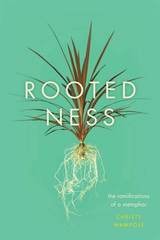
Rootedness
The Ramifications of a MetaphorChristy Wampole
University of Chicago Press, 2016
Wampole examines both the philosophical implications of this metaphor and its political evolution. From the root as home to the root as genealogical origin to the root as the past itself, rootedness has survived in part through its ability to subsume other compelling metaphors, such as the foundation, the source, and the seed. With a focus on this concept’s history in France and Germany, Wampole traces its influence in diverse areas such as the search for the mystical origins of words, land worship, and nationalist rhetoric, including the disturbing portrayal of the Jews as an unrooted, and thus unrighteous, people. Exploring the works of Martin Heidegger, Simone Weil, Jean-Paul Sartre, Paul Celan, and many more, Rootedness is a groundbreaking study of a figure of speech that has had wide-reaching—and at times dire—political and social consequences.
Sensing World, Sensing Wisdom
The Cognitive Foundation of Biblical MetaphorsNicole L. Tilford
SBL Press, 2017
Examine new insights into the conceptual worldview of biblical wisdom communities
The Bible is full of metaphors. On the surface, these metaphors seem like simple literary flourishes that have been added to the text for artistic effect. This book, however, argues that biblical metaphors reflect more basic, prelinguistic cognitive structures. These conceptual metaphors developed out of common concrete experiences and only gradually developed into the complex metaphors that one finds within biblical texts. This book explores how common sensory activities like seeing, hearing, touching, eating, breathing, and walking developed into the abstract metaphors for wisdom that one finds in Proverbs, Job, and Qohelet. Because it traces the cognitive development of a set of related metaphors across several congruent texts, it provides a model by which scholars can trace the cognitive development of biblical metaphors more generally in the Hebrew Bible and other early Jewish and Christian texts.
Features:
- A synthesis of conceptual metaphor theory that provides a workable theory for examining biblical texts
- An analytical framework for studying sensory experience and sensory metaphors in biblical texts
- Diagrams
Sporting Lives
Metaphor and Myth in American Sports AutobiographiesJames W. Pipkin
University of Missouri Press, 2008
Sometimes the crack of the bat or the roar of the crowd fails to capture the meaning of sports as athletes themselves understand it. Books about sports have ignored this dimension of the subject, particularly the athletes’ own autobiographical accounts. In Sporting Lives, the first book to examine the two popular realms of sports and autobiography, James Pipkin looks at recurring patterns found in athletes’ accounts of their lives and sporting experiences, examining language, metaphor, rhetorical strategies, and other elements to analyze sports from the inside out.
Sporting Lives takes a fresh look at memoirs from baseball, football, basketball, golf, and other sports to explore how American athletes see themselves: not only how those images mesh with popular perceptions of them as heroes or celebrities but also how their accounts differ from those of sports journalists and other outsiders. Drawing on the life stories of such well-known figures as Wilt Chamberlain, Babe Ruth, and Martina Navratilova—both as-told-to and self-authored works—Pipkin follows players from the “echoing green” of eternal youth to the sometimes cultlike and isolated status of fame, interpreting recurring patterns both in the living of their lives and in the telling of them. He even considers Dennis Rodman’s four autobiographies to show how the contradictions of his self-portrayals reflect the Janus-faced quality of sports in the era of celebrity culture.
As Pipkin shows, the life of the athlete involves more than mere athleticism; it is also a world of nostalgia and sentiment, missed opportunities and lost youth. He sheds light on athletes’ common obsession with youth and body image—including gender and racial considerations—and explores their descriptions of being “in a zone,” that transcendent state when everything seems to click. And he considers the time that all athletes dread, when their bodies begin to betray them . . . and the cheering stops.
While the lives of athletes may often suggest the magic of Peter Pan, Pipkin’s engaging study reveals that they are in many ways more like the Lost Boys. Sporting Lives shows that the meaning of sports is intertwined with the telling. It is both an eminently readable book for fans and a critically sophisticated analysis that will engage scholars of literature, sports or media studies, and American popular culture.
Syphilis
Medicine, Metaphor, and Religious Conflict in Early Modern FranceDeborah N. Losse
The Ohio State University Press, 2015
Losse provides close readings of a range of genres, moving between polemical poetry, satirical narratives, dialogical colloquies, travel literature, and the personal essay. With chapters featuring Erasmus, Rabelais, Montaigne, Léry, and Agrippa d’Aubigné, this study compares literary descriptions of syphilis with medical descriptions. In the first full-length study of Renaissance writers’ engagement with syphilis, Deborah Losse charts a history from the most vehement rhetoric of the pox to a tenuous resolution of France’s conflicts, when both sides called for a return to order.
The Age of Subtlety
Nature and Rhetorical Conceits in Early Modern EuropeJavier Patiño Loira
University of Delaware Press, 2024
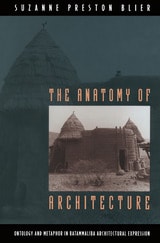
The Anatomy of Architecture
Ontology and Metaphor in Batammaliba Architectural ExpressionSuzanne Preston Blier
University of Chicago Press, 1994
"A splendid analysis of the centrality of architecture in the daily lives of the Batammaliba and its integral role in articulating social values....The story is beautifully told in the best of anthropological traditions."—Judith R. Blau, Contemporary Society
"A remarkable study....Blier's volume carries the study of African architecture to a qualitatively new level of scholarship. It introduces a new dimension whereby the architectural medium can be used to illuminate much of the entire belief system of any culture."—Labelle Prussin, African Arts
"In this excellent book Blier provides a richly detailed and searching account of what architecture means to the Batammaliba of northern Togo and Benin....The finest account I have yet read of the relations between systems of beliefs, ritual practices, and African aesthetics and plastic arts....The ethnography and basic insight should be the envy of any social anthropologist."—T.O. Beidelman, Man
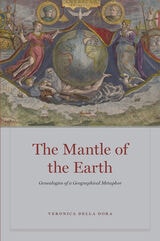
The Mantle of the Earth
Genealogies of a Geographical MetaphorVeronica della Dora
University of Chicago Press, 2021

The Method of Metaphor
Stanley Raffel
Intellect Books, 2013
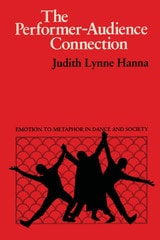
The Performer-Audience Connection
Emotion to Metaphor in Dance and SocietyBy Judith Lynne Hanna
University of Texas Press, 1983
The Performer-Audience Connection is a pioneering foray into one of the major puzzles of human communication: the communication of emotion in dance. It is the first attempt of its kind systematically to investigate what performers wish to convey and what audiences perceive in the performance of dance.
The centerpiece of this provocative book is an examination of performer intentions and audience response at eight dance performances in Washington, D.C. Part of the Smithsonian Institution Division of Performing Arts Dance Series, these concerts featured a variety of dance genres and cultures: American tap dance, Kathakali dance-drama from Kerala, India, Japanese Kabuki, contemporary avant-garde dance, Philippine folk dance, the Indian classical tradition of Kuchipudi, and modern dance to an AfroAmerican spiritual.
How did dancer and audience interact at the emotional level on these eight occasions? What affected performer-audience rapport? Through interviews of both spectators and dancers, Judith Lynne Hanna explores the performers' ways of imparting emotion through movement and audience members' expectations and responses. In doing so she casts new light on important issues of cultural identity, sex role, historic attitudes toward dance, and even marketing the arts today.
A landmark work not only for performers who wish to reach their audiences more effectively but also for choreographers, anthropologists, specialists in nonverbal communication, behavioral scientists, educators, and all who are fascinated by the arts and the special magic of the "performer-audience connection."

The Schlemiel as Metaphor, Revised and Enlarged Edition
Studies in Yiddish and American Jewish FictionSanford Pinsker
Southern Illinois University Press, 1991
The certainty that deep down we are all schlemiels is perhaps what makes America love an inept ball team or a Woody Allen who unburdens his neurotic heart in public.
In this unique, revised history of the schlemiel, Sanford Pinsker uses psychological, linguistic, and anecdotal approaches, as well as his considerable skills as a spritely storyteller, to trace the schlemiel from his beginnings in the Old Testament through his appearance in the nineteenth-century literature of Mendele Mocher Seforim and Sholom Aleichem to his final development as the beautiful loser in the works of Isaac Bashevis Singer, Bernard Malamud, Saul Bellow, Philip Roth, and Woody Allen. Horatio Alger might have once been a good emblem of the American sensibility, but today Woody Allen’s anxious, bespectacled punin (face) seems closer, and truer, to our national experience. His urban, end-of-the-century anxieties mirror—albeit in exaggeration—our own.
This expanded study of the schlemiel is especially relevant now, when scholarship of Yiddish and American Jewish literature is on the increase. By sketching the family tree of that durable anti-hero the schlemiel, Pinsker proves that Jewish humor is built upon the very foundations of the Jewish experience. Pinsker shows the evolution of the schlemiel from the comic butt of Yiddish jokes to a literary figure that speaks to the heart of our modern problems, and he demonstrates the way that Yiddish humor provides a sorely needed correction, a way of pulling down the vanities we all live by.
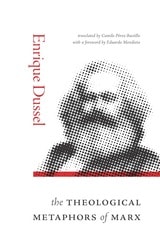
The Theological Metaphors of Marx
Enrique Dussel
Duke University Press, 2024
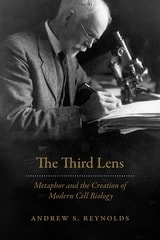
The Third Lens
Metaphor and the Creation of Modern Cell BiologyAndrew S. Reynolds
University of Chicago Press, 2018
Reynolds here investigates the role of metaphors in the creation of scientific concepts, theories, and explanations, using cell theory as his primary case study. He explores the history of key metaphors that have informed the field and the experimental, philosophical, and social circumstances under which they have emerged, risen in popularity, and in some cases faded from view. How we think of cells—as chambers, organisms, or even machines—makes a difference to scientific practice. Consequently, an accurate picture of how scientific knowledge is made requires us to understand how the metaphors scientists use—and the social values that often surreptitiously accompany them—influence our understanding of the world, and, ultimately, of ourselves.
The influence of metaphor isn’t limited to how we think about cells or proteins: in some cases they can even lead to real material change in the very nature of the thing in question, as scientists use technology to alter the reality to fit the metaphor. Drawing out the implications of science’s reliance upon metaphor, The Third Lens will be of interest to anyone working in the areas of history and philosophy of science, science studies, cell and molecular biology, science education and communication, and metaphor in general.
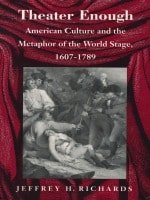
Theater Enough
American Culture and the Metaphor of the World Stage, 1607–1789Jeffrey H. Richards
Duke University Press, 1991
The rhetoric, or discourse, of early American theater emerged out of the figures of speech that permeated the colonists’ lives and literary productions. Jeffrey H. Richards examines a variety of texts—histories, diaries, letters, journals, poems, sermons, political tracts, trial transcripts, orations, and plays—and looks at the writings of such authors as John Winthrop and Mercy Otis Warren. Richards places the American usage of theatrum mundi—the world depicted as a stage—in the context of classical and Renaissance traditions, but shows how the trope functions in American rhetoric as a register for religious, political, and historical attitudes.
Toward More Sustainable Metaphors of Writing Program Administration
edited by Lydia Wilkes, Lilian W. Mina, and Patti Poblete afterword by Douglas Hesse
Utah State University Press, 2022
This volume presents twelve chapters that reclaim and revise established metaphors; offer new metaphors based on sustainable, relational, or emotional labor practices and phenomena; and reveal the improvisational, artisanal nature of WPA work. Chapters resonate across three sections. The first section focuses on organic relationships captured in phrases like “putting out fires” and "seeing forests for the trees” alongside unexpected comparisons to ground and light. The second describes institutional landscapes featuring generative juxtapositions such as the WPA as a labor activist or a mapper of emotional geography. And the third discusses performance crafts like improv comedy and artisanal making.
Toward More Sustainable Metaphors of Writing Program Administration offers new and revised ways of thinking and acting for WPAs, who are constantly negotiating the paradoxical demands of their work and continually striving to act ethically in conflicted, and even fraught, situations. It will inspire practicing, aspiring, and former WPAs working in a time of transformation by highlighting more sustainable ways of enacting WPA identity.
Contributors: Jacob Babb, John Belk, Katherine Daily O'Meara, Ryan J. Dippre, Douglas Hesse, Andrew Hollinger, Rona Kaufman, Cynthia D. Mwenja, Manny Piña, Scott Rogers, Robyn Tasaka, Alexis Teagarden, Christy I. Wenger, Lydia Wilkes
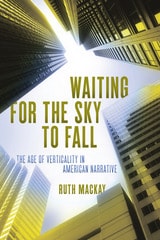
Waiting for the Sky to Fall
The Age of Verticality in American NarrativeRuth Mackay
The Ohio State University Press, 2016
With this study, Mackay asks: In what oblique ways has verticality leaked into American narrative? Why do metaphors of up and down recur across the twentieth century? With close readings of Jonathan Safran Foer’s Extremely Loud and Incredibly Close, Winsor McCay’s comic strip Little Nemo in Slumberland, Upton Sinclair’s Oil! and its film rendering There Will Be Blood, Allen Ginsberg’s poetic dissections of the nuclear bomb, and Leslie Marmon Silko’s imagining of flight in Almanac of the Dead, this interdisciplinary study culminates with a discussion of Philippe Petit’s tightrope walk between the Twin Towers. Waiting for the Sky to Fall examines how vertical representation cleaves to, and often transforms the associations of, specific events that are physically and visually disorienting, disquieting, or even traumatic.