Results by title

14 books match the query 'Methodist'
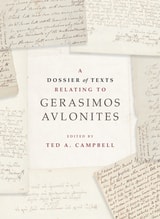
cover of A Dossier of Texts Relating to Gerosimos Avlonites

A Dossier of Texts Relating to Gerosimos Avlonites

Ted A. Campbell

Bridwell Press, 2025
GERASIMOS AVLONITES (fl. 1752-1773) was a Greek Christian leader who consistently identified himself as the Greek Orthodox Bishop of Arcadia in Crete. A native of Corfu, then dominated by Venice, he worked in Crete during the period of Ottoman domination there. He traveled throughout Europe, visiting Holland, England, Sweden and Switzerland and leaving a trail of letters and other writings in mixed Greek and Latin in each place. His interactions with John Wesley and his ordinations of Evangelical ministers in the 1760s first prompted awareness of him. This volume gathers all known sources for Gerasimos with images of original manuscripts, transcriptions of manuscript materials, and translations.
[more]
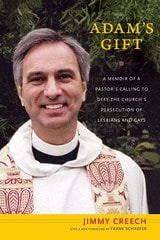
cover of Adam's Gift: A Memoir of a Pastor's Calling to Defy the Church's Persecution of Lesbians and Gays

Adam's Gift

A Memoir of a Pastor's Calling to Defy the Church's Persecution of Lesbians and Gays

Jimmy Creech

Duke University Press, 2011

Jimmy Creech, a United Methodist pastor in North Carolina, was visited one morning in 1984 by Adam, a longtime parishioner whom he liked and respected. Adam said that he was gay, and that he was leaving The United Methodist Church, which had just pronounced that “self-avowed practicing homosexuals” could not be ordained. He would not be part of a community that excluded him. Creech found himself instinctively supporting Adam, telling him that he was sure that God loved and accepted him as he was. Adam’s Gift is Creech’s inspiring first-person account of how that conversation transformed his life and ministry.

Adam’s visit prompted Creech to re-evaluate his belief that homosexuality was a sin, and to research the scriptural basis for the church’s position. He determined that the church was mistaken, that scriptural translations and interpretations had been botched and dangerously distorted. As a Christian, Creech came to believe that discriminating against lesbian, gay, bisexual, and transgender people was morally wrong. This understanding compelled him to perform same-gender commitment ceremonies, which conflicted with church directives. Creech was tried twice by The United Methodist Church, and, after the second trial, his ordination credentials were revoked. Adam’s Gift is a moving story and an important chapter in the unfinished struggle for lesbian, gay, bisexual, and transgender civil and human rights.
[more]
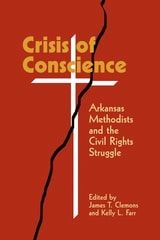
cover of Crisis of Conscience: Arkansas Methodists and the Civil Rights Struggle

Crisis of Conscience

Arkansas Methodists and the Civil Rights Struggle

James T. Clemons

Butler Center for Arkansas Studies, 2007
Crisis of Conscience features personal stories by Arkansas Methodist pastors, laypersons, and community leaders—including Dale Bumpers, M. Joycelyn Elders, and Miller Williams—who lived through the struggles for civil rights in the 1950s and saw their congregations and other institutions rocked by the tumultuous events of the history-making era. The book also depicts the desegregation of Hendrix College, the prophetic role of Philander Smith College in civil rights activism, and the experiences of other Arkansas Methodist institutions in the great freedom struggle that caused many of the state’s church members to realize they could no longer reconcile their belief in God with participation in a segregated society.
[more]
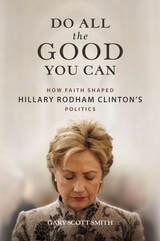
cover of Do All the Good You Can: How Faith Shaped Hillary Rodham Clinton’s Politics

Do All the Good You Can

How Faith Shaped Hillary Rodham Clinton’s Politics

Gary Scott Smith

University of Illinois Press, 2023

Methodism in the public and private lives of the politician

After more than forty contentious years in the public eye, Hillary Rodham Clinton is one of the best-known political figures in the nation. Yet the strong religious faith at the heart of her politics and personal life often remains confounding, if not mysterious, to longtime observers. Even many of her admirers would be surprised to hear Clinton state that her Methodist outlook has “been a huge part of who I am and how I have seen the world, and what I believe in, and what I have tried to do in my life.” 

Gary Scott Smith’s biography of Clinton’s journey in faith begins with her Methodist upbringing in Park Ridge, Illinois, where she faithfully attended worship services, Sunday school, and youth group meetings. Like many mainline Protestants, Clinton’s spiritual commitment developed gradually throughout childhood, while her combination of missionary zeal and impressive personal talents has informed her career from the time of her pro bono work at Yale on behalf of children to the present.

Her Methodist faith has been very important to many of Clinton’s high-profile endeavors and in helping her cope with the prominent travails brought on by two presidential campaigns, never-ending conservative rancor, and her husband’s infidelity. Smith’s account examines Clinton’s faith in the context of work ranging from her 1990s pursuit of healthcare reform to a “Hillary doctrine” of foreign policy focused on her longtime goal of providing basic human rights for children and women--a project she saw as essential to United States security. The result is an enlightening reconsideration of an extraordinary political figure who has defied private doubts and public controversy to live by John Wesley’s dictum: “Do all the good you can, by all the means you can, in all the ways you can, in all the places you can, at all the times you can, to all the people you can, as long as ever you can.”
[more]
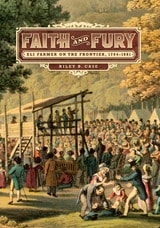
cover of Faith and Fury: Eli Farmer on the Frontier, 1794–1881

Faith and Fury

Eli Farmer on the Frontier, 1794–1881

Riley B. Case

Indiana Historical Society Press, 2018

Some of America’s political and social identity today can be traced to the early frontier. After 1801 religion exploded across settlements in the Old Northwest and Kentucky. Not only were souls saved through camp meetings, but regular people also began applying the words “equal” and “independent” to themselves. The life of Eli P. Farmer, a circuit-riding preacher, politician, farmer, and businessman, is instructive. His autobiography includes accounts of Native Americans, brawls, flatboats, settlers, and revival meetings. Setting his story within the context of the Second Great Awakening, author Riley B. Case shows how Farmer’s life personified this religious movement, which gave birth to American evangelicalism, as well as values that would become idyllic to many Americans: self-sufficiency and individualism.
[more]
cover of Hedstroms and the Bethel Ship Saga: Methodist Influence on Swedish Religious Life

Hedstroms and the Bethel Ship Saga

Methodist Influence on Swedish Religious Life

Henry C. Whyman. Foreword by Kenneth E. Rowe

Southern Illinois University Press, 1992

The first book-length biographical treatment of Olof Gustaf Hedstrom and his brother Jonas documents their work in spreading Methodism among Swedish immigrants to America. Henry C. Whyman discusses the Bethel Ship Saga, a ministry unique in American immigrant history, and examines the larger picture of the role of religion in nineteenth-century European immigration to the United States.

The Bethel Ship, a floating chapel in New York Harbor, was the vehicle and headquarters for an effective ministry to immigrants arriving in America. Olof Hedstrom, a Methodist minister serving in the Catskill Mountain area, was called to New York to organize and lead this endeavor.
[more]
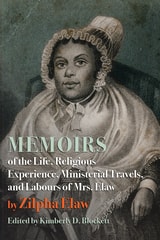
cover of Memoirs of the Life, Religious Experience, Ministerial Travels, and Labours of Mrs. Elaw

Memoirs of the Life, Religious Experience, Ministerial Travels, and Labours of Mrs. Elaw

Kimberly D. Blockett

University of Delaware Press, 0

As a young Black orphan indentured to a Quaker family in Bristol, Pennsylvania, Zilpha Elaw (c. 1793–1873) decided to join the upstart Methodists in 1808. She preached her first sermon a decade later, ignoring her husband and the many church leaders, clergy, and laity who tried to silence her. Elaw’s memoir chronicles the first twenty years of her forty-year itinerant ministry during massive Protestant revivalism in the United States and England.

Elaw preached from Maine to Virginia, attracting multiracial and multidenominational audiences that included powerful men, wealthy White women, poor families, and enslaved communities. She moved from Bristol to Burlington, New Jersey, then to Nantucket, Massachusetts, and finally, in 1840, to London’s East End. In England, Elaw’s celebrity expanded, and at least twice she drew crowds so large they caused human stampedes and multiple injuries.

Kimberly D. Blockett’s introduction and extensive annotations draw on newly unearthed information about the entirety of Elaw’s evangelism to provide context for this remarkable story of an antebellum Black woman’s personal and professional mobility.
[more]
cover of Music and the Wesleys

Music and the Wesleys

Edited by Nicholas Temperley and Stephen Banfield

University of Illinois Press, 2010
Providing new insight into the Wesley family, the fundamental importance of music in the development of Methodism, and the history of art music in Britain, Music and the Wesleys examines more than 150 years of a rich music-making tradition in England. John Wesley and his brother Charles, founders of the Methodist movement, considered music to be a vital part of religion, while Charles's sons Charles and Samuel and grandson Samuel Sebastian were among the most important English composers of their time.
 
This book explores the conflicts faced by the Wesleys but also celebrates their triumphs: John's determination to elevate the singing of his flock; the poetry of Charles's hymns and their musical treatment in both Britain and America; the controversial family concerts by which Charles launched his sons on their careers; the prolific output of Charles the younger; Samuel's range and rugged individuality as a composer; the oracular boldness of Sebastian's religious music and its reception around the English-speaking world. Exploring British concert life, sacred music forms, and hymnology, the contributors analyze the political, cultural, and social history of the Wesleys' enormous influence on English culture and religious practices.
 
Contributors are Stephen Banfield, Jonathan Barry, Martin V. Clarke, Sally Drage, Peter S. Forsaith, Peter Holman, Peter Horton, Robin A. Leaver, Alyson McLamore, Geoffrey C. Moore, John Nightingale, Philip Olleson, Nicholas Temperley, J. R. Watson, Anne Bagnall Yardley, and Carlton R. Young.
[more]
cover of Public Pulpits: Methodists and Mainline Churches in the Moral Argument of Public Life

Public Pulpits

Methodists and Mainline Churches in the Moral Argument of Public Life

Steven M. Tipton

University of Chicago Press, 2008

Since the 2000 presidential election, debate over the role of religion in public life has followed a narrow course as pundits and politicians alike have focused on the influence wielded by conservative Christians. But what about more mainstream Christians? Here, Steven M. Tipton examines the political activities of Methodists and mainline churches in this groundbreaking investigation into a generation of denominational strife among church officials, lobbyists, and activists. The result is an unusually detailed and thoughtful account that upends common stereotypes while asking searching questions about the contested relationship between church and state.

Documenting a wide range of reactions to two radically different events—the invasion of Iraq and the creation of the faith-based initiatives program—Tipton charts the new terrain of religious and moral argument under the Bush administration from Pat Robertson to Jim Wallis. He then turns to the case of the United Methodist Church, of which President Bush is a member, to uncover the twentieth-century history of their political advocacy, culminating in current threats to split the Church between liberal peace-and-justice activists and crusaders for evangelical renewal. Public Pulpits balances the firsthand drama of this internal account with a meditative exploration of the wider social impact that mainline churches have had in a time of diverging fortunes and diminished dreams of progress.

An eminently fair-minded and ethically astute analysis of how churches keep moral issues alive in politics, Public Pulpits delves deep into mainline Protestant efforts to enlarge civic conscience and cast clearer light on the commonweal and offers a masterly overview of public religion in America.
[more]
cover of Taking Heaven by Storm: Methodism and the Rise of Popular Christianity in America

Taking Heaven by Storm

Methodism and the Rise of Popular Christianity in America

John H. Wigger

University of Illinois Press, 1998

In 1770 there were fewer than 1,000 Methodists in America. Fifty years later, the church counted more than 250,000 adherents. Identifying Methodism as America's most significant large-scale popular religious movement of the antebellum period, John H. Wigger reveals what made Methodism so attractive to post-revolutionary America.
 
Taking Heaven by Storm shows how Methodism fed into popular religious enthusiasm as well as the social and economic ambitions of the "middling people on the make"--skilled artisans, shopkeepers, small planters, petty merchants--who constituted its core. Wigger describes how the movement expanded its reach and fostered communal intimacy and "intemperate zeal" by means of an efficient system of itinerant and local preachers, class meetings, love feasts, quarterly meetings, and camp meetings. He also examines the important role of African Americans and women in early American Methodism and explains how the movement's willingness to accept impressions, dreams, and visions as evidence of the work and call of God circumvented conventional assumptions about education, social standing, gender, and race.
 
A pivotal text on the role of religion in American life, Taking Heaven by Storm shows how the enthusiastic, egalitarian, entrepreneurial, lay-oriented spirit of early American Methodism continues to shape popular religion today.
 
[more]
cover of The Autobiography of the Rev. William Stevenson

The Autobiography of the Rev. William Stevenson

Ted A. Campbell

Bridwell Press, 2024
William Stevenson (1768-1857) was a pioneer itinerant Methodist preacher in the southwestern United States, who became the first Protestant of any denomination to preach within the bounds of what is now Texas. His Autobiography, a classic account of frontier and folk Methodism, was first published in serial form in the New Orleans Christian Advocate between March 13 and April 24, 1858. A typescript copy was sent to Bridwell Library in 1936, at the request of SMU President C. C. Selecman. Bridwell Library published the complete Autobiography in 2015, and Bridwell Press is pleased to bring this work to a new audience in 2024.
[more]
cover of The Times Were Strange and Stirring: Methodist Preachers and the Crisis of Emancipation

The Times Were Strange and Stirring

Methodist Preachers and the Crisis of Emancipation

Reginald F. Hildebrand

Duke University Press, 1995

With the conclusion of the Civil War, the beginnings of Reconstruction, and the realities of emancipation, former slaves were confronted with the possibility of freedom and, with it, a new way of life. In The Times Were Strange and Stirring, Reginald F. Hildebrand examines the role of the Methodist Church in the process of emancipation—and in shaping a new world at a unique moment in American, African American, and Methodist history.
Hildebrand explores the ideas and ideals of missionaries from several branches of Methodism—the African Methodist Episcopal Church, the Colored Methodist Episcopal Church, and the northern-based Methodist Episcopal Church—and the significant and highly charged battle waged between them over the challenge and meaning of freedom. He traces the various strategies and goals pursued by these competing visions and develops a typology of some of the ways in which emancipation was approached and understood.
Focusing on individual church leaders such as Lucius H. Holsey, Richard Harvey Cain, and Gilbert Haven, and with the benefit of extensive research in church archives and newspapers, Hildebrand tells the dramatic and sometimes moving story of how missionaries labored to organize their denominations in the black South, and of how they were overwhelmed at times by the struggles of freedom.
[more]
cover of Whose Sacrifice is the Eucharist? The Offering of Christ and His Church in Catholic and Methodist Theology

Whose Sacrifice is the Eucharist? The Offering of Christ and His Church in Catholic and Methodist Theology

Stephen B. Sours

Catholic University of America Press, 2024
This book explores what Catholics and Methodists believe about eucharistic sacrifice. Eucharistic sacrifice refers to the offering that Christ and his church make in the celebration of the Lord’s Supper. It is, therefore, both a Christian doctrine and a church practice. The sacrificial dimension of the sacrament comes both from Christ’s sacrifice on the cross and from his self-offering at the Last Supper in which Christ gives himself to the Father on behalf of his people. “This is my body, which is given for you” (Luke 22:19). The eucharist is a sacrificial meal because in the bread and cup Christians are united to the body and blood of Christ that was sacrificed for them on the cross. Moreover, the resurrected Lord is really present with his people in the eucharist, and while his historic crucifixion is an event in the past, Jesus’ salvation continues and his grace is given to his people in the sacrament, “for this is my blood of the covenant, which is poured out for many for the forgiveness of sins” (Matthew 26:28). Catholics and Methodists believe that Jesus instructs his followers to repeat his words and actions from the Last Supper in their celebration of the eucharist, but a long running assumption is that Catholics and Methodists—following the historic Reformation schism—are deeply divided over eucharistic sacrifice. This book challenges that assumption by analyzing what these churches teach on eucharistic sacrifice from historical, sacramental, liturgical, and ecumenical perspectives. Key figures like Thomas Aquinas and John Wesley help define eucharistic sacrifice in each tradition. Subsequently, authoritative texts such as ecclesial statements, eucharistic prayers, and hymns further specify what Catholics and Methodists believe they are doing when they offer the eucharist to God. Sours argues that far from being divided, Catholics and Methodists have much in common regarding this controversial doctrine.
[more]
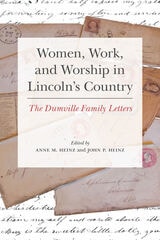
cover of Women, Work, and Worship in Lincoln's Country: The Dumville Family Letters

Women, Work, and Worship in Lincoln's Country

The Dumville Family Letters

Edited by Anne M. Heinz and John P. Heinz

University of Illinois Press, 2016

The Dumville family settled in central Illinois during an era of division and dramatic change. Arguments over slavery raged. Railroads and circuit-riding preachers brought the wider world to the prairie. Irish and German immigrants flooded towns and churches. Anne M. Heinz and John P. Heinz draw from an extraordinary archive at the Abraham Lincoln Presidential Library and Museum to reveal how Ann Dumville and her daughters Jemima, Hephzibah, and Elizabeth lived these times. The letters tell the story of Ann, expelled from her Methodist church for her unshakable abolitionist beliefs; the serious and religious Jemima, a schoolteacher who started each school day with prayer; Elizabeth, enduring hard work as a farmer's wife, far away from the others; and Hephzibah, observing human folly and her own marriage prospects with the same wicked wit. Though separated by circumstances, the Dumvilles deeply engaged one another with their differing views on Methodism, politics, education, technological innovation, and relationships with employers. At the same time, the letters offer a rarely seen look at antebellum working women confronting privation, scarce opportunities, and the horrors of civil war with unwavering courage and faith.
[more]