Results by title
3 books match the query 'Mexican American Literature'
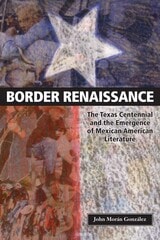
Border Renaissance
The Texas Centennial and the Emergence of Mexican American LiteratureBy John Morán González
University of Texas Press, 2009
The Texas Centennial of 1936, commemorated by statewide celebrations of independence from Mexico, proved to be a powerful catalyst for the formation of a distinctly Mexican American identity. Confronted by a media frenzy that vilified "Meskins" as the antithesis of Texan liberty, Mexican Americans created literary responses that critiqued these racialized representations while forging a new bilingual, bicultural community within the United States. The development of a modern Tejana identity, controversies surrounding bicultural nationalism, and other conflictual aspects of the transformation from mexicano to Mexican American are explored in this study. Capturing this fascinating aesthetic and political rebirth, Border Renaissance presents innovative readings of important novels by María Elena Zamora O'Shea, Américo Paredes, and Jovita González. In addition, the previously overlooked literary texts by members of the League of United Latin American Citizens (LULAC) are given their first detailed consideration in this compelling work of intellectual and literary history.
Drawing on extensive archival research in the English and Spanish languages, John Morán González revisits the 1930s as a crucial decade for the vibrant Mexican American reclamation of Texas history. Border Renaissance pays tribute to this vital turning point in the Mexican American struggle for civil rights.
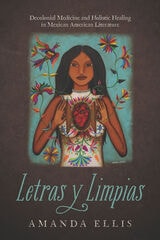
Letras y Limpias
Decolonial Medicine and Holistic Healing in Mexican American LiteratureAmanda Ellis
University of Arizona Press, 2021
Ellis explores the curandera in relationship to decoloniality, bioethics, and the topic of healing while recognizing the limitations and spiritual shortcomings of Western medicine. Ellis argues that our contemporary western health-care system does not know how to fully grapple with illnesses that patients face. Ellis reads the curandera’s perennial representation as an ongoing example of decolonial love useful for deconstructing narrow definitions of health and personhood, and for grappling with the effects of neoliberalism and colonialism on the health-care industry.
Letras y Limpias draws from Chicana feminist theory to assert the importance of the mindbodyspirit connection. Ellis conveys theoretical insights about the continual reimagining of the figure of the curandera as a watermark across Mexican American literary texts. This literary figure points to the oppressive forces that create susto and reminds us that healing work requires specific attention to colonialism, its legacy, and an intentional choice to carry forward the traditional practices rooted in curanderismo passed on from prior generations. By turning toward the figure of the curandera, readers are better poised to challenge prevailing ideas about health, and imagine ways to confront the ongoing problems that coloniality creates. Letras y Limpias shows how the figure of the curandera offers us ways to heal that have nothing to do with copays or medical professionals refusing care, and everything to do with honoring the beauty and complexity of any, every, and all humans.
Writing the Goodlife
Mexican American Literature and the EnvironmentPriscilla Solis Ybarra
University of Arizona Press, 2016
Goodlife writing has existed for at least the past century, Ybarra contends, but Chicana/o literary history’s emphasis on justice and civil rights eclipsed this tradition and hidden it from the general public’s view. Likewise, in ecocriticism, the voices of people of color most often appear in deliberations about environmental justice. The quiet power of goodlife writing certainly challenges injustice, to be sure, but it also brings to light the decolonial environmentalism heretofore obscured in both Chicana/o literary history and environmental literary studies.
Ybarra’s book takes on two of today’s most discussed topics—the worsening environmental crisis and the rising Latino population in the United States—and puts them in literary-historical context from the U.S.-Mexico War up to today’s controversial policies regarding climate change, immigration, and ethnic studies. This book uncovers 150 years’ worth of Mexican American and Chicana/o knowledge and practices that inspire hope in the face of some of today’s biggest challenges.