Results by title
7 books match the query 'Mexico, Gulf of'
Environmental Studies of a Marine Ecosystem
South Texas Outer Continental ShelfEdited by R. Warren Flint and Nancy N. Rabalais
University of Texas Press, 1981
Environmental Studies of a Marine Ecosystem reports the temporal and spatial variation of both the living and nonliving resources of the south Texas outer continental shelf. As the last major study to have been conducted before the Ixtoc oil spill in 1979, it is of great importance as a record of the baseline conditions and ecosystem characteristics for both biologists and chemists studying the effects of the Campeche disaster on the marine environment. The book is the culmination of three years of field studies conducted for the Bureau of Land Management and contains information on the climatology, hydrology, and sedimentology of the region as well as data on the pelagic and benthic biota, environmental hydrocarbons and trace metals, and the microbiology of the area. In addition to the ecosystem description, the data are integrated to expose ecological relationships that exist and to identify those specific variables which are most important for the assessment and management of environmentally damaging impacts to the area.
Fishes of the Gulf of Mexico, Vol. 1
Myxiniformes to GasterosteiformesBy John McEachran and Janice D. Fechhelm
University of Texas Press, 1998
The Gulf of Mexico is the ninth largest body of water in the world and contains over 15 percent of all known species of marine fishes. This diverse fish fauna has been the subject of many publications, but, until now, no work has ever surveyed all known species, including the deep sea fishes and those of the southern Gulf.
This book is the first of two volumes that will cover the entire fish fauna of the Gulf of Mexico. An introductory section that outlines the Gulf's geographical setting, geological origin, current patterns, tides, sediments, meteorology, ecology, and biological exploration is followed by a key for the forty-four orders of fishes known from the Gulf. Keys and descriptions are provided for families, which are arranged phylogenetically, and for the species, which are arranged alphabetically, described, and distinguished from similar species. All but a few species are illustrated.
Fishes of the Gulf of Mexico, Volume 2
Scorpaeniformes to TetraodontiformesBy John D. McEachran and Janice D. Fechhelm
University of Texas Press, 2006
This book is the second of two volumes that cover the entire fish fauna of the Gulf of Mexico. It includes the orders Scorpaeniformes, Perciformes, Pleuronectiformes, and Tetraodontiformes. Keys and descriptions are provided for the families, which are arranged phylogenetically, and for the species, which are arranged alphabetically, described (including distribution and life history), and distinguished from similar species. All but a few species are illustrated. The volume also includes a biogeographical synopsis of the fishes of the Gulf of Mexico.

For a Just and Better World
Engendering Anarchism in the Mexican Borderlands, 1900-1938Sonia Hernandez
University of Illinois Press, 2021
A vivid look at a radical activist and her times, For a Just and Better World illuminates the lives and work of Mexican women battling for labor rights and gender equality in the early twentieth century.
Lincoln's Trident
The West Gulf Blockading Squadron during the Civil WarRobert M. Browning Jr.
University of Alabama Press, 2014
Lincoln’s Trident is the definitive account of the US Navy’s West Gulf Blockading Squadron’s quarantine of the Confederacy in the central and western Gulf of Mexico and adjacent river systems.
In Lincoln’s Trident, Coast Guard historian Robert M. Browning Jr. continues his magisterial series about the Union’s naval blockade of the Confederacy during the American Civil War. Established by the Navy Department in 1862, the West Gulf Blockading Squadron operated from St. Andrews Bay (Panama City), Florida to the Rio Grande River. As with the Navy’s blockade squadrons operating in the Atlantic, the mission of the West Gulf Blockading Squadron was to cripple the South’s economy by halting imports and disrupting cotton exports, the South’s main source of hard currency. The blockade also limited transportation within the South and participated in combined operations with Union land forces.
The history of the squadron comprises myriad parts and players, deployed in a variety of missions across the thousand-mile-wide Western Theater. From disorganized beginnings, the squadron’s leaders and sailors had to overcome setbacks, unfulfilled expectations, and lost opportunities. Browning masterfully captures the many variables that influenced the strategic choices of Navy commanders as they both doggedly pursued unchanging long-term goals as well as improvised and reacted to short-term opportunities.
Notable among its leaders was David Glasgow Farragut, believed by many to be America’s greatest naval hero, who led the squadron through most of the war and the climactic Battle of Mobile Bay. Under his legendary leadership, the squadron not only sealed Confederate sea ports, but also made feints and thrusts up the Mississippi River as far north as Vicksburg, Mississippi.
Knowing the Navy’s role in isolating the Confederate economy and preventing the movement of troops and supplies within the South is crucial to understanding of the outcomes of the Civil War, as well as the importance of naval power in military conflicts. With thirty-five maps and illustrations, Lincoln’s Trident expounds upon an essential part of the Civil War as well as naval and American history.
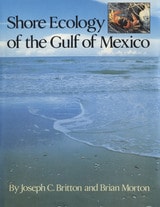
Shore Ecology of the Gulf of Mexico
By Joseph C. Britton and Brian Morton
University of Texas Press, 1989
To the casual visitor, the Gulf of Mexico shores offer mainly sun, sand, and sea. Even the standard field guides, focused on one group of animals or plants, barely hint at the wealth and diversity of habitats and species along Gulf shores. Shore Ecology of the Gulf of Mexico, using a “whole habitat” approach, breaks new ground in describing all the conspicuous vascular plants, algae, birds, mammals, mollusks, crustaceans, and other invertebrates for each marine habitat. The area covered begins west of the Mississippi delta in Louisiana and follows the shores west and south to the Yucatan Peninsula in Mexico.
Transitions between habitats also receive detailed treatment. The authors discuss changes in flora and fauna that result from differences in climate, shore geology, and patterns of precipitation in the succeeding habitats along the Gulf rim. They include discussion of more than 1,000 species of plants and animals, both on shore and in the near-shore subtidal zone, to give a virtually complete picture of western Gulf coast ecosystems. Excellent line drawings and photographs of over 800 species complement the text.
For marine scientists, students, and knowledgeable beachcombers, this is a thorough source on Gulf coast marine life.
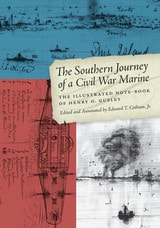
The Southern Journey of a Civil War Marine
The Illustrated Note-Book of Henry O. GusleyEdited and annotated by Edward T. Cotham, Jr.
University of Texas Press, 2006
On September 28, 1863, the Galveston Tri-Weekly News caught its readers' attention with an item headlined "A Yankee Note-Book." It was the first installment of a diary confiscated from U.S. Marine Henry O. Gusley, who had been captured at the Battle of Sabine Pass. Gusley's diary proved so popular with readers that they clamored for more, causing the newspaper to run each excerpt twice until the whole diary was published. For many in Gusley's Confederate readership, his diary provided a rare glimpse into the opinions and feelings of an ordinary Yankee—an enemy whom, they quickly discovered, it would be easy to regard as a friend.
This book contains the complete text of Henry Gusley's Civil War diary, expertly annotated and introduced by Edward Cotham. One of the few journals that have survived from U.S. Marines who served along the Gulf Coast, it records some of the most important naval campaigns of the Civil War, including the spectacular Union success at New Orleans and the embarrassing defeats at Galveston and Sabine Pass. It also offers an unmatched portrait of daily life aboard ship. Accompanying the diary entries are previously unpublished drawings by Daniel Nestell, a doctor who served in the same flotilla and eventually on the same ship as Gusley, which depict many of the locales and events that Gusley describes.
Together, Gusley's diary and Nestell's drawings are like picture postcards from the Civil War—vivid, literary, often moving dispatches from one of "Uncle Sam's nephews in the Gulf."