Results by title

5 books match the query 'Meyers, Todd'
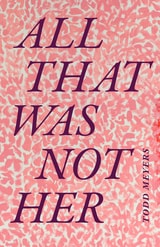
cover of All That Was Not Her

All That Was Not Her

Todd Meyers

Duke University Press, 2022

While studying caregiving and chronic illness in families living in situations of economic and social insecurity in Baltimore, anthropologist Todd Meyers met a woman named Beverly. In All That Was Not Her Meyers presents an intimate ethnographic portrait of Beverly, stitching together small moments they shared scattered over months and years and, following her death, into the present. He meditates on the possibilities of writing about someone who is gone—what should be represented, what experiences resist rendering, what ethical challenges exist when studying the lives of others. Meyers considers how chronic illness is bound up in the racialized and socioeconomic conditions of Beverly’s life and explores the stakes of the anthropologist’s engagement with one subject. Even as Meyers struggles to give Beverly the final word, he finds himself unmade alongside her. All That Was Not Her captures the complexity of personal relationships in the field and the difficulty of their ending.
[more]
cover of Gone Gone

Gone Gone

Todd Meyers

Duke University Press, 2025
In Gone Gone, Todd Meyers reckons with grief in the face of overdose death and with the afterlives of loss created by the opioid crisis. Through conversations with friends, lovers, and family members of those who are gone, Meyers brings readers into an inquiry about lives shared, told through tenderness and tragedy. Meyers seeks to find methods to record and convey the many experiences of grief in ways that do not simply consign sorrow to the world of drugs and addiction. Blending prose, poetry, and ethnography, Gone Gone is a lucid and devastating record that reminds readers that the grief felt by those who lose ones they love to overdose is varied and untamable.
[more]
cover of Mapping Medical Anthropology for the Twenty-First Century

Mapping Medical Anthropology for the Twenty-First Century

Matthew J. Wolf-Meyer

Rutgers University Press, 2026

Mapping Medical Anthropology for the Twenty-First Century provides readers with a comprehensive survey of topics, methodologies, and theories in the discipline, drawing on contributions from leading anthropologists around the world. As a discipline, medical anthropology provides situational analysis of health, disease, and disability to show how the experiences of medical experts, patients, and their broader communities are informed by their social and cultural contexts. Adopting a keywords-driven approach, Mapping Medical Anthropology for the Twenty-First Century provides readers with an introduction to the concepts and approaches that have animated medical anthropology over the course of the twentieth century. Authors put these keywords into dialogue with their ethnographic and archival research to demonstrate how these concepts can be expanded to address contemporary phenomena related to health, disease, and disability. Mapping Medical Anthropology for the Twenty-First Century provides newcomers to medical anthropology with a robust introduction to the discipline, while providing experienced readers a set of chapters that explore the discipline in novel and exciting ways. 
 

[more]
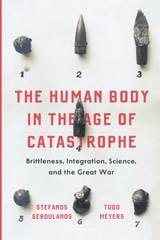
cover of The Human Body in the Age of Catastrophe: Brittleness, Integration, Science, and the Great War

The Human Body in the Age of Catastrophe

Brittleness, Integration, Science, and the Great War

Stefanos Geroulanos and Todd Meyers

University of Chicago Press, 2018

The injuries suffered by soldiers during WWI were as varied as they were brutal. How could the human body suffer and often absorb such disparate traumas? Why might the same wound lead one soldier to die but allow another to recover?
 
In The Human Body in the Age of Catastrophe, Stefanos Geroulanos and Todd Meyers uncover a fascinating story of how medical scientists came to conceptualize the body as an integrated yet brittle whole. Responding to the harrowing experience of the Great War, the medical community sought conceptual frameworks to understand bodily shock, brain injury, and the vast differences in patient responses they occasioned. Geroulanos and Meyers carefully trace how this emerging constellation of ideas became essential for thinking about integration, individuality, fragility, and collapse far beyond medicine: in fields as diverse as anthropology, political economy, psychoanalysis, and cybernetics.
 
Moving effortlessly between the history of medicine and intellectual history, The Human Body in the Age of Catastrophe is an intriguing look into the conceptual underpinnings of the world the Great War ushered in. 
 
[more]
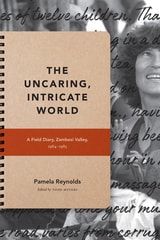
cover of The Uncaring, Intricate World: A Field Diary, Zambezi Valley, 1984-1985

The Uncaring, Intricate World

A Field Diary, Zambezi Valley, 1984-1985

Pamela Reynolds

Duke University Press, 2019

In the 1950s the colonial British government in Northern and Southern Rhodesia (present-day Zambia and Zimbabwe) began construction on a large hydroelectric dam that created Lake Kariba and dislocated nearly 60,000 indigenous residents. Three decades later, Pamela Reynolds began fieldwork with the Tonga people to study the lasting effects of the dispossession of their land on their lives. In The Uncaring, Intricate World Reynolds shares her field diary, in which she records her efforts to study children and their labor and, by doing so, exposes the character of everyday life. More than a memoir, her diary captures the range of pleasures, difficulties, frustrations, contradictions, and grappling with ethical questions that all anthropologists experience in the field. The Uncaring, Intricate World concludes with afterwords by Jane I. Guyer and Julie Livingston, who critically reflect on its context, its meaning for today, and relevance to conducting anthropological work.
[more]