Results by title
3 books match the query 'Microbes'
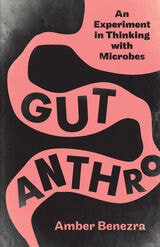
Gut Anthro
An Experiment in Thinking with MicrobesAmber Benezra
University of Minnesota Press, 2023
A fascinating ethnography of microbes that opens up new spaces for anthropological inquiry
The trillions of microbes in and on our bodies are determined by not only biology but also our social connections. Gut Anthro tells the fascinating story of how a sociocultural anthropologist developed a collaborative “anthropology of microbes” with a human microbial ecologist to address global health crises across disciplines. It asks: what would it mean for anthropology to act with science? Based partly at a preeminent U.S. lab studying the human microbiome, the Center for Genome Sciences at Washington University, and partly at a field site in Bangladesh studying infant malnutrition, it examines how microbes travel between human guts in the “field” and in microbiome laboratories, influencing definitions of health and disease, and how the microbiome can change our views on evolution, agency, and life.
As lab scientists studied the interrelationships between gut microbes and malnutrition in resource-poor countries, Amber Benezra explored ways to reconcile the scale and speed differences between the lab, the intimate biosocial practices of Bangladeshi mothers and their children, and the looming structural violence of poverty. In vital ways, Gut Anthro is about what it means to collaborate—with mothers, local field researchers in Bangladesh, massive philanthropic global health organizations, with the microbiome scientists, and, of course, with microbes. It follows microbes through various enactments in scientific research—microbes as kin, as data, and as race. Revealing how racial categories are used in microbiome research, Benezra argues that microbial differences need transdisciplinary collaboration to address racial health disparities without reifying race as a straightforward biological or social designation.
Gut Anthro is a tour de force of science studies and medical anthropology as well as an intensely personal and deeply theoretical accounting of what it means to do anthropology today.
Cover alt text:
Black background overlaid with a pink organic path suggestive of a human digestive system. Title appears within the guts as if being processed.
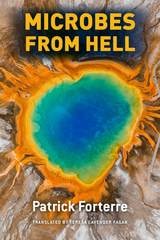
Microbes from Hell
Patrick Forterre
University of Chicago Press, 2016
In Microbes from Hell, one of the world’s leading experts on archaea and hyperthermophiles, or organisms that have evolved to flourish in extreme temperatures, offers a colorful, engaging account of this taxonomic upheaval. Blending tales of his own search for thermophiles with discussions of both the physiological challenges thermophiles face and the unique adaptations they have evolved to live in high-temperature environments, Forterre illuminates our developing understanding of the relationship between archaea and the rest of Earth’s organisms. From biotech applications to the latest discoveries in thermophile research, from microbiomes to the communities of organisms that dwell on deep-sea vents, Forterre’s exploration of life-forms that seem to thrive at the mouth of hell provides a glimpse into the early days of Earth, offering deep insight into what life may have looked like in the extreme environments of our planet’s dawn.
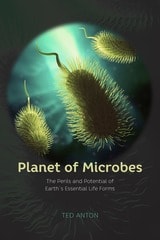
Planet of Microbes
The Perils and Potential of Earth's Essential Life FormsTed Anton
University of Chicago Press, 2017
In Planet of Microbes, Ted Anton takes readers through the most recent discoveries about microbes, revealing their unexpected potential to reshape the future of the planet. For years, we knew little about these invisible invaders, considering them as little more than our enemies in our fight against infectious disease. But the more we learn about microbes, the more it’s become clear that our very lives depend on them. They may also hold the answers to some of science’s most pressing problems, including how to combat a warming planet, clean up the environment, and help the body fight off a wide variety of diseases. Anton has spent years interviewing and working with the determined scientists who hope to harness the work of microbes, and he breaks down the science while also sharing incredible behind-the-scenes stories of the research taking place everywhere from microbreweries to Mars.
The world’s tiniest organisms were here more than three billion years before us. We live in their world, and Planet of Microbes at last gives these unsung heroes the recognition they deserve.