Results by title
355 books match the query 'Middle Atlantic (DC, DE, MD, NJ, NY, PA)' and 24 start with a
A Blacklist Education
American History, a Family Mystery, and a Teacher Under FireJane S. Smith
Rutgers University Press, 2025
Finalist for the Society of Midland Authors Richard Frisbie Award for Adult Nonfiction
In A Blacklist Education, a mysterious file of family papers triggers a journey through the dark days of political purges in the 1950s. Jane S. Smith tells the story of the anticommunist witch hunt that sent shockwaves through New York City’s public schools as more than a thousand teachers were targeted by Board of Education investigators. Her father was one of them—a fact she learned only long after his death.
Beginning in 1949, amid widespread panic about supposed communist subversion, investigators questioned teachers in their homes, accosted them in their classrooms, and ordered them to report to individual hearings. The interrogations were not published, filmed, open to the public, or reported in the news. By 1956, hundreds of New York City teachers had been fired, often because of uncorroborated reports from paid informers or anonymous accusers.
Most of the targeted teachers resigned or retired without any public process, their names recorded only in municipal files and their futures never known. Their absence became the invisible outline of an educational void, a narrowing of thought that pervaded classrooms for decades. In this highly personal story, family lore and childhood memory lead to restricted archives, forgotten inquisitions, and an eerily contemporary campaign to control who could teach and what was acceptable for students to learn.
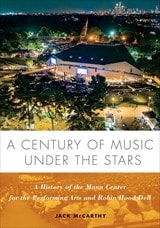
A Century of Music Under the Stars
A History of the Mann Center for the Performing Arts and Robin Hood DellMcCarthy, Jack, and The Mann Center for the Performing Arts
Temple University Press, 2025
The Dell, which opened in 1930, and the Mann, which opened in 1976, were initially built as summer homes for The Philadelphia Orchestra. As McCarthy fondly recounts, the Mann Center evolved to host the world’s top artists across many musical genres. Contemporary audiences have gathered on the Great Lawn for concerts by performers including James Taylor, The Roots, Phish, Diana Ross, John Legend, and others.
The venues, however, are more than just the music; they are about the beautiful natural setting, communal atmosphere, and spectacular view of the Philadelphia skyline. A Century of Music Under the Stars is a revealing and celebratory look back at beloved Philadelphia cultural icons. This informative and illuminating history will provide happy memories for generations of music lovers.
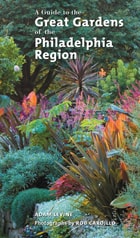
A Guide to the Great Gardens of the Philadelphia Region
Adam Levine
Temple University Press, 2007
As the horticultural epicenter of the United States, Philadelphia and the surrounding towns, suburbs, and countryside are blessed with more public gardens in a concentrated area than almost any other region in the world. Stretching from Trenton, New Jersey through Philadelphia and down to Newark, Delaware, this area (often called the Delaware Valley) offers more horticultural riches than a visitor can possibly see even in a coupl of weeks of hectic garden-hopping.
In A GUIDE TO THE GREAT GARDENS OF THE PHILADELPHIA REGION you will find:
Detailed coverage of almost 100 gardens
Maps to indicate where area gardens are in relation to each other to plan day trip itineraries
Key information about each major garden, including hours, fees, time needed for a tour, history, acreage, and special features
Over a dozen gardens that have never before been featured in any garden guidebook
Arranged by interest, to help guide readers to gardens that will most meet their needs
Notations about historical houses, cafes/restaurants, gift shops, and chidren's features at each major garden
A History of the Rutgers University Glee Club
David F. Chapman
Rutgers University Press, 2022
Founded in 1872, the Glee Club is Rutgers University’s oldest continuously active student organization, as well as one of the first glee clubs in the United States. For the past 150 years, it has represented the university and presented an image of the Rutgers man on a national and international stage.
This volume offers a comprehensive history of the Rutgers Glee Club, from its origins adopting traditions from the German Männerchor and British singing clubs to its current manifestation as a world-recognized ensemble. Along the way, we meet the colorful and charismatic men who have directed the group over the years, from the popular composer and minstrel performer Loren Bragdon to the classically-trained conductor Patrick Gardner. And of course, we learn what the club has meant to the generations of talented and dedicated young men who have sung in it.
A History of the Rutgers University Glee Club recounts the origins of the group’s most beloved traditions, including the composition of the alma mater’s anthem “On the Banks of the Old Raritan” and the development of the annual Christmas in Carol and Song concerts. Meticulously researched, including a complete discography of the club’s recordings, this book is a must-have for all the Rutgers Glee Club’s many fans and alumni.
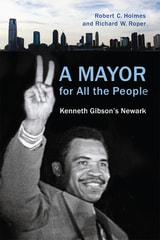
A Mayor for All the People
Kenneth Gibson's NewarkRobert C. Holmes
Rutgers University Press, 2020
In 1970, Kenneth Gibson was elected as Newark, New Jersey’s first African-American mayor, a position he held for an impressive sixteen years. Yet even as Gibson served as a trailblazer for black politicians, he presided over a troubled time in the city’s history, as Newark’s industries declined and its crime and unemployment rates soared.
This book offers a balanced assessment of Gibson’s leadership and his legacy, from the perspectives of the people most deeply immersed in 1970s and 1980s Newark politics: city employees, politicians, activists, journalists, educators, and even fellow big-city mayors like David Dinkins. The contributors include many of Gibson’s harshest critics, as well as some of his closest supporters, friends, and family members—culminating in an exclusive interview with Gibson himself, reflecting on his time in office.
Together, these accounts provide readers with a compelling inside look at a city in crisis, a city that had been rocked by riots three years before Gibson took office and one that Harper’s magazine named “America’s worst city” at the start of his second term. At its heart, it raises a question that is still relevant today: how should we evaluate a leader who faced major structural and economic challenges, but never delivered all the hope and change he promised voters?
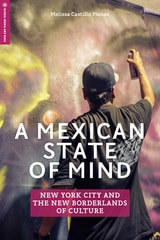
A Mexican State of Mind
New York City and the New Borderlands of CultureMelissa Castillo-Garsow
Rutgers University Press, 2020
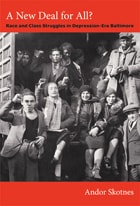
A New Deal for All?
Race and Class Struggles in Depression-Era BaltimoreAndor Skotnes
Duke University Press, 2012
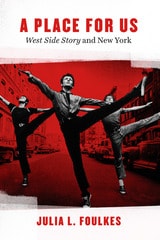
A Place for Us
“West Side Story” and New YorkJulia L. Foulkes
University of Chicago Press, 2016
That vision of postwar New York is at the heart of Julia L. Foulkes’s A Place for Us. A lifelong fan of the show, Foulkes became interested in its history when she made an unexpected discovery: scenes for the iconic film version were shot on the demolition site destined to become part of the Lincoln Center redevelopment area—a crowning jewel of postwar urban renewal. Foulkes interweaves the story of the creation of the musical and film with the remaking of the Upper West Side and the larger tale of New York’s postwar aspirations. Making unprecedented use of director and choreographer Jerome Robbins’s revelatory papers, she shows the crucial role played by the political commitments of Robbins and his fellow gay, Jewish collaborators, Leonard Bernstein and Arthur Laurents. Their determination to evoke life in New York as it was actually lived helped give West Side Story its unshakable sense of place even as it put forward a vision of a new, vigorous, determinedly multicultural American city.
Beautifully written and full of surprises for even the most dedicated West Side Story fan, A Place for Us is a revelatory new exploration of an American classic.
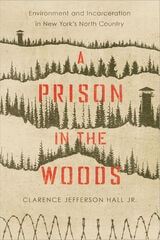
A Prison in the Woods
Environment and Incarceration in New York's North CountryClarence Jefferson Hall
University of Massachusetts Press, 2020
Clarence Jefferson Hall Jr. reveals that the introduction of correctional facilities—especially in the last three decades of the twentieth century—unearthed long-standing conflicts over the proper uses of Adirondack nature, particularly since these sites have contributed to deforestation, pollution, and habitat decline, even as they've provided jobs and spurred economic growth. Additionally, prison plans have challenged individuals' commitment to environmental protection, tested the strength of environmental regulations, endangered environmental and public health, and exposed tensions around race, class, place, and belonging in the isolated prison towns of America's largest state park.

A Sporting Time
New York City and the Rise of Modern Athletics, 1820-70Melvin L. Adelman
University of Illinois Press, 1986
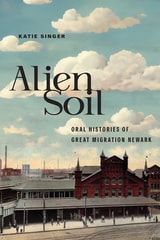
Alien Soil
Oral Histories of Great Migration NewarkKatie Singer
Rutgers University Press, 2024
The book begins with the Krueger-Scott Mansion’s deep history, followed by the sequence of events surrounding the proposed Cultural Center. Last owned by African-American millionaire and beauty-culture entrepreneur Louise Scott, the Victorian Krueger-Scott Mansion was built by beer baron Gottfried Krueger in 1888. Through the history of the Mansion, and the ultimately failed Cultural Center project, one learns about the Newark that African Americans migrated to, what they found when they got there, how living in the city changed them, and how they, individually and collectively, changed Newark.
After the Cultural Center project was officially halted in 2000, the cassette tapes of the oral history interviews were stored away at the Newark Public Library. Ten years later they were unearthed, and ultimately digitized. As of yet, no one has applied these sources directly to their research. Deeply committed to these rich, insightful stories, Singer calls for a more thoughtful consideration of all cities, reminding us that Newark is much more than its 1967 rebellion.
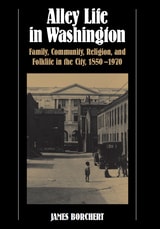
Alley Life in Washington
Family, Community, Religion, and Folklife in the City, 1850-1970James Borchert
University of Illinois Press, 1980
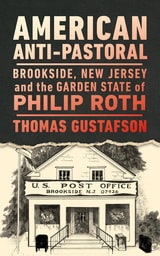
American Anti-Pastoral
Brookside, New Jersey and the Garden State of Philip RothThomas Gustafson
Rutgers University Press, 2024
American Anti-Pastoral reads the events in Roth’s novel in relation to the history of Brookside and its region. While Roth’s protagonist Seymour “Swede” Levov initially views Old Rimrock as an idyllic paradise within the Garden State, its real-world counterpart has a more complex past in its origins as a small industrial village, as well as a site for the politics of exclusionary zoning and a 1960s anti-war protest at its celebrated 4th of July parade. Literary historian and Brookside native Thomas Gustafson casts Roth’s canonical novel in a fresh light as he studies both Old Rimrock in comparison to Brookside and the novel in relationship to NJ literature, making a case for it as the Great New Jersey novel. For Roth fans and history buffs alike, American Anti-Pastoral peels back the myths about the bucolic Garden State countryside to reveal deep fissures along the fault-lines of race and religion in American democracy.
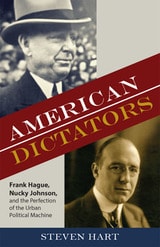
American Dictators
Frank Hague, Nucky Johnson, and the Perfection of the Urban Political MachineHart, Steven
Rutgers University Press, 2013
One man was tongue-tied and awkward around women, in many ways a mama's boy at heart, although his reputation for thuggery was well earned. The other was a playboy, full of easy charm and ready jokes, his appetite for high living a matter of public record. One man tolerated gangsters and bootleggers as long as they paid their dues to his organization. The other was effectively a gangster himself, so crooked that he hosted a national gathering of America's most ruthless killers. One man never drank alcohol. The other, from all evidence, seldom drank anything else.
American Dictators is the dual biography of two of America’s greatest political bosses: Frank Hagueand Enoch “Nucky” Johnson. Packed with compelling information and written in an informal, sometimes humorous style, the book shows Hague and Johnson at the peak of their power and the strength of their political machines during the years of Prohibition and the Great Depression. Steven Hart compares how both men used their influence to benefit and punish the local citizenry, amass huge personal fortunes, and sometimes collaborate to trounce their enemies.
Similar in their ruthlessness, both men were very different in appearance and temperament. Hague, the mayor of Jersey City, intimidated presidents and wielded unchallenged power for three decades. He never drank and was happily married to his wife for decades. He also allowed gangsters to run bootlegging and illegal gambling operations as long as they paid protection money. Johnson, the political boss of Atlantic City, and the inspiration for the hit HBO series Boardwalk Empire, presided over corruption as well, but for a shorter period of time. He was notorious for his decadent lifestyle. Essentially a gangster himself, Johnson hosted the infamous Atlantic City conference that fostered the growth of organized crime.
Both Hague and Johnson shrewdly integrated otherwise disenfranchised groups into their machines and gave them a stake in political power. Yet each failed to adapt to changing demographics and circumstances. In American Dictators, Hart paints a balanced portrait of their accomplishments and their failures.

American Dunkirk
The Waterborne Evacuation of Manhattan on 9/11James M Kendra
Temple University Press, 2016
When the terrorist attacks struck New York City on September 11, 2001, boat operators and waterfront workers quickly realized that they had the skills, the equipment, and the opportunity to take definite, immediate action in responding to the most significant destructive event in the United States in decades. For many of them, they were “doing what needed to be done.”
American Dunkirk shows how people, many of whom were volunteers, mobilized rescue efforts in various improvised and spontaneous ways on that fateful date. Disaster experts James Kendra and Tricia Wachtendorf examine the efforts through fieldwork and interviews with many of the participants to understand the evacuation and its larger implications for the entire practice of disaster management.
The authors ultimately explore how people—as individuals, groups, and formal organizations—pull together to respond to and recover from startling, destructive events. American Dunkirk asks, What can these people and lessons teach us about not only surviving but thriving in the face of calamity?
American Hotel
The Waldorf-Astoria and the Making of a CenturyDavid Freeland
Rutgers University Press, 2021
American Hotel takes us behind the glittering image to reveal the full extent of the Waldorf’s contribution toward shaping twentieth-century life and culture. Historian David Freeland examines the Waldorf from the opening of its first location in 1893 through its rise to a place of influence on the local, national, and international stage. Along the way, he explores how the hotel’s mission to provide hospitality to a diverse range of guests was put to the test by events such as Prohibition, the anticommunist Red Scare, and civil rights struggles.
Alongside famous guests like Frank Sinatra, Martin Luther King, Richard Nixon, and Eleanor Roosevelt, readers will meet the lesser-known men and women who made the Waldorf a leader in the hotel industry and a key setting for international events. American Hotel chronicles how institutions such as the Waldorf-Astoria played an essential role in New York’s growth as a world capital.
An Appalachian Reawakening
West Virginia and the Perils of the New Machine Age, 1945-1972JERRY B. THOMAS
West Virginia University Press, 2010
As the long boom of post-World War II economic expansion spread across the globe, dreams of white picket fences, democratic ideals, and endless opportunities flourished within the United States. Middle America experienced a period of affluent stability built upon a modern age of industrialization. Yet for the people of Appalachia, this new era brought economic, social, and environmental devastation, preventing many from realizing the American Dream. Some families suffered in silence; some joined a mass exodus from the mountains; while others, trapped by unemployment, poverty, illness, and injury became dependent upon welfare. As the one state most completely Appalachian, West Virginia symbolized the region's dilemma, even as it provided much of the labor and natural resources that fueled the nation's prosperity.
An Appalachian Reawakening: West Virginia and the Perils of the New Machine Age, 1945-1972 recounts the difficulties the state of West Virginia faced during the post-World War II period. While documenting this turmoil, this valuable analysis also traces the efforts of the New Frontier and Great Society programs, which stimulated maximum feasible participation and lead to the ultimate rise of grass roots activities and organizations that improved life and labor in the region and undermined the notion of Appalachian fatalism.
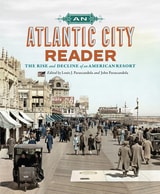
An Atlantic City Reader
The Rise and Decline of an American ResortLouis J. Parascandola
Rutgers University Press, 2026
As Atlantic City grew to become one of the largest tourist destinations on the East Coast, it loomed ever larger in the imaginations of American writers. Generation upon generation of novelists, journalists, musicians, and poets visited Atlantic City and left with vivid impressions of its kaleidoscopic delights and its seedy underbelly.
This new reader collects all of these diverse perspectives on the city in one place, including accounts of Atlantic City by such famous visitors as Walt Whitman, William Carlos Williams, Fanny Hurst, Arthur Conan Doyle, Damon Runyon, Langston Hughes, Elmore Leonard, and Bruce Springsteen. Arranged chronologically, the anthology traces the city’s history from its humble beginnings as a quiet health resort to its rapid ascent to the world’s playground, its gradual decline, and its hopeful if tenuous future. Together, the pieces in this collection take us inside the city’s glitz, glamor, and gambling palaces, but they also don’t shy away from its troubling histories of racial discrimination, political corruption, and urban decay. Compiling fiction, poetry, drama, memoirs, newspaper stories, and magazine reports, The Atlantic City Reader presents an engaging and multifaceted portrait of this iconic resort town.
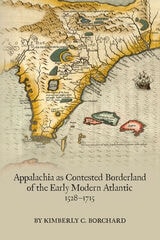
Appalachia as Contested Borderland of the Early Modern Atlantic, 1528-1715
Kimberly C. Borchard
Arizona Center for Medieval and Renaissance Studies, 2021
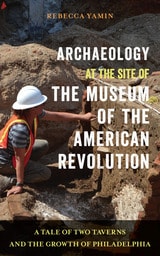
Archaeology at the Site of the Museum of the American Revolution
A Tale of Two Taverns and the Growth of PhiladelphiaRebecca Yamin
Temple University Press, 2019
When the Museum of the American Revolution acquired the land at Third and Chestnut streets in Olde City, Philadelphia, it came with the condition that an archaeological investigation be conducted. The excavation that began in the summer of 2014 yielded treasures in the trash: unearthed privy pits provided remarkable finds from a mid-eighteenth-century tavern to relics from a button factory dating to the early twentieth century. These artifacts are described and analyzed by urban archaeologist Rebecca Yamin in Archaeology at the Site of the Museum of the American Revolution.
Yamin, lead archaeologist on the dig, catalogues items—including earthenware plates and jugs, wig curlers, clay pipes, and liquor bottles—to tell the stories of their owners and their roles in Philadelphia history. As she uncovers the history of the people as well as their houses, taverns, and buildings that were once on the site, she explains that by looking at these remains, we see the story of the growth of Philadelphia from its colonial beginnings to the Second World War.
Archaeology at the Site of the Museum of the American Revolution is a perfect keepsake for armchair archaeologists, introductory students, and history buffs.
Archeology in the Adirondacks
The Last FrontierDavid R. Starbuck
University Press of New England, 2018
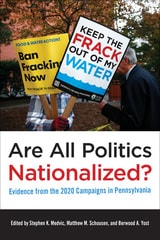
Are All Politics Nationalized?
Evidence from the 2020 Campaigns in PennsylvaniaEdited by Stephen K. Medvic, Matthew M. Schousen, and Berwood A. Yost
Temple University Press, 2023
Given the news media’s focus on national issues and debates, voters might be expected to make decisions about state and local candidates based on their views of the national parties and presidential candidates. However, nationalization as a concept, and the process by which politics becomes nationalized, are not fully understood. Are All Politics Nationalized? addresses this knowledge gap by looking at the behavior of candidates and the factors that influence voters’ electoral choices.
The editors and contributors examine the 2020 elections in six Pennsylvania districts to explore the level of nationalization in campaigns for Congress and state legislature. They also question if politicians are encouraging nationalized behavior and straight ticket voting—especially with down-ballot races.
Are All Politics Nationalized? concludes that issues specific to particular districts—such as fracking and local union politics—still matter, and candidates are eager to connect with voters by highlighting their ties to the local community. National politics do trickle down to local races, but races up and down the ballot are still heavily localized.
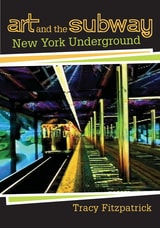
Art and the Subway
New York UndergroundFitzpatrick, Tracy
Rutgers University Press, 2009
Fitzpatrick captures the emotions of artists and riders alike, as she explores paintings, photographs, performance art, graffiti, and public art by artists such as Walker Evans, Bruce Davidson, DONDI, Keith Haring, Yayoi Kusama, Jacob Lawrence, Reginald Marsh, Elizabeth Murray, and many others. She also considers representations of the subway in film, on song sheet covers, and in illustration. By examining the cultural, technological, and social contexts for these creative interpretations, Fitzpatrick illuminates in fresh ways the contradictions and harmonies between public and private space.
Featuring 17 color plates and 80 black-and-white images, Art and the Subway takes readers on a fascinating ride through the visual history of one of the twentieth century's greatest urban planning endeavors as it grew, changed form, and reinvented itself with passion and vitality.
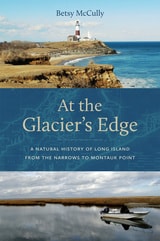
At the Glacier’s Edge
A Natural History of Long Island from the Narrows to Montauk PointBetsy McCully
Rutgers University Press, 2024
Combining science writing, environmental history, and first-hand accounts from a longtime resident, At the Glacier’s Edge offers a unique narrative natural history of Long Island. Betsy McCully tells the story of how the island was formed at the end of the last ice age, how its habitats evolved, and how humans in the last few hundred years have radically altered and degraded its landscape. Yet as she personally recounts the habitat losses and species declines she has witnessed over the past few decades, she describes the vital efforts that environmental activists are making to restore and reclaim this land—from replanting salt marshes, to preserving remaining grasslands and forests, to cleaning up the waters. At the Glacier’s Edge provides an in-depth look at the flora, fauna and geology that make Long Island so special.