Results by title

7 books match the query 'Midrash'
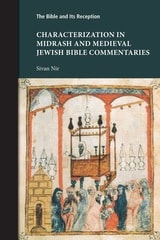
cover of Characterization in Midrash and Medieval Jewish Bible Commentaries

Characterization in Midrash and Medieval Jewish Bible Commentaries

Sivan Nir

SBL Press, 2024
Sivan Nir meticulously examines the reimaginings of the biblical figures Balaam, Jeremiah, and Esther in a wide range of Jewish texts from second-century rabbinic sources to medieval Jewish biblical commentaries. Nir’s unique approach analyzes the continuity, or lack thereof, that emerges when characterization is viewed in relation to and in contrast with its cross cultural context, including the contemporary conventions found in Hellenistic rhetoric and novels, Byzantine Christian literature, Islamic adab and Mu‘tazila literature, and more. Such an approach reveals a transition from typological depictions to richer, more lifelike portrayals—a transformation shaped by rival notions of literature and history. Nir translates the sources into accessible English for students and scholars of not only Jewish exegesis but also those in Christian theology, Islamic studies, and world literature.
[more]
cover of Dirshuni: Contemporary Women’s Midrash

Dirshuni

Contemporary Women’s Midrash

Edited by Tamar Biala

Brandeis University Press, 2022

A unique compilation of contemporary women’s midrashim.
 
Dirshuni: Contemporary Women’s Midrash, is the first-ever English edition of a historic collection of midrashim composed by Israeli women, which has been long-anticipated by multiple American audiences, including synagogues, rabbinical seminaries, adult learning programs, Jewish educators, and scholars of gender and religion. Using the classical forms developed by the ancient rabbis, the contributors express their religious and moral thought and experience through innovative interpretations of scripture. The women writers, from all denominations and beyond, of all political stripes and ethnic backgrounds, contribute their Torah to fill the missing half of the sacred Jewish bookshelf. This book reflects dramatic changes in the agency of women in the world of religious writings. The volume features a comprehensive introduction to Midrash for the uninitiated reader by the distinguished scholar Tamar Kadari and extensive annotation and commentary by Tamar Biala.

 
[more]
cover of Encyclopaedia of Midrash: Biblical Interpretation in Formative Judaism

Encyclopaedia of Midrash

Biblical Interpretation in Formative Judaism

Jacob Neusner

SBL Press, 2016

Now in Paperback!

The Encyclopedia of Midrash provides readers with a deep, broad treatment of midrash unavailable in any other single source. Through the writings of top scholars in each of their fields, it sets out the current state of the question for the many topics discussed throughout the two-volume set. The encyclopedia treats interpretations of Scripture that came to closure prior to, or outside of, the framework of rabbinic midrash: Hellenistic Jewish midrash, Josephus, Pseudo-Philo, Jubilees, as well as to the New Testament, Karaite and Samaritan writings, and the Dead Sea Scrolls.

Features:

  • Paperback format of an essential Brill hardcover reference set
  • A general introduction to rabbinic midrash and its traits
  • Discussion of rabbinic midrashic documents focused on specific books of Scripture, the theology expressed by rabbinic midrashic compilations, and the historical context in which rabbinic Midrash took shape
[more]
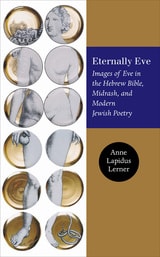
cover of Eternally Eve: Images of Eve in the Hebrew Bible, Midrash, and Modern Jewish Poetry

Eternally Eve

Images of Eve in the Hebrew Bible, Midrash, and Modern Jewish Poetry

Anne Lapidus Lerner

University Press of New England, 2007
The biblical accounts of Eve's life are central to Western culture, occupying a privileged place in our literature and art, culture, and society. For both Judaism and Christianity, these stories involving Eve have for centuries been entangled with the religious and social construction of gender. The ambiguous biblical record of her life from the two versions of her creation, through her encounter with the forbidden fruit, to her expulsion from Eden, and followed by the tantalizing glimpses of her life in the real world has served through the ages as a mirror of commonly held views about women. For Jewish readers, Eve's role as metonym -- signifying womanhood, or Jewish womanhood, as a whole -- is of prime importance. By tracing the imagined character of Eve from ancient times to the present, Eternally Eve opens a window on the transmission and persistence of cultural and social values. Eternally Eve takes as its subject the many ways these stories can be read, interpreting the biblical narratives as well as their iteration by rabbinic midrashists and modern poets. Anne Lapidus Lerner argues that we must set aside, or at least rethink, a series of assumptions about Eve that have been dominant in Jewish thought for centuries and instead return to the original texts to rediscover meanings implicit in them. Using modern poetry about Eve as a touchstone for reinterpreting older texts, Lerner discovers that Genesis is often more open to contemporary values than are later rabbinic texts. Linking sacred texts to works of the classical and modern imagination, Lerner restores to her sources meanings suppressed or neglected over many years and demonstrates their power to speak today.
[more]
cover of Judaism and Christianity in the Age of Constantine: History, Messiah, Israel, and the Initial Confrontation

Judaism and Christianity in the Age of Constantine

History, Messiah, Israel, and the Initial Confrontation

Jacob Neusner

University of Chicago Press, 1987

With the conversion of Constantine in 312, Christianity began a period of political and cultural dominance that it would enjoy until the twentieth century. Jacob Neusner contradicts the prevailing view that following Christianity's ascendancy, Judaism continued to evolve in isolation. He argues that because of the political need to defend its claims to religious authenticity, Judaism was forced to review itself in the context of a triumphant Christianity. The definition of issues long discussed in Judaism—the meaning of history, the coming of the Messiah, and the political identity of Israel—became of immediate and urgent concern to both parties. What emerged was a polemical dialogue between Christian and Jewish teachers that was unprecedented.

In a close analysis of texts by the Christian theologians Eusebius, Aphrahat, and Chrysostom on one hand, and of the central Jewish works the Talmud of the Land of Israel, the Genesis Rabbah, and the Leviticus Rabbah on the other, Neusner finds that both religious groups turned to the same corpus of Hebrew scripture to examine the same fundamental issues. Eusebius and Genesis Rabbah both address the issue of history, Chrysostom and the Talmud the issue of the Messiah, and Aphrahat and Leviticus Rabbah the issue of Israel. As Neusner demonstrates, the conclusions drawn shaped the dialogue between the two religions for the rest of their shared history in the West.
[more]
cover of Midrash and Theory: Ancient Jewish Exegesis and Contempory Literary Studies

Midrash and Theory

Ancient Jewish Exegesis and Contempory Literary Studies

David Stern

Northwestern University Press, 1998

In Midrash and Theory, David Stern presents an approach to midrashic literature through the prism of contemporary theory.

As midrash--the literature of classical Jewish Scriptural interpretation--has become the focus of new interest in contemporary literary circles, it has been invoked as a precursor of post-structuralist theory and criticism. At the same time, the midrashic imagination has undergone a revival in the larger Jewish community and shown itself capable of exercising a powerful influence and hold on a new type of contemporary Jewish writing. Stern examines this resurgence of fascination with ancient Jewish interpretation from the persepctive of the cultural relevance of midrash and its connection to its original historical and literary contexts.
[more]
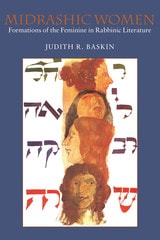
cover of Midrashic Women: Formations of the Feminine in Rabbinic Literature

Midrashic Women

Formations of the Feminine in Rabbinic Literature

Judith R. Baskin

Brandeis University Press, 2002

While most gender-based analyses of rabbinic Judaism concentrate on the status of women in the halakhah (the rabbinic legal tradition), Judith R. Baskin turns her attention to the construction of women in the aggadic midrash, a collection of expansions of the biblical text, rabbinic ruminations, and homiletical discourses that constitutes the non-legal component of rabbinic literature. Examining rabbinic convictions of female alterity, competing narratives of creation, and justifications of female disadvantages, as well as aggadic understandings of the ideal wife, the dilemma of infertility, and women among women and as individuals, she shows that rabbinic Judaism, a tradition formed by men for a male community, deeply valued the essential contributions of wives and mothers while also consciously constructing women as other and lesser than men. Recent feminist scholarship has illuminated many aspects of the significance of gender in biblical and halakhic texts but there has been little previous study of how aggadic literature portrays females and the feminine. Such representations, Baskin argues, often offer a more nuanced and complex view of women and their actual lives than the rigorous proscriptions of legal discourse.
[more]