Results by title
7 books match the query 'Military intelligence'
A Monument to Deceit
Sam Adams and the Vietnam Intelligence WarsC. Michael Hiam
University Press of New England, 2014
Anthropological Intelligence
The Deployment and Neglect of American Anthropology in the Second World WarDavid H. Price
Duke University Press, 2008
Anthropological Intelligence is based on interviews with anthropologists as well as extensive archival research involving many Freedom of Information Act requests. Price looks at the role played by the two primary U.S. anthropological organizations, the American Anthropological Association and the Society for Applied Anthropology (which was formed in 1941), in facilitating the application of anthropological methods to the problems of war. He chronicles specific projects undertaken on behalf of government agencies, including an analysis of the social effects of postwar migration, the design and implementation of OSS counterinsurgency campaigns, and the study of Japanese social structures to help tailor American propaganda efforts. Price discusses anthropologists’ work in internment camps, their collection of intelligence in Central and South America for the FBI’s Special Intelligence Service, and their help forming foreign language programs to assist soldiers and intelligence agents. Evaluating the ethical implications of anthropological contributions to World War II, Price suggests that by the time the Cold War began, the profession had set a dangerous precedent regarding what it would be willing to do on behalf of the U.S. government.
Cold War Anthropology
The CIA, the Pentagon, and the Growth of Dual Use AnthropologyDavid H. Price
Duke University Press, 2016
Information Gathering in Classical Greece
Frank S. Russell
University of Michigan Press, 2000
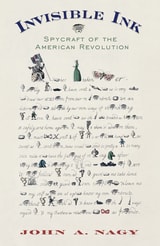
Invisible Ink
Spycraft of the American RevolutionJohn A. Nagy
Westholme Publishing, 2010
The Critical Role of Espionage During the War of Independence and the Techniques Spies Used
During the American Revolution, espionage was critical to the successes and failures of both Continental and British efforts, and those employed in cloakand- dagger operations always risked death. While the most notorious episode of spying during the war—the Benedict Arnold affair—was a failure, most intelligence operations succeeded. Spycraft was no more wholly embraced than by the American commander-in-chief, George Washington. Washington relied on a vast spy network and personally designed sophisticated battle plan deceptions and counterintelligence efforts, some surprisingly modern in form. In Invisible Ink: Spycraft of the American Revolution, award-winning author John A. Nagy briefly traces the history of spy techniques from ancient China through Elizabethan England before embarking on the various techniques used by spies on both sides of the war to exchange secret information. These methods included dictionary codes, diplomatic ciphers, dead drops, hidden compartments (such as a hollowed-out bullet or a woman’s garter), and even musical notation, as well as efforts of counterintelligence, including “Black Chambers,” where postal correspondence was read by cryptologists. Throughout, the author provides examples of the various codes and ciphers employed, many of which have not been previously described. In addition, the author analyzes some of the key spy rings operating during the war, most notably the Culper ring that provided information to Washington from inside British-controlled New York City. Based on nearly two decades of primary research, including the author’s discovery of previously unrecognized spies and methods, Invisible Ink is a major contribution to the history of conflict and technology.
Soldiers, Airmen, Spies, and Whisperers
The Gold Coast in World War IINancy Ellen Lawler
Ohio University Press, 2002
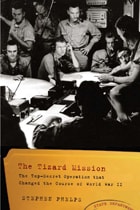
The Tizard Mission
The Top-Secret Operation That Changed the Course of World War IIStephen Phelps
Westholme Publishing, 2010
Alone Against Germany, Britain Gave America Its Most Astonishing Secrets
In August 1940, a German invasion of Britain looked inevitable. Luftwaffe bombers were pounding British cities, France had surrendered, and the Low Countries were under German control. Although sympathetic to Britain’s plight, the United States remained staunchly neutral. Unknown to the rest of the world, Britain’s brightest scientific and military minds had been working on futuristic technology for a decade, including radar and jet propulsion. While the great value of radar to locate and identify objects at long distance and at night or in bad weather was appreciated, at the time it was thought that practical radar required a room-sized device for generating an effective signal. Now, suddenly, British scientists had something extraordinary—the cavity magnetron, a generator hundreds of times more powerful than any other in use and small enough to be held in the hand. With the British economy and industry reeling from the war, Winston Churchill gambled on an unorthodox plan: a team of scientists and engineers would travel under cover to the United States and give the still-neutral Americans the best of Britain’s military secrets. It was hoped that in exchange the United States would provide financial and manufacturing support—which might even lead to their official entry into the war.
The Tizard Mission, named for its leader Sir Henry Tizard, steamed across the Atlantic carrying a suitcase-sized metal deed box. Designed to sink in the event the ship was torpedoed by a U-boat, the box contained details of the Whittle jet engine, research for an atomic bomb, and a precious cavity magnetron. The Americans proved to be astonished, receptive, and efficient: Bell Telephone produced the first thirty magnetrons in October 1940, and over a million by the end of the war. With this device, both warships and aircraft could carry war-winning radar. But Britain did not only give America military secrets, these same technologies would produce a fortune for postwar commercial industries, with the magnetron being the key component to the microwave oven. In The Tizard Mission: The Top-Secret Operation That Changed the Course of World War II, Stephen Phelps reveals how the Tizard Mission was the turning point in the technological war, giving Britain the weapons it desperately needed and laying the groundwork for both the Special Relationship and much of the United States’s postwar economic boom, an effect that still resonates today.