Results by title
5 books match the query 'Miller, Alexei'
Imperial Rule
Alfred J. Rieber
Central European University Press, 2004
Renowned academics compare major features of imperial rule in the 19th century, reflecting a significant shift away from nationalism and toward empires in the studies of state building. The book responds to the current interest in multi-unit formations, such as the European Union and the expanded outreach of the United States. National historical narratives have systematically marginalized imperial dimensions, yet empires play an important role. This book examines the methods discerned in the creation of the Habsburg Monarchy, the Ottoman Empire, the Hohenzollern rule and Imperial Russia. It inspects the respective imperial elites in these empires, and it details the role of nations, religions and ideologies in the legitimacy of empire building, bringing the Spanish Empire into the analysis. The final part of the book focuses on modern empires, such as the German "Reich." The essays suggest that empires were more adaptive and resilient to change than is commonly thought.
[more]
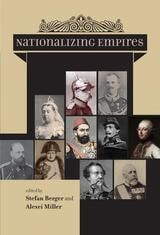
Nationalizing Empires
Stefan Berger
Central European University Press, 2015
The essays in Nationalizing Empires challenge the dichotomy between empire and nation state that for decades has dominated historiography. The authors center their attention on nation-building in the imperial core and maintain that the nineteenth century, rather than the age of nation-states, was the age of empires and nationalism. They identify a number of instances where nation building projects in the imperial metropolis aimed at the preservation and extension of empires rather than at their dissolution or the transformation of entire empires into nation states. Such observations have until recently largely escaped theoretical reflection.
[more]
The Convolutions of Historical Politics
Alexei Miller
Central European University Press, 2012
Thirteen essays by scholars from seven countries discuss the political use and abuse of history in the recent decades with particular focus on Central and Eastern Europe (Hungary, Poland, Estonia, Moldova, Ukraine, Russia as case studies), but also includes articles on Germany, Japan and Turkey, which provide a much needed comparative dimension. The main focus is on new conditions of political utilization of history in post-communist context, which is characterized by lack of censorship and political pluralism. The phenomenon of history politics became extremely visible in Central and Eastern Europe in the past decade, and remains central for political agenda in many countries of the regions. Each essay is a case study contributing to the knowledge about collective memory and political use of history, offering a new theoretical twist. The studies look at actors (from political parties to individual historians), institutions (museums, Institutes of National remembrance, special political commissions), methods, political rationale and motivations behind this phenomenon.
[more]
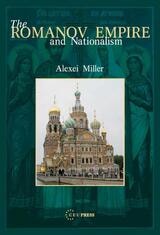
The Romanov Empire and Nationalism
Essays in the Methodology of Historical ResearchAlexei Miller
Central European University Press, 2008
Miller addresses the fabric of interaction between the imperial authority and local communities in the Romanov empire. How did the authorities structure the space of the empire? What were the economic relations between the borderlands and the center? How was the use of different languages regulated? How did the central authorities and local officials implement policies regarding different population groups? How did the experience, acquired in particular borderlands, influence the policies elsewhere —among others—through officials who often changed their place of service during their careers? How did the local elites and communities react to the policies of the imperial authorities? How did they uphold their special interests if the empire encroached on them, but also—how did they collaborate with the empire and how did they use imperial resources for local interests?
[more]
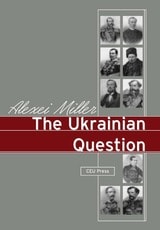
The Ukrainian Question
Russian Empire and Nationalism in the 19th CenturyAlexei Miller
Central European University Press, 2003
This pioneering work treats the Ukrainian question in Russian imperial policy and its importance for the intelligentsia of the empire. Miller sets the Russian Empire in the context of modernizing and occasionally nationalizing great power states and discusses the process of incorporating the Ukraine, better known as "Little Russia" in that time, into the Romanov Empire in the late 18th and 19th centuries. This territorial expansion evolved into a competition of mutually exclusive concepts of Russian and Ukrainian nation-building projects.
[more]