Results by title
10 books match the query 'Miller, Char'

Burn Scars
A Documentary History of Fire Suppression, from Colonial Origins to the Resurgence of Cultural BurningChar Miller
Oregon State University Press, 2024
In Burn Scars, historian Char Miller assembles a collection of primary sources focused on debates over “light burning” (as prescribed or controlled burning was called). These historic documents show that not only was fire suppression controversial, but that it was also driven by explicitly racist and colonial beliefs. Yet the suppression paradigm contained within it the seeds of its destruction: Indigenous people continued to use fire as did non-Indigenous land managers. By the 1920s, scientific evidence was beginning to reveal that fire was essential for regenerating grasslands and forests; by the 1930s even the Forest Service was testing fire’s ecological benefits.
Burn Scars focuses on the burning debates of the early twentieth century, but Miller also provides evidence of a powerful counternarrative emerging from southern non-Indigenous foresters who used fire to revive longleaf pine ecosystems. The volume begins and ends with contributions from Indigenous practitioners discussing the long history and resurgent practice of cultural burning as part of traditional land management.

Cities and Nature in the American West
Char Miller
University of Nevada Press, 2010
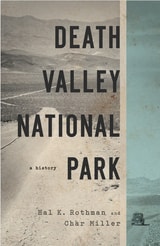
Death Valley National Park
A HistoryHal Rothman
University of Nevada Press, 2013
This history begins with a discussion of the physical setting, its geography and geology, and descriptions of the Timbisha, the first peoples to inhabit this tough and dangerous landscape. In the 19th-century and early 20th century, new arrivals came to exploit the mineral resources in the region and develop permanent agricultural and resort settlements. Although Death Valley was established as a National Monument in 1933, fear of the harsh desert precluded widespread acceptance by both the visiting public and its own administrative agency. As a result, Death Valley lacked both support and resources. This volume details the many debates over the park’s size, conflicts between miners, farmers, the military, and wilderness advocates, the treatment of the Timbisha, and the impact of tourists on its cultural and natural resources.
In time, Death Valley came to be seen as one of the great natural wonders of the United States, and was elevated to full national park status in 1994. The history of Death Valley National Park embodies the many tensions confronting American environmentalism.

Fluid Arguments
Five Centuries of Western Water ConflictEdited by Char Miller
University of Arizona Press, 2001
Seventeen contributors—representing history, geography, ethnography, political science, law, and urban studies—provide an interdisciplinary perspective on the many dimensions of water in the West: Spanish colonial water law, Native American water rights, agricultural concerns, and dam building. A concluding essay looks toward the future by examining the impact of cities on water and of water marketing on the western economy.
As farmers and ranchers from Kansas to California compete for water with powerful urban economies, the West will continue to be reshaped by this scarce and precious resource. Fluid Arguments clearly shows that many of the current disputes over water take place without a real appreciation for the long history of the debate. By shedding new light on how water allocation is established—and who controls it—this book makes a vital contribution to our understanding of water and growth in the region.
CONTENTS
Divining the Past: An Introduction / Char Miller
Part 1. Land and Water on New Spain’s Frontiers
1. "Only Fit for Raising Stock": Spanish and Mexican Land and Water Rights in the Tamaulipan Cession / Jesús F. de la Teja
2. Water, the Gila River Pimas, and the Arrival of the Spanish / Shelly C. Dudley
3. "Between This River and That": Establishing Water Rights in the Chama Basin of New Mexico / Sandra K. Mathews-Lamb
Part 2. The Native American Struggle for Water
4. Maggot Creek and Other Tales: Kiowa Identity and Water, 1870-1920 / Bonnie Lynn-Sherow
5. The Dilemmas of Indian Water Policy, 1887-1928 / Donald J. Pisani
6. First in Time: Tribal Reserved Water Rights and General Adjudications in New Mexico / Alan S. Newell
7. Winters Comes Home to Roost / Daniel McCool
Part 3. Agricultural Conundrums
8. Water, Sun, and Cattle: The Chisholm Trail as an Ephemeral Ecosystem / James E. Sherow
9. Private Irrigation in Colorado’s Grand Valley / Brad F. Raley
10. A Rio Grande "Brew": Agriculture, Industry, and Water Quality in the Lower Rio Grande Valley / John P. Tiefenbacher
11. Specialization and Diversification in the Agricultural System of Southwestern Kansas, 1887-1980 / Thomas C. Schafer
12. John Wesley Powell Was Right: Resizing the Ogallala High Plains / John Opie
Part 4. Dam those Waters!
13. Private Initiative, Public Works: Ed Fletcher, the Santa Fe Railway, and Phoenix’s Cave Creek Flood Control Dam / Donald C. Jackson
14. The Changing Fortunes of the Big Dam Era in the American West / Mark Harvey
15. Building Dams and Damning People in the Texas-Mexico Border Region: Mexico’s El Cuchillo Dam Project / Raúl M. Sánchez
Part 5. The Coming Fight
16. Water and the Western Service Economy: A New Challenge / Hal K. Rothman

Forest Conservation in the Anthropocene
Science, Policy, and PracticeV. Alaric Sample
University Press of Colorado, 2016
Forest Conservation in the Anthropocene provides thought-provoking insight into the ongoing environmental crises that climate change is generating and raises critical questions about how public and private land managers in North America will adapt to the climatological disruptions that are already transforming the ecological structures of these forests.
In this pathbreaking anthology, a team of leading environmental researchers probes the central dilemmas that ecologists, forest land managers, state and federal agencies, and grassroots organizations are confronting—and will continue to confront—in the coming century. Each chapter examines strategies that are currently being tested across the country as scientists, citizen-scientists, policy makers, academics, and activists work to grasp their options and opportunities for a future that will be shaped by ongoing environmental upheaval.
Successful adaptation to the challenges of climate change requires a transdisciplinary perspective. Forest Conservation in the Anthropocene provides a compelling set of arguments and case studies that underscores the need for innovative policies and energetic actions.
Contributors: Craig D. Allen, Mark Anderson, Susan Beecher, R. Travis Belote, Timothy J. Brown, Anne A. Carlson, Tim Caro, Grace K. Charles, Dave Cleaves, Dena J. Clink, Ayesha Dinshaw, R. Kasten Dumroese, Jonas Epstein, Alexander M. Evans, Todd Gartner, Jessica E. Halofsky, Nels Johnson, Linda A. Joyce, Paige Lewis, Laura Falk McCarthy, Heather McGray, Constance I. Millar, James Mulligan, Chadwick Dearing, David L. Peterson, Will Price, Janine M. Rice, Jason Riggio, Tania Schoennagel, Mark L. Shaffer, Curt Stager, Scott L. Stephens, Thomas W. Swetnam, Gary M. Tabor, Christopher Topik, Monica G. Turner, Thomas T. Veblen, Alexandra M. Weill, Anthony L. Westerling, Carolyn Whitesell, Mary I. Williams
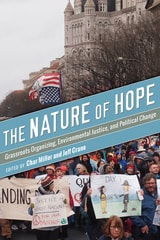
Nature of Hope
Grassroots Organizing, Environmental Justice, and Political ChangeChar Miller
University Press of Colorado, 2018
Through lively and accessible storytelling, The Nature of Hope reveals unsung and unstinting efforts to protect the physical environment and human health in the face of continuing economic growth and development and the failure of state and federal governments to deal adequately with the resulting degradation of air, water, and soils. In an age of environmental crisis, apathy, and deep-seated cynicism, these efforts suggest the dynamic power of a “politics of hope” to offer compelling models of resistance, regeneration, and resilience. The contributors frame their chapters around the drive for greater democracy and improved human and ecological health and demonstrate that local activism is essential to the preservation of democracy and the protection of the environment. The book also brings to light new styles of leadership and new structures for activist organizations, complicating assumptions about the environmental movement in the United States that have focused on particular leaders, agencies, thematic orientations, and human perceptions of nature.
The critical implications that emerge from these stories about ecological activism are crucial to understanding the essential role that protecting the environment plays in sustaining the health of civil society. The Nature of Hope will be crucial reading for scholars interested in environmentalism and the mechanics of social movements and will engage historians, geographers, political scientists, grassroots activists, humanists, and social scientists alike.

On Strawberry Hill
The Transcendent Love of Gifford Pinchot and Laura HoughtelingPaula Ivaska Robbins
University of Alabama Press, 2017
At its core, Paula Ivaska Robbins’s On Strawberry Hill: The Transcendent Love of Gifford Pinchot and Laura Houghteling is a human interest story that cuts a neat slice across nineteenth-century America by bringing into juxtaposition a wide array of topics germane to the period—the national fascination with spiritualism, the death scourge that was tuberculosis, the rise of sanitariums and tourism in the southern highlands, the expansion of railroad travel, the rage for public parklands and playgrounds, and the development of professional forestry and green preservation―all through the very personal love story of two young blue bloods.
Born into a wealthy New York family, Gifford Pinchot (1865–1946) served two terms as Pennsylvania’s governor and was the first chief of the US Forest Service, which today manages 192 million acres across the country. Pinchot also created the Society of American Foresters, the organization that oversees his chosen profession, and the Yale School of Forestry and Environmental Studies, the oldest forestry school in America. Ultimately, he and his friend President Theodore Roosevelt made forestry the focus of a national land conservation movement.
But before these accomplishments, Gifford Pinchot fell in love with Laura Houghteling, daughter of the head of the Chicago Board of Trade, while she recuperated from “consumption” at Strawberry Hill, the family retreat in Asheville, North Carolina. In his twenties at the time and still a budding forester, Pinchot was working just across the French Broad River at George Vanderbilt’s great undertaking, the Biltmore Estate, when the young couple’s relationship blossomed. Although Laura would eventually succumb to the disease, their brief romance left an indelible mark on Gifford, who recorded his ongoing relationship, and mental conversations, with Laura in his daily diary entries long after her death. He steadfastly remained a bachelor for twenty years while accomplishing the major highlights of his career.
This poignant book focuses on that phenomenon of devotion and inspiration, providing a unique window into the private practice of spiritualism in the context of Victorian mores, while offering new perspectives on Pinchot and early American forestry. In addition, preeminent Pinchot biographer Char Miller contributes an excellent foreword.

Public Lands, Public Debates
A Century of ControversyChar Miller, editor
Oregon State University Press, 2012
—Char Miller, from the introduction
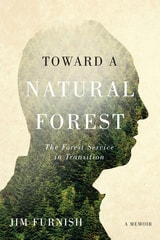
Toward a Natural Forest
The Forest Service in Transition (A Memoir)Jim Furnish
Oregon State University Press, 2015
The Forest Service stumbled in responding to a wave of lawsuits from environmental groups in the late 20th Century—a phenomenon best symbolized by the spotted owl controversy that shut down logging on public forests in the Pacific Northwest in the 1990s. The agency was brought to its knees, pitted between a powerful timber industry that had been having its way with the national forests for decades, and organized environmentalists who believed public lands had been abused and deserved better stewardship.
Toward a Natural Forest offers an insider’s view of this tumultuous time in the history of the Forest Service, presenting twin tales of transformation, both within the agency and within the author’s evolving environmental consciousness. While stewarding our national forests with the best of intentions, had the Forest Service diminished their natural essence and ecological values? How could one man confront the crisis while remaining loyal to his employer?
In this revealing memoir, Furnish addresses the fundamental human drive to gain sustenance from and protect the Earth, believing that we need not destroy it in the process. Drawing on the author’s personal experience and his broad professional knowledge, Toward a Natural Forest illuminates the potential of the Forest Service to provide strong leadership in global conservation efforts. Those interested in our public lands—environmentalists, natural resource professionals, academics, and historians—will find Jim Furnish’s story deeply informed, thought-provoking, and ultimately inspiring.

Water in the West
A High Country News ReaderChar Miller
Oregon State University Press, 2000