Results by title
4 books match the query 'Miller, Judith G.'
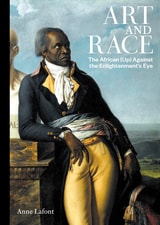
Art and Race
The African (Up) Against the Enlightenment’s EyeAnne Lafont
J. Paul Getty Trust, The, 2026
In this text, French art historian Anne Lafont examines the complexities and contradictions in Enlightenment-era ideas about race, focusing on the figurations of Africans and other people of color. Through studies of a wide range of eighteenth-century art, Lafont grounds her analysis in the objects themselves and, by doing so, highlights how visual works can reveal the values of the culture that produced them.
While Lafont locates—unsurprisingly—instances of the marginalization and objectification of Black people, she also draws attention to depictions that present African sitters as subjects in their own right. For example, Anne-Louis Girodet’s Portrait of Jean-Baptiste Belley (1797) offers a dignified, individualized representation of this formerly enslaved French politician from Saint-Domingue; and portraits of anonymous sitters show them as actual persons whose costumes and poses demonstrate their agency.
Ultimately, Lafont moves beyond artworks to consider the broader intellectual context of the Enlightenment, particularly ideas about freedom, equality, and universal human rights, which were anchored in visual culture and indexed by it. She reveals how these ideals often conflicted with the realities of colonialism and the shifting status of Black people during this era.
Contemporary Francophone African Plays
An AnthologyJudith G. Miller
Bucknell University Press, 2024
Plays by French and Francophone Women
A Critical AnthologyChristiane P. Makward and Judith G. Miller, Editors
University of Michigan Press, 1994
Plays by French and Francophone Women presents eight recent plays by contemporary French and francophone women writers. The plays vary in style and form from the satirical to the poetic, from the comedic one-woman show to the potential multi-media esoteric production, and have been written by French, Qué becois, Acadian, and Caribbean francophone writers. The editors have provided informative headnotes to introduce each play, then faithful translations rendered with an ear toward production in English. A general introduction to the volume situates each work within the broader context of contemporary French-language theater by women. The volume also includes an annotated bibliography by Cynthia Running-Johnson of thirty-one additional plays by women in French.
Featured plays and playwrights are The Scent of Sulphur by S. Corinna Bille; When Fairies Thirst by Denise Boucher; Island Memories by Ina Césaire; Warmth: A Bloodsong by Chantal Chawaf; The Goddess Lar or Centuries of Women by Andrée Chedid; The Name of Oedipus: Song of the Forbidden Body by Hélène Cixous; The Table: Womenspeak by Michèle Foucher; and The Rabble by Antonine Maillet.
Seven Plays of Koffi Kwahulé
In and Out of AfricaJudith G. Miller, Editor, Chantal Bilodeau, Translator
University of Michigan Press, 2017
Kwahulé’s theater delves into both the horror of civil war in Africa and the diasporic experience of peoples of African origin living in Europe and the “New World.” From the split consciousness of the protagonist and rape victim in Jaz to the careless buffoonery of mercenaries in Brewery, Kwahulé’s characters speak in riffs and refrains that resonate with the improvisational pulse of jazz music. He confronts us with a violent world that represents the damage done to Africa and asks us, through exaggeration and surreal touches, to examine the reality of an ever-expanding network of global migrants. His plays speak to the contemporary state of humanity, suffering from exile, poverty, capitalist greed, collusion, and fear of “the other”—however that “other” gets defined.
Judith G. Miller’s introductory essay situates Kwahulé among his postcolonial contemporaries. Short introductory essays to each play, accompanied by production photos, contextualize possible approaches to Kwahulé’s often enigmatic work. Anglophone theater scholars and theater professionals eager to engage with contemporary theater beyond their borders, particularly in terms of what so-called minority theater artists from other countries are creating, will welcome this indispensable collection. Students and scholars of African studies and of global French studies will also find this work intriguing and challenging.