Results by title
3 books match the query 'Minangkabau (Indonesian people)'

Change and Continuity in Minangkabau
Local, Regional, and Historical Perspectives on West SumatraLynn L. Thomas
Ohio University Press, 1985
Focusing on Minangkabau proper, and treating several adjacent areas as well, this collection examines the resilience and adaptability of the Minangkabau in the face of outside political and economic pressures and of distortions in social science and legal theory. Individual studies address issues of kinship and other forms of social organization, ideology, and political and economic life. Together, they emphasize the integrity of Minangkabau social forms while revealing fascinating patterns of continuity and change in Minangkabau culture.
This collection will be of particular interest to anthropologists specializing in Southeast Asia, but it will also be important reading for those concerned with the issue of change and continuity in the third world generally.
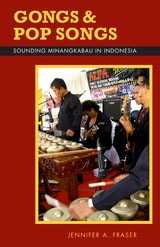
Gongs and Pop Songs
Sounding Minangkabau in IndonesiaJennifer A. Fraser
Ohio University Press, 2015
Scholarship on the musical traditions of Indonesia has long focused on practices from Java and Bali, including famed gamelan traditions, at the expense of the wide diversity of other musical forms within the archipelago. Jennifer A. Fraser counters this tendency by exploring a little-known gong tradition from Sumatra called talempong, long associated with people who identify themselves as Minangkabau.
Grounded in rich ethnographic data and supplemented with online audiovisual materials, Gongs and Pop Songs is the first study to chronicle the history and variety of talempong styles. It reveals the continued vitality of older modes in rural communities in the twenty-first century, while tracing the emergence of newer ones with radically different aesthetic frames and values. Each talempong style discussed incorporates into its repertoire Minangkabau pop or indigenous songs, both of which have strong associations with the place and people. These contemporary developments in talempong have taken place against a shifting political, social, and economic backdrop: the institutionalization of indigenous arts, a failed regional rebellion, and the pressures of a free-market economy.
Fraser adopts a cognitive approach to ethnicity, asking how people understand themselves as Minangkabau through talempong and how different styles of the genre help create and articulate ethnic sentiments—that is, how they help people sound Minangkabau.
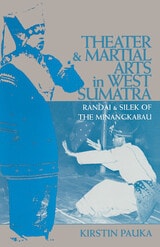
Theater and Martial Arts in West Sumatra
Randai and Silek of the MinangkabauKirstin Pauka
Ohio University Press, 1998
Randai, the popular folk theater tradition of the Minangkabau ethnic group in West Sumatra, has evolved to include influences of martial arts, storytelling, and folk songs. Theater and Martial Arts in West Sumatra describes the origin, development, and cultural background of randai and highlights two recent developments: the emergence of female performers and modern staging techniques.
This book also explores the indigenous martial arts form silek, a vital part of randai today. The strong presence of silek is illustrated in the martial focus of the stories that are told through randai, in its movement repertoire, and even in its costumes and musical accompaniment. As Kirstin Pauka shows, randai, firmly rooted in silek and Minangkabau tradition, is an intriguing mirror of the Minangkabau culture.