Results by title
37 books match the query 'Mind and body'
A Doctor's Dozen
Twelve Strategies for Personal Health and a Culture of WellnessCatherine Florio Pipas
Dartmouth College Press, 2018
Body Thoughts
Andrew J. Strathern
University of Michigan Press, 1996
Climbing
Hil Malatino
Duke University Press, 2026
Coming to Mind
The Soul and Its BodyLenn E. Goodman and D. Gregory Caramenico
University of Chicago Press, 2013
Rooted in some of the richest philosophical and intellectual traditions of Western and Eastern philosophy, psychology, literature, and the arts and the latest findings of cognitive psychology and brain science—Coming to Mind is a subtle manifesto of a new humanism and an outstanding contribution to our understanding of the human person. Drawing on new and classical understandings of perception, consciousness, memory, agency, and creativity, Goodman and Caramenico frame a convincing argument for a dynamic and integrated self capable of language, thought, discovery, caring, and love.
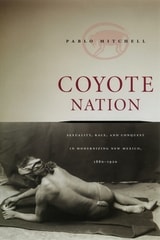
Coyote Nation
Sexuality, Race, and Conquest in Modernizing New Mexico, 1880-1920Pablo Mitchell
University of Chicago Press, 2005
Coyote Nation considers these questions as it explores how New Mexicans evaluated and categorized racial identities through bodily practices. Where ethnic groups were numerous and—in the wake of miscegenation—often difficult to discern, the ways one dressed, bathed, spoke, gestured, or even stood were largely instrumental in conveying one's race. Even such practices as cutting one's hair, shopping, drinking alcohol, or embalming a deceased loved one could inextricably link a person to a very specific racial identity.
A fascinating history of an extraordinarily plural and polyglot region, Coyote Nation will be of value to historians of race and ethnicity in American culture.
Embodied Mind, Meaning, and Reason
How Our Bodies Give Rise to UnderstandingMark Johnson
University of Chicago Press, 2017
A brief account of Johnson’s own intellectual journey, through which we track some of the most important discoveries in the field over the past forty years, sets the stage. Subsequent chapters set out Johnson’s important role in embodied cognition theory, including his cofounding (with George Lakoff) of conceptual metaphor theory and, later, their theory of bodily structures and processes that underlie all meaning, conceptualization, and reasoning. A detailed account of how meaning arises from our physical engagement with our environments provides the basis for a nondualistic, nonreductive view of mind that he sees as most congruous with the latest cognitive science. A concluding section explores the implications of our embodiment for our understanding of knowledge, reason, and truth. The resulting book will be essential for all philosophers dealing with mind, thought, and language.
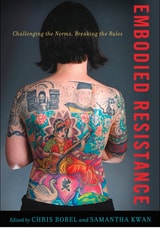
Embodied Resistance
Challenging the Norms, Breaking the RulesChris Bobel
Vanderbilt University Press, 2011
Gender Thinking
Steven G. Smith
Temple University Press, 1992
How can we accept the gender system in view of its ills? Yet, are we really at liberty to abolish gender differences, "when the gender system gives us benchmarks of personal identity and worth along with primary channels in which to pursue the rewards of love?" With this double question, Steven G. Smith introduces his inquiry into the idea of gender and how it is implicated in love, respect, equality, and personal character. Gender Thinking is the first comprehensive philosophical exploration of the concept of gender Asking the question, what is gender?—that is, what sort of thing do we take femininity and masculinity to be?—Smith considers how gender thinking is interwoven with ideas about human nature. He suggests ways in which ideas about race, class, culture age, temperament, and sexual orientation can be understood from clues found in gender thinking. And he calls for a renegotiated procreative partnership between women and men as the key to the redemption of gender.
Gut Feminism
Elizabeth A. Wilson
Duke University Press, 2015
Hawking Incorporated
Stephen Hawking and the Anthropology of the Knowing SubjectHélène Mialet
University of Chicago Press, 2012
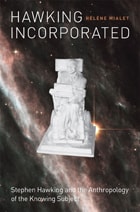
These days, the idea of the cyborg is less the stuff of science fiction and more a reality, as we are all, in one way or another, constantly connected, extended, wired, and dispersed in and through technology. One wonders where the individual, the person, the human, and the body are—or, alternatively, where they stop. These are the kinds of questions Hélène Mialet explores in this fascinating volume, as she focuses on a man who is permanently attached to assemblages of machines, devices, and collectivities of people: Stephen Hawking.
Drawing on an extensive and in-depth series of interviews with Hawking, his assistants and colleagues, physicists, engineers, writers, journalists, archivists, and artists, Mialet reconstructs the human, material, and machine-based networks that enable Hawking to live and work. She reveals how Hawking—who is often portrayed as the most singular, individual, rational, and bodiless of all—is in fact not only incorporated, materialized, and distributed in a complex nexus of machines and human beings like everyone else, but even more so. Each chapter focuses on a description of the functioning and coordination of different elements or media that create his presence, agency, identity, and competencies. Attentive to Hawking’s daily activities, including his lecturing and scientific writing, Mialet’s ethnographic analysis powerfully reassesses the notion of scientific genius and its associations with human singularity. This book will fascinate anyone interested in Stephen Hawking or an extraordinary life in science.
Incarnation, Pain, Theology
A Phenomenology of the BodyEspen Dahl
Northwestern University Press, 2024
While the phenomenological tradition has carefully treated both the objective and the lived body, Espen Dahl explores a dimension of the body that does not fall neatly into either category, suggesting that philosophers should take account of the inner density of our organic, material body. By integrating the dimension of “flesh-and-blood” into the phenomenological notion of the body, Dahl argues that it is possible to reach a more adequate notion of human incarnation. The author explores the body in its subjectivity and its resistance, in activity founded on passivity, and in the ambiguous limits of its skin. The phenomenon of pain is given particular attention in this investigation, since pain is, as Dahl argues, what makes the body inescapably manifest in its otherwise hidden dimensions, including its ambiguity and vulnerability. Related to this focus, Dahl also engages with the Christian theological concerns of incarnation, pain, and hope. Phenomenologists have long drawn on this religious inheritance, particularly in what has been dubbed the French “theological turn.” In a similar manner, Incarnation, Pain, Theology: A Phenomenology of the Body draws on these theological sources while firmly holding to its philosophical commitments in methodological approach and analytic aims.

Inward
Vipassana Meditation and the Embodiment of the SelfMichal Pagis
University of Chicago Press, 2019
Knowing as Moving
Perception, Memory, and PlaceSusan Leigh Foster
Duke University Press, 2025
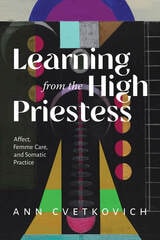
Learning from the High Priestess
Affect, Femme Care, and Somatic PracticeAnn Cvetkovich
Duke University Press, 2026
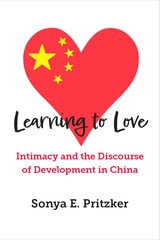
Learning to Love
Intimacy and the Discourse of Development in ChinaSonya E. Pritzker
University of Michigan Press, 2024
Learning to Love offers a range of perspectives on the embodied, relational, affective, and sociopolitical project of “learning to love” at the New Life Center for Holistic Growth, a popular “mind-body-spirit” bookstore and practice space in northeast China, in the early part of the 21st century. This intimate form of self-care exists alongside the fast-moving, growing capitalist society of contemporary China and has emerged as an understandable response to the pressures of Chinese industrialized life in the early 21st century. Opening with an investigation of the complex ways newcomers to the center suffered a sense of being “off,” both in and with the world at multiple scales, Learning to Love then examines how new horizons of possibility are opened as people interact with one another as well as with a range of aesthetic objects at New Life.
Author Sonya Pritzker draws upon the core concepts of scalar intimacy—a participatory, discursive process in which people position themselves in relation to others as well as dominant ideologies, concepts, and ideals—and scalar inquiry—the process through which speakers interrogate these forms, their relationship with them, and their participation in reproducing them. In demonstrating the collaborative interrogation of culture, history, and memory, she examines how these exercises in physical, mental, and spiritual self-care allow participants to grapple with past social harms and forms of injustice, how historical systems of power—including both patriarchal and governance structures—continue in the present, and how they might be transformed in the future. By examining the interactions and relational experiences from New Life, Learning to Love offers a range of novel theoretical interventions into political subjectivity, temporality, and intergenerational trauma/healing.
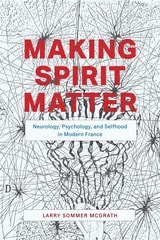
Making Spirit Matter
Neurology, Psychology, and Selfhood in Modern FranceLarry Sommer McGrath
University of Chicago Press, 2020
The connection between mind and brain has been one of the most persistent problems in modern Western thought; even recent advances in neuroscience haven’t been able to explain it satisfactorily. Historian Larry Sommer McGrath’s Making Spirit Matter studies how a particularly productive and influential group of nineteenth- and early twentieth-century French thinkers attempted to solve this puzzle by showing the mutual dependence of spirit and matter. The scientific revolution taking place at this point in history across disciplines, from biology to psychology and neurology, located our mental powers in the brain and offered a radical reformulation of the meaning of society, spirit, and the self. Tracing connections among thinkers such as Henri Bergson, Alfred Fouillée, Jean-Marie Guyau, and others, McGrath plots alternative intellectual movements that revived themes of creativity, time, and experience by applying the very sciences that seemed to undermine metaphysics and religion. Making Spirit Matter lays out the long legacy of this moment in the history of ideas and how it might renew our understanding of the relationship between mind and brain today.
Mind and Philosophers
John Lachs
Vanderbilt University Press, 1987
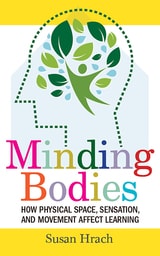
Minding Bodies
How Physical Space, Sensation, and Movement Affect LearningSusan Hrach
West Virginia University Press, 2021
What happens to teaching when you consider the whole body (and not just “brains on sticks”)?
Starting from new research on the body—aptly summarized as “sitting is the new smoking”—Minding Bodies aims to help instructors improve their students’ knowledge and skills through physical movement, attention to the spatial environment, and sensitivity to humans as more than “brains on sticks.” It shifts the focus of adult learning from an exclusively mental effort toward an embodied, sensory-rich experience, offering new strategies to maximize the effectiveness of time spent learning together on campus as well as remotely.
Minding Bodies draws from a wide range of body/mind research in cognitive psychology, kinesiology, and phenomenology to bring a holistic perspective to teaching and learning. The embodied learning approaches described by Susan Hrach are inclusive, low-tech, low-cost strategies that deepen the development of disciplinary knowledge and skills. Campus change-makers will also find recommendations for supporting a transformational mission through an attention to students’ embodied learning experiences.
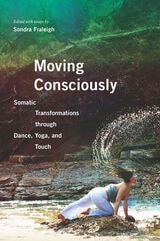
Moving Consciously
Somatic Transformations through Dance, Yoga, and TouchEdited by Sondra Fraleigh
University of Illinois Press, 2015
Neuropolitics
Thinking, Culture, SpeedWilliam E. Connolly
University of Minnesota Press, 2002
On Descartes’ Passive Thought
The Myth of Cartesian DualismJean-Luc Marion
University of Chicago Press, 2018
Descartes has long been associated with mind-body dualism, but Marion argues here that this is a historical misattribution, popularized by Malebranche and popular ever since both within the academy and with the general public. Actually, Marion shows, Descartes held a holistic conception of body and mind. He called it the meum corpus, a passive mode of thinking, which implies far more than just pure mind—rather, it signifies a mind directly connected to the body: the human being that I am. Understood in this new light, the Descartes Marion uncovers through close readings of works such as Passions of the Soul resists prominent criticisms leveled at him by twentieth-century figures like Husserl and Heidegger, and even anticipates the non-dualistic, phenomenological concepts of human being discussed today. This is a momentous book that no serious historian of philosophy will be able to ignore.
On Learning to Heal
or, What Medicine Doesn't KnowEd Cohen
Duke University Press, 2023
Personal Demons
Possession Narratives of Late LiberalismGrace Lavery
Duke University Press, 2026
Physical Expression and the Performing Artist
Moving Beyond the PlateauJerald Schwiebert
University of Michigan Press, 2011
All performers know that "tuning up the body" is necessary to maximize performance. A person's mannerisms, habitual patterns of movement, and posture can block the capacity for expression, often without the performer even noticing. Physical Expression and the Performing Artist offers an organized approach to movement for actors, conductors, dancers, singers, musicians---for performers of any kind.
Capturing the energy of the popular workshops presented by master movement teacher Jerald Schwiebert, the book draws from the wisdom of hatha yoga, tai chi, and Pilates as well as from the teachings of Stanislavski, Structural Integration (Rolfing), Alexander, Feldenkrais, and Laban to provide a fresh and accessible approach to movement. More than 300 anatomical drawings help readers pinpoint specific muscles, joints, and actions as they explore the capacity of the performer's physical instrument, the components of dynamic movement, and the anatomy of expression. The book's many detailed exercises bring awareness of habitual and inefficient movement and introduce the steps necessary for more efficient movement patterns in all parts of the body. This book will prove indispensable in movement courses and as a resource guide for professionals seeking to take their performances to the next level.
Plotinus ENNEAD IV.8
On the Descent of the Soul into Bodies: Translation, with an Introduction, and CommentaryBarrie Fleet
Parmenides Publishing, 2012
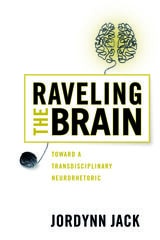
Raveling the Brain
Toward a Transdisciplinary NeurorhetoricJordynn Jack
The Ohio State University Press, 2019
Jack first looks at the problem of “neurohype”—exaggerated or oversimplified claims that essentialize brains and make them “uncritically real”—questioning some of the fundamental assumptions about the brain that experimental protocols and psychological concepts rely on. Then, through examples of research on sex and gender, political orientation, and affect, Jack demonstrates how a rhetorical-material approach can help to generate alternative approaches to studying the brain that might mitigate the problem of neurohype. By raveling out the roots of neurohype and raveling back its use through time, Raveling the Brain shows how rhetoric and neuroscience might be raveled together, or intertwined, to create a stronger transdisciplinary approach that might enrich our understanding of those issues of interest to neuroscientists and humanists alike.
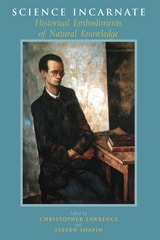
Science Incarnate
Historical Embodiments of Natural KnowledgeEdited by Christopher Lawrence and Steven Shapin
University of Chicago Press, 1998
Bringing body and knowledge into such intimate contact is occasionally seen as funny, sometimes as enraging, and more often just as pointless. Vividly written and well illustrated, Science Incarnate offers concrete historical answers to such skeptical questions about the relationships between body, mind, and knowledge.
Focusing on the seventeenth century to the present, Science Incarnate explores how intellectuals sought to establish the value and authority of their ideas through public displays of their private ways of life. Patterns of eating, sleeping, exercising, being ill, and having (or avoiding) sex, as well as the marks of gender and bodily form, were proof of the presence or absence of intellectual virtue, integrity, skill, and authority. Intellectuals examined in detail include René Descartes, Isaac Newton, Charles Darwin, and Ada Lovelace.
Science Incarnate is at once very funny and deeply serious, addressing issues of crucial importance to present-day discussions about the nature of knowledge and how it is produced. It incorporates much that will interest cultural and social historians, historians of science and medicine, philosophers, sociologists, and anthropologists.
Sentient Flesh
Thinking in Disorder, Poiesis in BlackR. A. Judy
Duke University Press, 2020
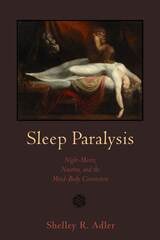
Sleep Paralysis
Night-mares, Nocebos, and the Mind-Body ConnectionAdler, Shelley R
Rutgers University Press, 2011
Shelley R. Adler's fifteen years of field and archival research focus on the ways in which night-mare attacks have been experienced and interpreted throughout history and across cultures and how, in a unique example of the effect of nocebo (placebo's evil twin), the combination of meaning and biology may result in sudden nocturnal death.
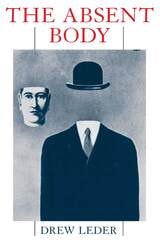
The Absent Body
Drew Leder
University of Chicago Press, 1990
In part 1, Leder explores a wide range of bodily functions with an eye to structures of concealment and alienation. He discusses not only perception and movement, skills and tools, but a variety of "bodies" that philosophers tend to overlook: the inner body with its anonymous rhythms; the sleeping body into which we nightly lapse; the prenatal body from which we first came to be. Leder thereby seeks to challenge "primacy of perception." In part 2, Leder shows how this phenomenology allows us to rethink traditional concepts of mind and body. Leder argues that Cartesian dualism exhibits an abiding power because it draws upon life-world experiences. Descartes' corpus is filled with disruptive bodies which can only be subdued by exercising "disembodied" reason. Leder explores the origins of this notion of reason as disembodied, focusing upon the hidden corporeality of language and thought. In a final chapter, Leder then proposes a new ethic of embodiment to carry us beyond Cartesianism.
This original, important, and accessible work uses examples from the author's medical training throughout. It will interest all those concerned with phenomenology, the philosophy of mind, or the Cartesian tradition; those working in the health care professions; and all those fascinated by the human body.
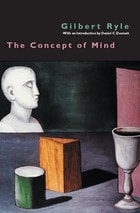
The Concept of Mind
Gilbert Ryle
University of Chicago Press, 2003
The Human Place in the Cosmos
Max Scheler; Translated from the German by Manfred S. Frings, Introduction by Eugene Kely
Northwestern University Press, 2009
The Roots Of Thinking
Maxine Sheets-Johnstone
Temple University Press, 1990
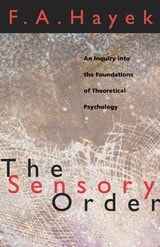
The Sensory Order
An Inquiry into the Foundations of Theoretical PsychologyF. A. Hayek
University of Chicago Press, 1952
"A most encouraging example of a sustained attempt to bring together information, inference, and hypothesis in the several fields of biology, psychology, and philosophy."—Quarterly Review of Biology
F. A. Hayek (1899-1992), recipient of the Medal of Freedom in 1991 and co-winner of the Nobel Memorial Prize in Economics in 1974, taught at the University of London, the University of Chicago, and the University of Freiburg.
The Tragedy and Comedy of Life
Plato's PhilebusPlato
University of Chicago Press, 1993
In The Tragedy and Comedy of Life, Seth Benardete focuses on the idea of the good in what is widely regarded as one of Plato's most challenging and complex dialogues, the Philebus. Traditionally the Philebus is interpreted as affirming the doctrine that the good resides in thought and mind rather than in pleasure or the body. Benardete challenges this view, arguing that Socrates vindicates the life of the mind over the life of pleasure not by separating the two and advocating a strict asceticism, but by mixing pleasure and pain with mind in such a way that the philosophic life emerges as the only possible human life.
Benardete combines a probing and challenging commentary that subtly mirrors and illuminates the complexities of this dialogue with the finest English translation of the Philebus yet available. The result is a work that will be of great value to classicists, philosophers, and political theorists alike.
Variations on the Body
Michel Serres
University of Minnesota Press, 2015
World-renowned philosopher, Michel Serres writes a text in praise of the body and movement, in praise of teachers of physical education, coaches, mountain guides, athletes, dancers, mimes, clowns, artisans, and artists. This work describes the variations, the admirable metamorphoses that the body can accomplish. While animals lack such a variety of gestures, postures, and movements, the fluidity of the human body mimics the leisure of living beings and things; what’s more, it creates signs. Already here, within its movements and metamorphoses, the mind is born. The five senses are not the only source of knowledge: it emerges, in large part, from the imitations the plasticity of the body allows. In it, with it, by it knowledge begins.
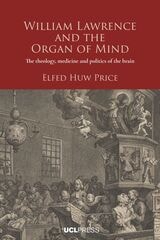
William Lawrence and the Organ of Mind
The Theology, Medicine and Politics of the BrainElfed Huw Price
University College London, 2025
Elfed Huw Price studies the radical history behind the idea that thought and consciousness are rooted in the brain, tracing its emergence in early nineteenth-century Britain. Centered on the controversy surrounding Lawrence’s Lectures on Physiology, Zoology, and the Natural History of Man, this book reveals how his arguments on the sentient brain challenged both medical tradition and religious orthodoxy, provoking backlash from the establishment.
Drawing on archival sources including unpublished material from Bethlem Hospital, Price situates Lawrence’s work within the rise of Christian mortalist thought and the broader shift toward Victorian naturalism. Despite Lawrence’s silencing, his ideas endured, shaping a transformation that redefined human exceptionality through biology rather than theology.
Bridging science, medicine, philosophy, and religion, William Lawrence and the Organ of Mind illuminates a pivotal yet overlooked moment in the history of mind and brain studies, offering fresh insights into the intellectual struggles that helped reshape modern thought.