Results by title

11 books match the query 'Mineralogy'

cover of Colorado Gem Trails: And Mineral Guide

Colorado Gem Trails

And Mineral Guide

Richard M. Pearl

Ohio University Press, 1972

This famous book takes you on an extensive gem and mineral collecting tour of Colorado, revealing the interesting places where Nature has stored her treasures.

Detailed directions are given for reaching the noted as well as the little-known localities in all sections of this great mineral-producing state. Included are numerous mileage logs never before published, and many sketch maps made especially for this book. A unique system arranges the localities along segments of the main highways.

Latest information is given on local travel and collecting conditions and land ownership, so much desired by collectors who want to make the best use of their time. Gem and mineral societies that welcome visitors — museums that display outstanding collections — are all described. Official maps and references to the literature are listed.
[more]
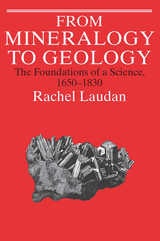
cover of From Mineralogy to Geology: The Foundations of a Science, 1650-1830

From Mineralogy to Geology

The Foundations of a Science, 1650-1830

Rachel Laudan

University of Chicago Press, 1987
"A fine treatment of this critical time in geology's history. Although it goes against our standard histories of the field, Laudan defends her views convincingly. Her style is direct, with carefully reasoned personal opinions and interpretations clearly defined."—Jere H. Lipps, The Scientist
[more]
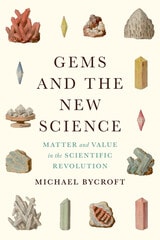
cover of Gems and the New Science: Matter and Value in the Scientific Revolution

Gems and the New Science

Matter and Value in the Scientific Revolution

Michael Bycroft

University of Chicago Press, 2026

The first book-length history of gems in early modern science offers a thought-provoking new take on the Scientific Revolution.
 
In Gems and the New Science, Michael Bycroft argues that gems were connected to major developments in the “new science” between the sixteenth and nineteenth centuries. As he explains, precious and semiprecious stones were at the center of dramatic shifts in natural knowledge in early modern Europe. They were used to investigate luminescence, electricity, combustion, chemical composition, and more. They were collected by naturalists; measured by mathematicians; and rubbed, burned, and dissolved by experimental philosophers. This led to the demise of the traditional way of classifying gems—which grouped them by transparency, color, and locality—and the turn to density, refraction, chemistry, and crystallography as more reliable guides for sorting these substances.
 
The science of gems shows that material evaluation was as important as material production in the history of science. It also shows the value of seeing science as the product of the interaction between different material worlds. The book begins by bringing these insights to bear on five themes of the Scientific Revolution. Each of the subsequent chapters deals with a major episode in early modern science, from the expansion of natural history in the sixteenth century to the emergence of applied science early in the nineteenth century. This important work is not only the first book-length history of the science of gems but also a fresh interpretation of the Scientific Revolution and an argument for using a new form of materialism to understand the evolution of science.
[more]
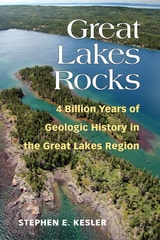
cover of Great Lakes Rocks: 4 Billion Years of Geologic History in the Great Lakes Region

Great Lakes Rocks

4 Billion Years of Geologic History in the Great Lakes Region

Stephen E. Kesler

University of Michigan Press, 2019

The geologic story of the Great Lakes region is one of the most remarkable of any place on Earth. Great Lakes Rocks takes readers on this fascinating journey through geologic history, beginning with an investigation of the surface features—the hills and valleys, waterfalls and caves, and the Great Lakes themselves—that we encounter on a daily basis. From there the book digs deeper into the past, and readers learn about the amazing techniques geologists have used to reconstruct the events that shaped this region millions and even billions of years before humans set foot on Earth. Throughout, the book gives special attention to the link between the region’s geology and its modern history, including the impacts of geology on settlement patterns as well as the development of industries and the present-day economy. Other discussed topics include natural hazards that are geologic in nature, including earthquakes, floods, landslides, and coastal erosion, as well as information on rocks, minerals, and ancient life seen in fossils. Written for nonspecialist readers, this book provides a detailed but easy-to-follow introduction to the geology of the Great Lakes region, and it is an ideal fit for introductory geology courses, including those aimed at nonscience majors.
[more]
cover of Iowa's Minerals: Their Occurance, Origins, Industries and Lore

Iowa's Minerals

Their Occurance, Origins, Industries and Lore

Paul Garvin

University of Iowa Press, 1998
[more]
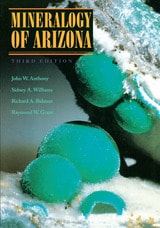
cover of Mineralogy of Arizona

Mineralogy of Arizona

John W. Anthony, Sidney A. Williams, Richard A. Bideaux, and Raymond W. Grant

University of Arizona Press, 1995

Long awaited by professional geologists and amateur rockhounds alike, the new Mineralogy of Arizona is a completely revised and greatly expanded edition of a book first published in 1977 and updated in 1982. New material covers 232 minerals discovered in Arizona since the first edition, including 28 first identified in the state. Also new is a section on the history of Arizona mining and mineralogy, which provides context for understanding the significance of mineral discoveries and production since prehistoric times.

For nearly 20 years, Mineralogy of Arizona has been respected as the definitive reference on Arizona minerals. Now completely revised and greatly expanded with breathtaking new color photographs, the third edition covers 232 minerals discovered in Arizona since the first edition, including 28 first identified in the state.
[more]
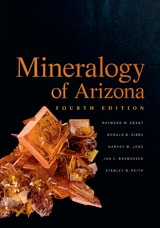
cover of Mineralogy of Arizona, Fourth Edition

Mineralogy of Arizona, Fourth Edition

Raymond W. Grant, Ronald B. Gibbs, Harvey W. Jong, Jan C. Rasmussen, and Stanley B. Keith

University of Arizona Press, 2022

Completely revised and expanded, this fourth edition covers the 986 minerals found in Arizona, showcased with breathtaking new color photographs throughout the book. The new edition includes more than 200 new species not reported in the third edition and previously unknown in Arizona.

Chapters in this fourth edition of Mineralogy of Arizona cover gemstones and lapidary materials, fluorescent minerals, and an impressive catalog of mineral species. The authors also discuss mineral districts, including information about the geology, mineralogy, and age of mineral occurrences throughout the state. The book includes detailed maps of each county, showing the boundaries and characteristics of the mineral districts present in the state.

Arizona’s rich mineral history is well illustrated by the more than 300 color photographs of minerals, gemstones, and fluorescent minerals that help the reader identify and understand the rich and diverse mineralogy of Arizona. Anyone interested in the mineralogy and geology of the state will find this the most up-to-date compilation of the minerals known to occur in Arizona.

[more]
cover of Minerals of Nevada

Minerals of Nevada

Stephen B. Castor

University of Nevada Press, 2012

Nevada has an extraordinary diversity of minerals, some of them unique to the state and some the focus of human exploitation for millennia. Minerals of Nevada is the first synoptic catalog of Nevada minerals, listing every mineral found in the state along with the places where they occur. The book includes the geologic history of the state, the history of mining in Nevada, descriptions of significant mineral deposits and mining districts, maps, and an album of striking color photographs of rare and important minerals.
[more]
cover of Nonfuel Minerals: Foreign Dependence and National Security

Nonfuel Minerals

Foreign Dependence and National Security

Raymond F. Mikesell

University of Michigan Press, 1987
In an uncertain international economic environment, the United States is increasingly dependent upon foreign suppliers for many things, including nonfuel minerals. This book deals with the major problems and policy issues involved with these minerals. The major problems concern the medium- and long-term availability of world supplies, the competitive structure of nonfuel mineral industries, and the location of world production and consumption. Special attention is given to the production of nonfuel minerals in developing countries and the role of foreign investment in Third World mineral industries. The major policy include reducing U.S. vulnerability to disruption of imports of nonfuel minerals; subsidizing, or protecting against imports, domestic producers of nonfuel minerals; conflicts between environmentalists and the mining industry; and international loans to Third World metal-producing countries. While the treatment of conflicting policy positions is objective, the author comes out on the side of unrestricted competition in world markets, including elimination of domestic subsidies to import barriers, the use of economic stockpiles to reduce vulnerability to import disruption, and maintenance of strict environmental pollution standards. The author is optimistic about the long-run outlook for mineral supplies necessary to meet world requirements for economic growth. United States domestic mineral independence may be unnecessary in terms of national security and too costly to consumers and the environment.
[more]
cover of Red Metal: The Calumet and Hecla Story

Red Metal

The Calumet and Hecla Story

C. Harry Benedict

University of Michigan Press, 1952
Red Metal is a different kind of book on American industrial history. It’s a dramatic story linked to the present by the energies and fortunes of the men who move in colorful realism through its pages; it’s a story of fortunes and misfortunes, of foresight and mistakes, of successes and failures of American enterprise relating to the largest of the copper mines of the Upper Peninsula of Michigan. The story traces the development of one of the oldest and richest copper companies in America. From the pathless wilds in which the great Calumet conglomerate ore body was first discovered came the achievement of many years of world leadership in the copper industry and the present aspects of a company with manufacturing plants that fabricate products of copper, copper-base alloys, aluminum, and steel.
[more]
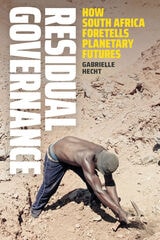
cover of Residual Governance: How South Africa Foretells Planetary Futures

Residual Governance

How South Africa Foretells Planetary Futures

Gabrielle Hecht

Duke University Press, 2023

In Residual Governance, Gabrielle Hecht dives into the wastes of gold and uranium mining in South Africa to explore how communities, experts, and artists fight for infrastructural and environmental justice. Hecht outlines how mining in South Africa is a prime example of what she theorizes as residual governance—the governance of waste and discard, governance that is purposefully inefficient, and governance that treats people and places as waste and wastelands. She centers the voices of people who resist residual governance and the harms of toxic mining waste to highlight how mining’s centrality to South African history reveals the links between race, capitalism, the state, and the environment. In this way, Hecht shows how the history of mining in South Africa and the resistance to residual governance and environmental degradation is a planetary story: the underlying logic of residual governance lies at the heart of contemporary global racial capitalism and is a major accelerant of the Anthropocene.
[more]