Results by title
8 books match the query 'Ming dynasty, 1368-1644'
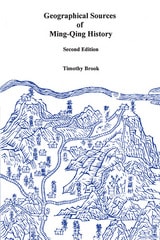
Geographical Sources of Ming-Qing History
Timothy Brook
University of Michigan Press, 2002
First published in 1988 in response to the growing need for documentation concerning local history in the late imperial period, Geographical Sources provides bibliographical data regarding two distinct genres: route books, and topographical and institutional gazetteers. In its second edition, this essential research tool has been completely revised and expanded with close to one hundred new entries, which provide complete coverage of these important sources for research in Chinese social, cultural, and religious history. The separate introductions to the two genres introduce the student to the history and uses of these materials. In addition to providing bibliographic data and noting variant editions, each entry provides locations where a work or its later editions can be found, whether in North America, Europe, China, or Japan.
[more]
History and Legend
Ideas and Images in the Ming Historical NovelsShelley Hsueh-lun Chang
University of Michigan Press, 1990
History, according to the Confucian tradition, was a “comprehensive mirror” for aid in government: it was part of the great Way (ta-tao), the tradition of the governing elite. Fiction, which was originally referred to as “the talk of the streets,” belonged to the small Way (hsia-tao), the tradition of the governed masses. In History and Legend: Ideas and Images in the Ming Historical Novels, Shelly Hsueh-Iun Chang maintains that the historical novels blended legends with historical fact, making them a medium of interplay between the elite and popular traditions.
This combination of influences in the historical novels was especially significant during the Ming dynasty because of the rise of both urban culture of great refinement and diversity and a popularizing vernacular designed to promote learning among all people. These two exuberant movements came together in the historical novel to propagate the difficult and complex Official Histories of the governing elite, as well as to adapt unofficial histories and fictitious narratives, thus opening the way to the influence of the common people in literature.
This book is the first study of the novels from a historical standpoint. Combining traditional historical research with new source material of the historical novels and with analytical strategies, Chang creates a three-dimensional picture of the “historical world” of the Ming people. Chang compares issues of the dynastic cycle and political legitimacy of a regime, human ambitions and immortality, ethics in the relations between historical personages and legendary heroes, ideals of government and grandiose imperial institutions, and supernatural power and the justice of history that emerged from the historical novels with those in the Official Histories and Confucian canon.
[more]
Mexican Americans and Education
El saber es poderEstela Godinez Ballón
University of Arizona Press, 2015
As the Mexican American student population in U.S. public schools climbs to over 8 million, the establishment of policies that promote equity and respect have never been more crucial. In Mexican Americans and Education, Estela Godinez Ballón provides an overview of the relationship between Mexican Americans and all levels of U.S. public schooling.
Mexican Americans and Education begins with a brief overview of historical educational conditions that have impacted the experiences and opportunities of Mexican American students, and moves into an examination of major contemporary institutional barriers to academic success, including segregation, high-stakes testing, and curriculum tracking. Ballón also explores the status of Mexican American students in higher education and introduces theories and pedagogies that aim to understand and improve school conditions. Through her extensive examination of the major issues impacting Mexican American students, Ballón provides a broad introduction to an increasingly relevant topic.
Ballón uses understandable and accessible language to examine institutional and ideological factors that have negatively impacted Mexican Americans’ public school experiences, while also focusing on their strengths and possibilities for future action. This unique overview serves as a foundation for both education and Chicana/o studies courses, as well as in teacher and professional development.
[more]
The Courtesan's Memory, Voice, and Late Ming Drama
Peng Xu
University of Michigan Press, 2025
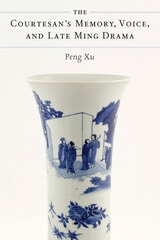
Peng Xu’s The Courtesan’s Memory, Voice, and Late Ming Drama argues that courtesans of the era played an active role in the theater and their impact manifested in Chinese literary history, albeit concealed or erased. In the late Ming dynasty (1368–1644), theater was dominated by male performers with professional actresses largely absent from the stage, unlike in the Yuan dynasty (1271–1368), where women performed without restriction in theater troupes. Despite the prevailing assumption that women played no part in the theatrical movement, The Courtesan’s Memory, Voice, and Late Ming Drama illuminates how courtesans, as serious theater artists and playwrights, left a significant mark on the male-dominated dramatic and literary landscapes.
This study profoundly remaps the textbook narratives of gender bias, challenges modern prejudices prevalent in the literary history of Chinese drama, and reveals how theatrical conditions and writing styles shifted to accommodate courtesan performances. Utilizing a wide range of sources such as scripts, city guides, biographies, diaries, letters, wood-block illustrations, and paintings, this study distinguishes itself from earlier studies of Chinese courtesans by not thematizing courtesans for their allegorical values, but rather pinpointing their agency in shaping the features of Chinese theater and recognizing courtesans as a source of creativity and development in the medium. Xu’s focus on courtesan performance culture allows for fresh readings of canonical Chinese plays, opening up new ways of understanding the history of Chinese drama written by women, thus deviating from standard historiography based solely on the writings of men.
This study profoundly remaps the textbook narratives of gender bias, challenges modern prejudices prevalent in the literary history of Chinese drama, and reveals how theatrical conditions and writing styles shifted to accommodate courtesan performances. Utilizing a wide range of sources such as scripts, city guides, biographies, diaries, letters, wood-block illustrations, and paintings, this study distinguishes itself from earlier studies of Chinese courtesans by not thematizing courtesans for their allegorical values, but rather pinpointing their agency in shaping the features of Chinese theater and recognizing courtesans as a source of creativity and development in the medium. Xu’s focus on courtesan performance culture allows for fresh readings of canonical Chinese plays, opening up new ways of understanding the history of Chinese drama written by women, thus deviating from standard historiography based solely on the writings of men.
[more]
The Ming Dynasty
Its Origins and Evolving InstitutionsCharles O. Hucker
University of Michigan Press, 1978
In the latter half of the fourteenth century, at one end of the Eurasian continent, the stage was not yet set for the emergence of modern nation-states. At the other end, the Chinese drove out their Mongol overlords, inaugurated a new native dynasty called Ming (1368–1644), and reasserted the mastery of their national destiny. It was a dramatic era of change, the full significance of which can only be perceived retrospectively.
With the establishment of the Ming dynasty, a major historical tension rose into prominence between more absolutist and less absolutist modes of rulership. This produced a distinctive style of rule that modern students have come to call Ming despotism. It proved a capriciously absolutist pattern for Chinese government into our own time. [1, 2 ,3]
[more]
The Selden Map of China
A New Understanding of the Ming DynastyHongping Annie Nie
Bodleian Library Publishing, 2019
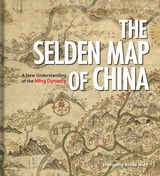
Dating from the seventeenth century at the height of the Ming Dynasty, the Selden Map of China reveals a country very different from popular conceptions of the time, looking not inward to the Asian landmass but outward to the sea. Discovered in the stacks of the Bodleian Library, this beautifully decorative map of China is, in fact, a seafaring chart showing Ming Dynasty trade routes. It is the earliest surviving example of Chinese merchant cartography and is evidence that Ming China was outward-looking, capitalistic, and vibrant.
Exploring the commercial aims of the Ming Dynasty, the port city of Quanzhou and its connections with the voyages of the early traveler Zheng He, this book describes the historical background of the era in which the map was used. It also includes an analysis of the skills and techniques involved in Chinese map-making and the significance of the compass bearings, scale, and ratios found on the map, all of which combine to represent a breakthrough in cartographic techniques.
The enthralling story revealed by this extraordinary artifact sheds light on the long history of China’s relationship with the sea and with the wider world.
[more]
Two Studies on Ming History
Charles O. Hucker
University of Michigan Press, 1971
In the first study of Two Studies on Ming History, Charles O. Hucker presents an account of a military campaign that provides insight into the nature of civil officials’ authority, decision-making, and relationship with the Ming court. In the spring and summer of 1556, a Chinese renegade named Hsü Hai led an invading group of Japanese and Chinese soldiers on a plundering foray through the northeastern sector of Chekiang province. Opposing them was a military establishment that for years past had been battered by coastal raiders, now under the control of an ambitious and clever official named Hu Tsung-hsien. The campaign was not one of the most consequential in China’s military history, even during the Ming dynasty (1368–1644). But it was famous and well reported in its time, and it illustrates some of the unusual ways in which the Chinese of the imperial age coped with the often unusual military problems they faced.
In the second part of Two Studies, Hucker presents a translation of K’ai-tu ch’uan-hsin, a popular narrative of a spontaneous demonstration in which literati and commoners alike rose up to defend an austere and incorruptible adherent to Confucian morality who had been doomed to die because of his defiance of the ruthless and heterodox clique that had usurped imperial power. In 1626, Chinese political morality was at one of its lowest ebbs. On the throne at Peking was an incompetent twenty-one-year-old emperor who was much too occupied with puttering at carpentry to pay attention to the government. Into the vacuum stepped Wei Chung-hsien, the favorite of the emperor’s governess. Wei used brutal terror to make himself undisputed master of the vast bureaucratic mechanism that administered China. One of Wei’s many victims was Chou Shun-ch’ang, a member of the official class who was said to have hated evil as a personal enemy. Chou became critical of Wei, an order was put out for Chou’s arrest, and a popular uprising occurred in protest.
[more]
Writing Pirates
Vernacular Fiction and Oceans in Late Ming ChinaYuanfei Wang
University of Michigan Press, 2021
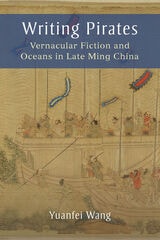
In Writing Pirates, Yuanfei Wang connects Chinese literary production to emerging discourses of pirates and the sea. In the late Ming dynasty, so-called “Japanese pirates” raided southeast coastal China. Hideyoshi invaded Korea. Europeans sailed for overseas territories, and Chinese maritime merchants and emigrants founded diaspora communities in Southeast Asia. Travel writings, histories, and fiction of the period jointly narrate pirates and China’s Orient in maritime Asia. Wang shows that the late Ming discourses of pirates and the sea were fluid, ambivalent, and dialogical; they simultaneously entailed imperialistic and personal narratives of the “other”: foreigners, renegades, migrants, and marginalized authors. At the center of the discourses, early modern concepts of empire, race, and authenticity were intensively negotiated. Connecting late Ming literature to the global maritime world, Writing Pirates expands current discussions of Chinese diaspora and debates on Sinophone language and identity.
[more]