Results by title
13 books match the query 'Mining camps'
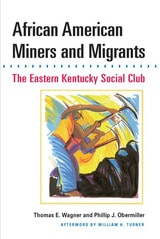
African American Miners and Migrants
THE EASTERN KENTUCKY SOCIAL CLUBThomas E. Wagner and Phillip J. Obermiller; Afterword by William H. Turner
University of Illinois Press, 2004
Bound together by segregation, the inherent dangers of mining, and coal company paternalism, it might seem that black miners and mountaineers would be eager to forget their past. Instead, members of the EKSC have chosen to celebrate their Harlan County roots. African American Miners and Migrants uses historical and archival research and extensive personal interviews to explore their reasons and the ties that still bind them to eastern Kentucky. The book also examines life in the model coal towns of Benham and Lynch in the context of Progressive Era policies, the practice of welfare capitalism, and the contemporary national trend of building corporate towns and planned communities.
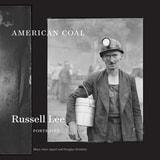
American Coal
Russell Lee PortraitsMary Jane Appel and Douglas Brinkley
University of Texas Press, 2024
More than 100 powerful images by noted photographer Russell Lee that document the working conditions and lives of coal mining communities in the postwar United States; publication coincides with an exhibition at the National Archives in Washington, DC.
In 1946 the Truman administration made a promise to striking coal miners: as part of a deal to resume work, the government would sponsor a nationwide survey of health and labor conditions in mining camps. One instrumental member of the survey team was photographer Russell Lee. Lee had made his name during the Depression, when, alongside Dorothea Lange and Walker Evans, he used his camera to document agrarian life for the Farm Security Administration (FSA). Now he trained his lens on miners and their families to show their difficult circumstances despite their essential contributions to the nation's first wave of postwar growth.
American Coal draws from the thousands of photographs that Lee made for the survey—also on view in the US National Archives and Records Administration’s exhibition Power & Light—and includes his original, detailed captions as well as an essay by biographer Mary Jane Appel and historian Douglas Brinkley. They place his work in context and illuminate how Lee helped win improved conditions for his subjects through vivid images that captured an array of miners and their communities at work and at play, at church and in school, in moments of joy and struggle, ultimately revealing to their fellow Americans the humanity and resilience of these underrecognized workers.
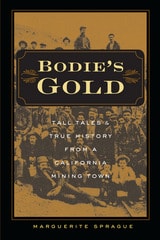
Bodie’s Gold
Tall Tales and True History from a California Mining TownMarguerite Sprague
University of Nevada Press, 2011

Guide to the Colorado Ghost Towns and Mining Camps
And Mining CampsPerry Eberhart
Ohio University Press, 1969
"This is not a history book. Rather it is a directory of towns, and compilation of known information about those towns. In undertaking the stud, I was amazed at the amount of legend and contradictory information Colorado history has collected in just one hundred years. Who was it that said: 'History is the perpetuation of saleable gossip'? (Perhaps, nobody has said it yet. In that case, it's mine, all mine.)
"As of this moment, this is the most complete compilation of Colorado mining towns—ghost or going—available.
"For the fourth edition, over 100 towns have been added. Also, I have included a new chapter (XXVI. Addendum, page 466), the first couple of pages of which can well be read as a second Preface to the book."
— Perry Eberhart, Preface, 1959 and 1969
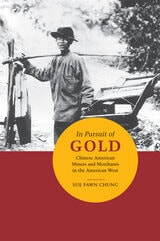
In Pursuit of Gold
Chinese American Miners and Merchants in the American WestSue Fawn Chung
University of Illinois Press, 2011
Both a history of an overlooked community and a well-rounded reassessment of prevailing assumptions about Chinese miners in the American West, In Pursuit of Gold brings to life in rich detail the world of turn-of-the-century mining towns in the Northwest. Sue Fawn Chung meticulously recreates the lives of Chinese immigrants, miners, merchants, and others who populated these towns and interacted amicably with their white and Native American neighbors, defying the common perception of nineteenth-century Chinese communities as insular enclaves subject to increasing prejudice and violence.
While most research has focused on Chinese miners in California, this book is the first extensive study of Chinese experiences in the towns of John Day in Oregon and Tuscarora, Island Mountain, and Gold Creek in Nevada. Chung illustrates the relationships between miners and merchants within the communities and in the larger context of immigration, arguing that the leaders of the Chinese and non-Chinese communities worked together to create economic interdependence and to short-circuit many of the hostilities and tensions that plagued other mining towns.
Peppered with fascinating details about these communities from the intricacies of Chinese gambling games to the techniques of hydraulic mining, In Pursuit of Gold draws on a wealth of historical materials, including immigration records, census manuscripts, legal documents, newspapers, memoirs, and manuscript collections. Chung supplements this historical research with invaluable first-hand observations of artifacts that she experienced in archaeological digs and restoration efforts at several of the sites of the former booming mining towns.
In clear, analytical prose, Chung expertly characterizes the movement of Chinese miners into Oregon and Nevada, the heyday of their mining efforts in the region, and the decline of the communities due to changes in the mining industry. Highlighting the positive experiences and friendships many of the immigrants had in these relatively isolated mining communities, In Pursuit of Gold also suggests comparisons with the Chinese diaspora in other locations such as British Columbia and South Africa.
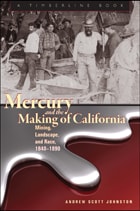
Mercury and the Making of California
Mining, Landscape, and Race, 1840–1890Andrew Scott Johnston
University Press of Colorado, 2015
Gold and silver could not be refined without mercury; therefore, its production and use were vital to securing power and wealth in the West. The first industrialized mining in California, mercury mining had its own particular organization, structure, and built environments. These were formed within the Spanish Empire, subsequently transformed by British imperial ambitions, and eventually manipulated by American bankers and investors. In California, mercury mining also depended on a workforce differentiated by race and ethnicity. The landscapes of work and camp and the relations among the many groups involved in the industry—Mexicans, Chileans, Spanish, English, Irish, Cornish, American, and Chinese—form a crucial chapter in the complex history of race and ethnicity in the American West.
This pioneering study explicates the mutual structuring of the built environments of the mercury-mining industry and the emergence of California’s ethnic communities. Combining rich documentary sources with a close examination of the existing physical landscape, Johnston explores both the detail of everyday work and life in the mines and the larger economic and social structures in which mercury mining was enmeshed, revealing the significance of mercury mining for Western history.
Montana Pay Dirt
Guide To Mining Camps Of Treasure StateMuriel Sibell Wolle
Ohio University Press, 1963
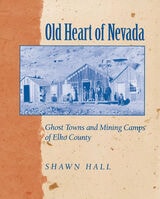
Old Heart Of Nevada
Ghost Towns And Mining Camps Of Elko CountyShawn Hall
University of Nevada Press, 1998
Elko County, in the old heart of Nevada, is rich in historic sites, many of them hitherto uncharted and some verging on disappearing. For the first time, historian Shawn Hall identifies and locates the ghost towns and old mining camps of Elko County and recounts their colorful histories. Following a guidebook format, Hall divides the county into five easily accessible regions, then lists the historic sites within each region and provides directions to reach them. He offers a brief history of each site as well as a description of its extant structures and their present condition. The result is a lively compilation of local history and mining and ranching lore that records the dramatic past of Nevada’s northeast corner, its pioneers and prospectors, its towns and mines, its outlaws, ranchers, merchants, mining concerns, and civic leaders. The book offers never-before available information about the old heart of Nevada and the people who settled there. It will be of enduring value to tourists and weekend explorers, historic preservationists, and all those interested in the history and artifacts of this region.
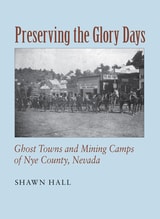
Preserving The Glory Days
Ghost Towns And Mining Camps Of Nye County, NevadaShawn Hall
University of Nevada Press, 1999
Nye County is Nevada’s largest and least populated county, but it is also the site of many of the state’s most colorful ghost towns and mining camps. The county’s economy throughout its history has been largely based on its mines--first, exploiting veins of gold and silver, and more recently deposits of raw materials for modern industry, such as molybdenum and barite. It was here that famous boomtowns like Tonopah and Rhyolite sprang up after the discovery of nearby lodes brought in rushes of prospectors and the merchants who supported them. But the county includes many smaller, shorter-lived camps and numerous abandoned stagecoach and railroad stops associated with defunct mining operations.This book offers a lively, informative record of Nevada’s isolated interior. Hall first published a guide to Nye County’s ghost towns in 1981. Since then, he has continued his research into the county’s past and has uncovered much new information and corrected some errors. To prepare this revised and greatly expanded edition, he revisited all 175 sites recorded earlier and has added more than 20 previously unlisted sites.
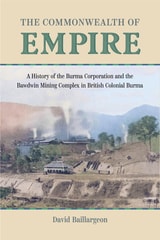
The Commonwealth of Empire
A History of the Burma Corporation and the Bawdwin Mining Complex in British Colonial BurmaDavid Baillargeon
University of Nevada Press, 2026
The Commonwealth of Empire explores the overlooked history of the Bawdwin mining complex in Burma's Northern Shan States, focusing on its development during the British colonial period. Drawing on global and imperial history, author David Baillargeon showcases how industrial-scale mining transformed Bawdwin into a hub of commerce and migration, especially under the Burma Corporation in the early twentieth century. By the 1920s, Bawdwin had become one of the largest industrial sites in the world, staffed by a multinational workforce from South, Southeast, and East Asia, and managed by foreign engineers from the United States and Australia. Known as the “Commonwealth of Namtu” for its diverse workforce, the site exemplifies how colonial and corporate interests overlapped, and how such commercial spaces were shaped, contested, and reimagined locally. In telling the stories of the diverse agents and workers who developed the site and made it their home, The Commonwealth of Empire uncovers how and why a space like Bawdwin has been forgotten over time, interrogating its marginalization in national and regional histories and linking such forgetting to the nature of Britain's colonial project.
Baillargeon argues that recovering such forgotten histories requires moving beyond nation-based frameworks and embracing methods that illuminate the global forces behind colonial enterprises. In doing so, the book offers opportunities to decolonize histories and spaces of occupation that fit uneasily into existing frameworks of empire and nation.
The Main Event
Boxing in Nevada from the Mining Camps to the Las Vegas StripRichard O. Davies
University of Nevada Press, 2014
As the twentieth century dawned, bare-knuckle prizefighting was transforming into the popular sport of boxing, yet simultaneously it was banned as immoral in many locales. Nevada was the first state to legalize it, in 1897, solely to stage the Corbett-Fitzsimmons world heavyweight championship in Carson City. Davies shows that the history of boxing in Nevada is integral to the growth of the sport in America. Promoters such as Tex Rickard brought in fighters like Jack Dempsey to the mining towns of Goldfield and Tonopah and presented the Johnson-Jeffries “Fight of the Century” in Reno in 1910. Prizefights sold tickets, hotel rooms, drinks, meals, and bets on the outcomes. It was boxing\--before gambling, prostitution, and easy divorce\--that first got Nevada called “America’s Disgrace” and the “Sin State.” The Main Event explores how boxing’s growth in Nevada relates to the state’s role as a social and cultural outlier. Starting in the Rat Pack era, organized gambling’s moguls built arenas outside the Vegas casinos to stage championships\--more than two hundred from 1960 to the present. Tourists and players came to see and bet on historic bouts featuring Sonny Liston, Muhammad Ali, George Foreman, Sugar Ray Leonard, Mike Tyson, and other legends of the ring.
From the celebrated referee Mills Lane to the challenge posed by mixed martial arts in contemporary Las Vegas, the story of boxing in Nevada is a prism for viewing the sport. Davies utilizes primary and secondary sources to analyze how boxing in the Silver State intersects with its tourist economy and libertarian values, paying special attention to issues of race, class, and gender. Written in an engaging style that shifts easily between narrative and analysis, The Main Event will be essential reading for sports fans and historians everywhere.
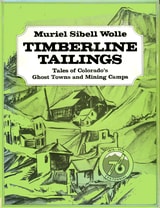
Timberline Tailings
Tales Of Colorado'S Ghost Towns And Mining CampsMuriel Sibell Wolle
Ohio University Press, 1993
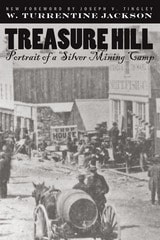
Treasure Hill
Portrait Of A Silver Mining CampW. Turrentine Jackson
University of Nevada Press, 2000