Results by title
15 books match the query 'Miracles'
A Saint Is Born in Chima
A NovelBy Manuel Zapata Olivella
University of Texas Press, 1991
When the paralyzed cripple Domingo Vidal is rescued unsinged from a burning house, the people of Chima believe they have witnessed a miracle. Domingo becomes their patron "saint," and tales of his miracles multiply. Domingo makes the rains come, cures the blind and lame, and swells barren wombs with new life. But is Domingo really a saint, or is he a pagan idol? Padre Berrocal calls the people heretics, but they are afraid not to worship Domingo. To what excesses will superstition and ignorance drive the frightened people of Chima?
This novel, published in 1963 as En Chimá nace un santo, makes important connections between the frustrations of poverty and the excesses of religious fanaticism. Zapata Olivella indicts the dogmatic attitudes of religious and civil institutions as a major cause of the creation of local cults like the one that grows up around "Saint" Domingo. In Zapata Olivella's compelling narrative, the struggle over Domingo points up both the inflexibility of established institutions and the potential power for change that lies within the hands of a determined populace.
An Epoch of Miracles
Oral Literature of the Yucatec MayaTranslated with Commentaries by Allan F. Burns
University of Texas Press, 1983
“Mr. Allan Burns, I am here to tell you an example, the example of the Hunchbacks.” So said Paulino Yamá, traditionalist and storyteller, to Allan Burns, anthropologist and linguist, as he began one story that found its way into this book.
Paulino Yamá was just one of several master storytellers from the Yucatán Peninsula of Mexico from whom Burns learned not only the Mayan language but also the style and performance of myths, stories, riddles, prayers, and other forms of speech of their people. The result is An Epoch of Miracles, a wonderfully readable yet thoroughly scholarly set of translations from the oral literature of the Yucatec Maya, an important New World tradition never before systematically described.
An Epoch of Miracles brings us over thirty-five long narratives of things large, small, strange, and “regular” and as many delightful short pieces, such as bird lore, riddles, and definitions of anteaters, rainbows, and other commonplaces of the Mayan world. Here are profound narratives of the Feathered Serpent, the mighty Rain God Chac and his helpers, and the mysterious cult of the Speaking Cross. But because these are modern, “Petroleum Age” Maya, here too are a discussion with Cuba’s Fidel Castro and a greeting to former president Richard Nixon.
All pieces are translated ethnopoetically; examples of several genres are presented bilingually. An especially valuable feature is the indication of performance style, such as pauses and voice quality, given with each piece.
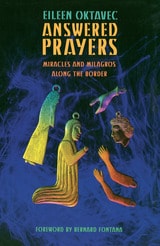
Answered Prayers
Miracles and Milagros along the BorderEileen Oktavec
University of Arizona Press, 1995
In Answered Prayers, the Mexicans, Mexican Americans, Tohono O'odham, and Yaquis who practice this tradition share their stories of unwavering faith and divine intervention. Anthropologist and photographer Eileen Oktavec has spent more than two decades documenting this fascinating tradition in the Arizona-Mexico borderlands. Quoting extensive interviews, she explains the beliefs of the people who perform this ancient folk ritual and the many rules guiding this practice. She also describes the many places where milagros are offered—from the elaborate Mexican baroque Mission San Xavier near Tucson, Arizona, to tiny household shrines and hospitals on both sides of the border. Oktavec also explains how milagros are made, where they are bought, and how they are used in jewelry, sculpture, and art.
Deprived of Sense and Intellect
Insanity, Possession, and Diagnosis in Medieval EuropeLeigh Ann Craig
University of Michigan Press, 2026
While medieval communities assigned these tensions to a malfunction of consciousness in a single person, medieval miracle texts also reveal how the function and malfunction of consciousness was named and classified. In studying these texts, Leigh Ann Craig explores the terminology and rhetoric used to diagnose a loss of mind as either from natural causes or as an effect of demonic predation, tracing the use of Latin vocabulary in medical compendia, law, and theology. Deprived of Sense and Intellect finds that since diagnoses were difficult and frequently subject to doubt, they varied based on regional cultures of disability in northern and southern Europe, the influences on the development of community consensus in Latin Europe in the Middle Ages, and assumptions based on gender, material evidence, and self-diagnosis.

Heavenly Supper
The Story of Maria JanisFulvio Tomizza
University of Chicago Press, 1991
So begins Fulvio Tomizza's absorbing account of the true story of Maria Janis, a devout peasant woman from the mountains north of Bergamo. Too poor to enter a convent, Maria had set out to serve God by relinquishing the little she had, through renunciation of all food but the bread and wine of communion. Encouraged by the restless village priest Pietro Morali, Maria claimed to have existed in this sanctified state for five years. During this time, she, Morali, and the weaver Pietro Palazzi travel from a little village in the Alps to Rome and then to Venice, where their alleged sacrilege is discovered and they are brought to trial. Both revered as a saint and reviled as a fraud, Maria with her "privilege" inspires and threatens believers within the Church. Combining the historian's precision with the novelist's imagination, Tomizza painstakingly reconstructs her story, crafting a fascinating portrait of sublimated love, ambition, and jealousy.
Heavenly Supper alternates a chronological account of the trial with analyses of each protagonist's life history. Along the way, Tomizza gives voice to the minds and hearts of his characters, allowing them to speak for themselves in their own words. The world he recreates resonates with the fervor of the Counter Reformation when faith and its consequences were rigidly controlled by the Church. As suspenseful as a detective novel, Tomizza's story goes beyond the trial to evoke a panoramic view of seventeenth-century Italian culture.
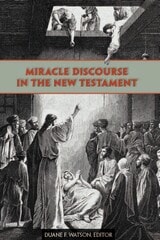
Miracle Discourse in the New Testament
Duane F. Watson
SBL Press, 2012

Miracles & Prophecies in Nineteenth-Century France
SELMAN, THOMAS K
Rutgers University Press, 1983
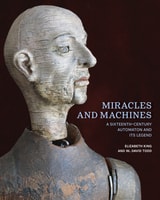
Miracles and Machines
A Sixteenth-Century Automaton and Its LegendElizabeth King
J. Paul Getty Trust, The, 0
This volume tells the singular story of an uncanny, rare object at the cusp of art and science: a 450-year-old automaton known as “the monk.” The walking, gesticulating figure of a friar, in the collection of the Smithsonian Institution’s National Museum of American History, is among the earliest extant ancestors of the self-propelled robot. According to legend connected to the court of Philip II of Spain, the monk represents a portrait of Diego de Alcalá, a humble Franciscan lay brother whose holy corpse was said to be agent to the miraculous cure of Spain’s crown prince as he lay dying in 1562.
In tracking the origins of the monk and its legend, the authors visited archives, libraries, and museums across the United States and Europe, probing the paradox of a mechanical object performing an apparently spiritual act. They identified seven kindred automata from the same period, which, they argue, form a paradigmatic class of walking “prime movers,” unprecedented in their combination of visual and functional realism. While most of the literature on automata focuses on the Enlightenment, this enthralling narrative journeys back to the late Renaissance, when clockwork machinery was entirely new, foretelling the evolution of artificial life to come.
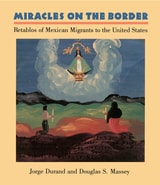
Miracles on the Border
Retablos of Mexican Migrants to the United StatesJorge Durand and Douglas S. Massey
University of Arizona Press, 1995
Tent of Miracles
Jorge Amado; translated by Barbara Shelby Merello
University of Wisconsin Press, 2003
The Law of Miracles
And Other StoriesGregory Blake Smith
University of Massachusetts Press, 2011

The Miracles of St. John of Capistran
Stanko Andric
Central European University Press, 2000
Religious history and, in particular, the history of the cult of saints and their miracles has recently become one of the most popular fields of historical investigation. Together with continuing interest in the related ecclesiastic motivations and the well organized craft of hagiography, this new interest might be explained by the marvellously rich details of thousands of witness accounts testifying to the miraculous help they received from the saint in times of desparate need. These accounts provide an unparalleled insight into the history of everyday life and into the various hardships, illnesses, hopes dreams and anxieties during the late medieval and early modern period.
Only two records exist on the history of the medieval Hungarian kingdom- the thirteenth century canonization trial of St. Margaret of Hungary and the miracle collections promoting the canonization of St. John of Capistran, the victorious Crusader at Belgrade in 1456, who died thereafter in Ilok (a city located on the periphery of western Christianity in Croatia). Based on a careful study of the widely scattered manuscripts on Capistranean miracles and with the help of a microscopic philological analysis, the author has managed to reconstruct, for the first time, one of the most complex miracle collections in the history of medieval hagiography.
Covering the recording of the first miracle series by the urban notaries of Ilok, the local hagiographer of Ilok Franciscans (John Geszti), the vicar general of the Hungarian province (Stephen Varsányi), and a number of subsequent editions and amplifications of this material recycling into the canonization campaign of St. John of Capistran and the miracles he himself recorded, The Miracles of St. John of Capistran, is an outstanding debut by a representative of a new generation of Central European medievalists.
The Time of Miracles
Borislav Pekic
Northwestern University Press, 1994
Violence and Miracle in the Fourteenth Century
Private Grief and Public SalvationMichael E. Goodich
University of Chicago Press, 1995
Rescue miracles offer a wide range of voices rarely heard in medieval history, from women and children to peasants and urban artisans. They tell of salvation not just from the ravages of nature and war, but from the vagaries of a violent society—crime, unfair judicial practices, domestic squabbles, and communal or factional conflict. The stories speak to a collapse of confidence in decaying institutions, from the law to the market to feudal authority. Particularly, the miraculous escapes documented during the Hundred Years' War, the Italian communal wars, and other conflicts are vivid testimony to the end of aristocratic warfare and the growing victimization of noncombatants.
Miracles, Goodich finds, represent the transcendent and unifying force of faith in a time of widespread distress and the hopeless conditions endured by the common people of the Middle Ages. Just as the lives of the saints, once dismissed as church propaganda, have become valuable to historians, so have rescue miracles, as evidence of an underlying medieval mentalite. This work expands our knowledge of that state of mind and the grim conditions that colored and shaped it.
Writing Faith
Text, Sign, and History in the Miracles of Sainte FoyKathleen Ashley and Pamela Sheingorn
University of Chicago Press, 1999
As Ashley and Sheingorn show, differing agendas shaped the miracle stories over time. The first author, Bernard of Angers, used his narratives to critique popular religion and to establish his own literary reputation, while the monks who continued the collection tried to enhance their monastery's prestige. Because these stories were rhetorical constructions, Ashley and Sheingorn argue, we cannot use them directly as sources of historical data. Instead, they demonstrate how analyzing representations common to groups of miracle stories—such as negative portrayals of Muslims on the eve of the Crusades—can reveal the traces of history.