Results by title
3 books match the query 'Missing'
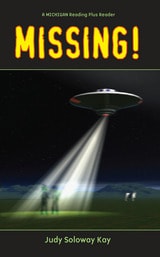
Missing!
Judy Soloway Kay
University of Michigan Press, 2005
The MICHIGAN Reading Plus Readers are original fiction written for students who wish to improve their reading skills. The MICHIGAN Reading Plus Readers support the need for extensive reading on topics of interest to today's students. The Readers offer students books in the genres of mystery, science-fiction, and romance. Activities that practice vocabulary and reading skills are provided on the companion website.
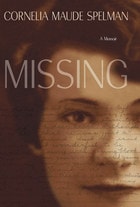
Missing
A MemoirCornelia Maude Spelman
Northwestern University Press, 2010
Acclaimed children’s book author Cornelia Maude Spelman’s memoir of her family springs from a meeting and subsequent friendship with the late, legendary New Yorker editor William MaxwellIn the 1920s, he and her parents had been friends as undergraduates at the University of Illinois at Urbana-Champaign. When Spelman hints at what she thinks of as the failure of her parents’ lives, he counters that “in a good novel one doesn’t look for a success story, but for a story that moves one with its human drama and richness of experience.”
At their final meeting, Maxwell encourages her to tell her mother’s story. Missing is Spelman’s response to Maxwell’s wisdom. With the pacing of the mystery novels her mother loved, and using everything from letters and interviews to the family’s quotidian paper trail—medical records, telegrams, and other oft-overlooked clues to a family’s history—Spelman reconstructs her mother’s life and untimely death. Along the way, she unravels mysteries of her family, including the fate of her long lost older brother.
Spelman skillfully draws the reader into the elation and sorrow that accompany the discovery of a family’s past. A profoundly loving yet honest elegy, Missing is, like the woman it memorializes, complex and beautiful.
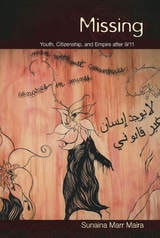
Missing
Youth, Citizenship, and Empire after 9/11Sunaina Marr Maira
Duke University Press, 2009
Bringing grounded ethnographic analysis to the critique of U.S. empire, Maira teases out the ways that imperial power affects the everyday lives of young immigrants in the United States. She illuminates the paradoxes of national belonging, exclusion, alienation, and political expression facing a generation of Muslim youth coming of age at this particular moment. She also sheds new light on larger questions about civil rights, globalization, and U.S. foreign policy. Maira demonstrates that a particular subjectivity, the “imperial feeling” of the present historical moment, is linked not just to issues of war and terrorism but also to migration and work, popular culture and global media, family and belonging.