Results by title
3 books match the query 'Missionaries, Medical'

Doctor Mary in Arabia
MemoirsBy Mary Bruins Allison
University of Texas Press, 1994
Until fairly recently, Arab women rarely received professional health care, since few women doctors had ever practiced in Arabia and their culture forbade them from consulting male doctors. Not surprisingly, Dr. Mary Bruins Allison faced an overwhelming demand when she arrived in Kuwait in 1934 as a medical missionary of the Reformed Church of America. Over the next forty years, "Dr. Mary" treated thousands of women and children, faithfully performing the duties that seemed required of her as a Christian—to heal the sick and seek converts.
These memoirs record a fascinating life. Dr. Allison briefly describes her upbringing and her professional training at Women's Medical College of Pennsylvania. She then focuses on her experiences in Kuwait, where women of all classes, including royalty, flocked to her care. In addition to describing many of her cases, Dr. Allison paints a richly detailed picture of life in Kuwait both before and after the discovery of oil transformed the country. Her recollections include invaluable details of women's lives in the Middle East during the early and mid-twentieth century. They add a valuable chapter to the story of modern medicine, to the largely unsuccessful efforts of the Christian church to win converts in the Middle East, and to the opportunities and limitations that faced American women of the period.
Dr. Allison also worked briefly in Bahrain, Qatar, Oman, and India, and she includes material on each country. The introduction situates her experiences in the context of Middle Eastern and medical developments of the period.
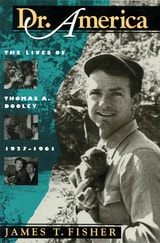
Dr. America
The Lives of Thomas A. Dooley, 1927-1961James T. Fisher
University of Massachusetts Press, 1997
This book chronicles the life of Tom Dooley, the American doctor whose much-publicized exploits in Vietnam and Laos during the 1950s helped lay the ideological groundwork for the U.S. military intervention a decade later. The scion of an upper-middle-class St. Louis family, Dooley was an enormously complex and fascinating individual. He was a devoutly religious Roman Catholic as well as a self-styled playboy socialite, a devoted physician to the poor and a tireless propagandist for the “Vietnam Lobby,” a shameless self-promoter and a closeted homosexual, a victim of Navy persecution and a beneficiary of CIA support. Dooley first gained notoriety as a young Navy doctor charged with overseeing the evacuation of Catholic refugees from North Vietnam in the wake of the 1954 Geneva Accords. His celebrity grew after his book Deliver Us from Evil, a fervently anticommunist account of his experiences, was serialized in Reader's Digest. By the end of the decade, as his name became associated (albeit mistakenly) with a ballad popularized by the Kingston Trio, he had achieved the status of “America's first pop star saint.” In addition to exposing the roots of the Vietnam War, Dooley's story illuminates a broad range of developments in post-World War II United States culture—from the “Americanization” of Catholicism to the rise of the mass media.
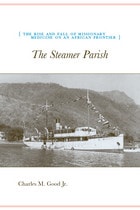
The Steamer Parish
The Rise and Fall of Missionary Medicine on an African FrontierCharles M. Good
University of Chicago Press, 2003
In The Steamer Parish, Charles M. Good Jr. traces the Mission's history and its lasting impact on public health care in south-central Africa-and shows how steam and medicine, together with theology, allowed the Mission to impose its will, indelibly, on hundreds of thousands of people. What's more, many of the issues he discusses-rural development, the ecological history of disease, and competition between western and traditional medicine-are as relevant today as they were 100 years ago.