Results by title
3 books match the query 'Modern Brazil'

Race, Elections, and Power in Modern Brazil
Andrew Janusz
University of Michigan Press, 2027
While Brazil is famous for its history of racial diversity and was once revered as a “racial democracy,” its political arena is a site of separation. Elected officials in the country, which has the largest African descendant population of any country outside of Africa, are overwhelmingly white. Why are Afro-Brazilians not elected in proportion to their population size? And how does their underrepresentation affect the policymaking process?
In Race, Elections, and Power in Modern Brazil, Andrew Janusz argues that race shapes who runs for public office, who is elected, and who they represent. Drawing on surveys, interviews, and administrative election datasets, he shows that white politicians have several electoral advantages over their Afro-Brazilian competitors. Due to social stereotypes and racism, white Brazilians are more likely than Afro-Brazilians to be recruited by party elites, raise campaign funds, and be favored by voters. Using original data on legislator behavior, Janusz also finds that Brazil’s predominately white lawmakers are largely unresponsive to the needs of marginalized Afro-Brazilians and less likely than their Afro-Brazilian counterparts to advance legislation that would meaningfully enhance their quality of life. Providing compelling empirical evidence that Brazil is a racialized democracy, this book offers an accessible and eye-opening look at the central role race plays in Brazilian politics.
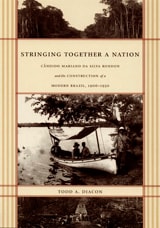
Stringing Together a Nation
Cândido Mariano da Silva Rondon and the Construction of a Modern Brazil, 1906–1930Todd A. Diacon
Duke University Press, 2004
Using an impressive array of archival and documentary sources, Diacon chronicles the Rondon Commission’s arduous construction of telegraph lines across more than eight hundred miles of the Amazon Basin; its exploration, surveying, and mapping of vast areas of northwest Brazil; and its implementation of policies governing relations between the Brazilian state and indigenous groups. He considers the importance of Positivist philosophy to Rondon’s thought, and he highlights the Rondon Commission’s significant public relations work on behalf of nation-building efforts. He reflects on the discussions—both contemporaneous and historiographical—that have made Rondon such a fundamental and controversial figure in Brazilian cultural history.
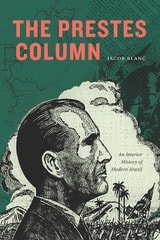
The Prestes Column
An Interior History of Modern BrazilJacob Blanc
Duke University Press, 2024