Results by title
4 books match the query 'Modern Science'

Invention Of Modern Science
Isabelle Stengers
University of Minnesota Press, 2000
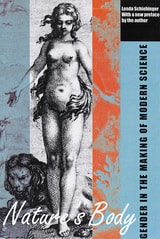
Nature's Body
Gender in the Making of Modern ScienceSchiebinger, Londa
Rutgers University Press, 2004
Eighteenth-century natural historians created a peculiar, and peculiarly durable, vision of nature—one that embodied the sexual and racial tensions of that era. When plants were found to reproduce sexually, eighteenth-century botanists ascribed to them passionate relations, polyandrous marriages, and suicidal incest, and accounts of steamy plant sex began to infiltrate the botanical literature of the day. Naturalists also turned their attention to the great apes just becoming known to eighteenth-century Europeans, clothing the females in silk vestments and training them to sip tea with the modest demeanor of English matrons, while imagining the males of the species fully capable of ravishing women.
Written with humor and meticulous detail, Nature’s Body draws on these and other examples to uncover the ways in which assumptions about gender, sex, and race have shaped scientific explanations of nature. Schiebinger offers a rich cultural history of science and a timely and passionate argument that science must be restructured in order to get it right.
The Knowable and the Unknowable
Modern Science, Nonclassical Thought, and the "Two Cultures"Arkady Plotnitsky
University of Michigan Press, 2002
Plotnitsky highlights those points at which the known gives way to the unknown (and unknowable). These points are significant, he argues, because they push the boundaries of thought and challenge the boundaries of disciplinarity. One of the book's most interesting observations is that key figures in science, in order to push toward a framing of the unknown, actually retreated into a conservative disciplinarity. Plotnitsky's informed, interdisciplinary approach is more productive than the disparaging attacks on postmodernism or scientism that have hitherto characterized this discourse.
Arkady Plotnitsky is Professor of English and Director, Theory and Cultural Studies Program, Purdue University. Trained in both mathematics and literary theory, he is author of several books, including In the Shadow of Hegel: Complementarity, History and the Unconscious and Reconfigurations: Critical Theory and General Economy.

The New Century
Bergsonism, Phenomenology, and Responses to Modern ScienceEdited by Keith Ansell-Pearson and Alan D. Schrift
University of Chicago Press, 2010
From Kant to Kierkegaard, from Hegel to Heidegger, continental philosophers have indelibly shaped the trajectory of Western thought since the eighteenth century. Although much has been written about these monumental thinkers, students and scholars lack a definitive guide to the entire scope of the continental tradition. The most comprehensive reference work to date, this eight-volume History of Continental Philosophy will both encapsulate the subject and reorient our understanding of it. Beginning with an overview of Kant’s philosophy and its initial reception, the History traces the evolution of continental philosophy through major figures as well as movements such as existentialism, phenomenology, hermeneutics, and poststructuralism. The final volume outlines the current state of the field, bringing the work of both historical and modern thinkers to bear on such contemporary topics as feminism, globalization, and the environment. Throughout, the volumes examine important philosophical figures and developments in their historical, political, and cultural contexts.
The first reference of its kind, A History of Continental Philosophy has been written and edited by internationally recognized experts with a commitment to explaining complex thinkers, texts, and movements in rigorous yet jargon-free essays suitable for both undergraduates and seasoned specialists. These volumes also elucidate ongoing debates about the nature of continental and analytic philosophy, surveying the distinctive, sometimes overlapping characteristics and approaches of each tradition. Featuring helpful overviews of major topics and plotting road maps to their underlying contexts, A History of Continental Philosophy is destined to be the resource of first and last resort for students and scholars alike.