Results by title
11 books match the query 'Modern State'
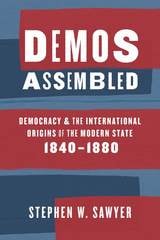
Demos Assembled
Democracy and the International Origins of the Modern State, 1840–1880Stephen W. Sawyer
University of Chicago Press, 2018
Previous studies have covered in great detail how the modern state slowly emerged from the early Renaissance through the seventeenth century, but we know relatively little about the next great act: the birth and transformation of the modern democratic state. And in an era where our democratic institutions are rife with conflict, it’s more important now than ever to understand how our institutions came into being.
Stephen W. Sawyer’s Demos Assembled provides us with a fresh, transatlantic understanding of that political order’s genesis. While the French influence on American political development is well understood, Sawyer sheds new light on the subsequent reciprocal influence that American thinkers and politicians had on the establishment of post-revolutionary regimes in France. He argues that the emergence of the stable Third Republic (1870–1940), which is typically said to have been driven by idiosyncratic internal factors, was in fact a deeply transnational, dynamic phenomenon. Sawyer’s findings reach beyond their historical moment, speaking broadly to conceptions of state formation: how contingent claims to authority, whether grounded in violence or appeals to reason and common cause, take form as stateness.

Egypt's Beer
Stella, Identity, and the Modern StateBy Omar D. Foda
University of Texas Press, 2019
Although alcohol is generally forbidden in Muslim countries, beer has been an important part of Egyptian identity for much of the last century. Egypt’s Stella beer (which only coincidentally shares a name with the Belgian beer Stella Artois) became a particularly meaningful symbol of the changes that occurred in Egypt after British Occupation.
Weaving cultural studies with business history, Egypt’s Beer traces Egyptian history from 1880 to 2003 through the study of social, economic, and technological changes that surrounded the production and consumption of Stella beer in Egypt, providing an unparalleled case study of economic success during an era of seismic transformation. Delving into archival troves—including the papers of his grandfather, who for twenty years was CEO of the company that produced Stella—Omar D. Foda explains how Stella Beer achieved a powerful presence in all popular forms of art and media, including Arabic novels, songs, films, and journalism. As the company’s success was built on a mix of innovation, efficient use of local resources, executive excellence, and shifting cultural dynamics, this is the story of the rise of a distinctly Egyptian “modernity” seen through the lens of a distinctly Egyptian brand.
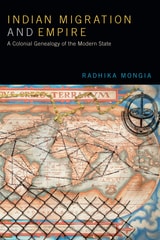
Indian Migration and Empire
A Colonial Genealogy of the Modern StateRadhika Mongia
Duke University Press, 2018

Insurgencies
Constituent Power And The Modern StateAntonio Negri
University of Minnesota Press, 1999
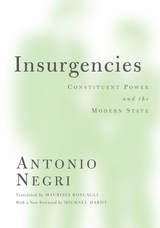
Insurgencies
Constituent Power and the Modern StateAntonio Negri
University of Minnesota Press, 2009
New Edition
In the ten years since the initial publication of Insurgencies, Antonio Negri's reputation as one of the world's foremost political philosophers has grown dramatically. An invigorating appraisal of revolutionary thought, Insurgencies is both the precursor to and the historical basis for Antonio Negri and Michael Hardt's masterwork, Empire.
At the center of this book is the conflict between "constituent power," the democratic force of revolutionary innovation, and "constituted power," the fixed power of formal constitutions and central authority. This conflict, Negri argues, defines the drama of modern rebellions. Now with a foreword by Michael Hardt, Insurgencies leads to a new notion of how power and action must be understood if we are to achieve a democratic future.
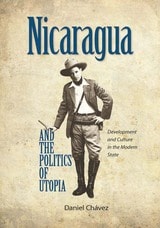
Nicaragua and the Politics of Utopia
Development and Culture in the Modern StateDaniel Chavez
Vanderbilt University Press, 2015
For each era, Chavez reveals the ways Nicaraguan popular culture adapted and interpreted the new political order, shaping, critiquing, or amplifying the regime's message of stability and prosperity for the people. These tactics of interpretation, otherwise known as meaning-making, became all-important for the Nicaraguan people, as they opposed the autocracy of Somocismo, or complemented the Sandinistas, or struggled to find their place in the Neoliberal era. In every case, Chavez shows the reflective nature of cultural production and its pursuit of utopian idealism.
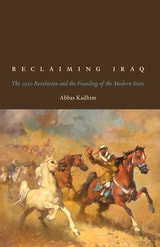
Reclaiming Iraq
The 1920 Revolution and the Founding of the Modern StateBy Abbas Kadhim
University of Texas Press, 2012
While some scholars would argue that there was no “Iraq” before King Faysal’s coronation in 1921, Iraqi history spans fourteen centuries of tribal communities that endured continual occupation in their historic homeland, including Mongol invasions in the thirteenth century and subsequent Ottoman and British invasions. An Iraqi identity was established long before the League of Nations defined the nation-state of Iraq in 1932. Drawing on neglected primary sources and other crucial accounts, including memoirs and correspondence, Reclaiming Iraq puts the 1920 revolt against British occupation in a new light—one that emphasizes the role of rural fighters between June and November of that year.
While most accounts of the revolution have been shaped by the British administration and successive Iraqi governments, Abbas Kadhim sets out to explore the reality that the intelligentsia of Baghdad and other cities in the region played an ideological role but did not join in the fighting. His history depicts a situation we see even today in conflicts in the Middle East, where most military engagement is undertaken by rural tribes that have no central base of power. In the study of the modern Iraqi state, Kadhim argues, Faysal’s coronation has detracted from the more significant, earlier achievements of local attempts at self-rule. With clarity and insight, this work offers an alternative perspective on the dawn of modern Iraq.

Teleology and the Conceptual Genesis of the Modern State
Essays on the Nature of PhilosophyFrancis Slade
Catholic University of America Press, 2027

The Bill of Rights in the Modern State
Edited by Geoffrey R. Stone, Richard A. Epstein, and Cass R. Sunstein
University of Chicago Press, 1992
The contributors to this volume are among the most prominent constitutional scholars in the country. Most of the essays are grouped in pairs, each of which offers conflicting positions on current constitutional controversies, including property rights, freedom of religion, freedom of speech, levels of generality in constitutional interpreation, and unemumerated rights.
The contributors are: Bruce Ackerman, Mary E. Becker, Ronald Dworkin, Frank H. Easterbrook, Richard A. Epstein, Charles Fried, Mary Ann Glendon, Philip B. Kurland, Frank J. Michaelman, Michael W. McConnell, Richard A. Posner, Kathleen M. Sullivan, John Paul Stevens, David A. Strauss, and Cass R. Sunstein.
"A thoughtful and well coordinated set of exchanges between leading modern constitutional theorists about the most significant issues related to the Bill of Rights and the Welfare State. These issues are debated through penetrating essays by opposing theorists who get to the heart of these issues and provide significant answers to their debate opponents' points."—Thomas R. Van Dervort, Southeastern Political Review

The Theological-Political Origins of the Modern State
The Controversy between James I of England and Cardinal BellarmineBernard Bourdin
Catholic University of America Press, 2010
Underdeveloping the Amazon
Extraction, Unequal Exchange, and the Failure of the Modern StateStephen G. Bunker
University of Chicago Press, 1988