Results by title
14 books match the query 'Modern Times'
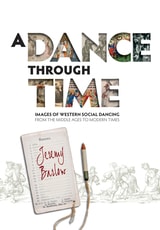
A Dance Through Time
Images of Western Social Dancing from the Middle Ages to Modern TimesJeremy Barlow
Bodleian Library Publishing, 2012

Arabs in the Mirror
Images and Self-Images from Pre-Islamic to Modern TimesBy Nissim Rejwan
University of Texas Press, 2008
What is an Arab? Though many in the West would answer that question with simplistic stereotypes, the reality is far more complex and interesting. Arabs themselves have been debating Arab identity since pre-Islamic times, coming to a variety of conclusions about the nature and extent of their “Arabness.” Likewise, Westerners and others have attempted to analyze Arab identity, reaching mostly negative conclusions about Arab culture and capacity for self-government.
To bring new perspectives to the question of Arab identity, Iraqi-born scholar Nissim Rejwan has assembled this fascinating collection of writings by Arab and Western intellectuals, who try to define what it means to be Arab. He begins with pre-Islamic times and continues to the last decades of the twentieth century, quoting thinkers ranging from Ibn Khaldun to modern writers such as al-Ansari, Haykal, Ahmad Amin, al-'Azm, and Said. Through their works, Rejwan shows how Arabs have grappled with such significant issues as the influence of Islam, the rise of nationalism, the quest for democracy, women's status, the younger generation, Egypt's place in the Arab world, Israel's role in Middle Eastern conflict, and the West's "cultural invasion."
By letting Arabs speak for themselves, Arabs in the Mirror refutes a prominent Western stereotype—that Arabs are incapable of self-reflection or self-government. On the contrary, it reveals a rich tradition of self-criticism and self-knowledge in the Arab world.
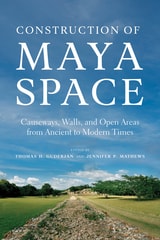
Construction of Maya Space
Causeways, Walls, and Open Areas from Ancient to Modern TimesThomas H. Guderjan
University of Arizona Press, 2023
Through fifteen engaging chapters, contributors examine the construction of spatial features by ancient, historic, and contemporary Maya elite and nonelite peoples to understand how they used spaces differently. Through cutting-edge methodologies and case studies, chapters consider how and why Maya people connected and divided the spaces they used daily in their homes, in their public centers, in their sacred places such as caves, and across their regions to inform us about the mental constructs they used to create their lives and cultures of the past.
Contributors
Elias Alcocer Puerto
Alejandra Alonso Olvera
Traci Ardren
Jaime J. Awe
Alejandra Badillo Sánchez
Nicolas C. Barth
Grace Lloyd Bascopé
Adolpho Iván Batún-Alpuche
Elizabeth Beckner
M. Kathryn Brown
Bernadette Cap
Miguel Covarrubias Reyna
Juan Fernandez Diaz
Alberto G. Flores Colin
Thomas H. Guderjan
C. Colleen Hanratty
Héctor Hernández Álvarez
Scott R. Hutson
Joshua J. Kwoka
Whitney Lytle
Aline Magnoni
Jennifer P. Mathews
Stephanie J. Miller
Shawn G. Morton
Holley Moyes
Shannon Plank
Dominique Rissolo
Patrick Rohrer
Carmen Rojas Sandoval
Justine M. Shaw
J. Gregory Smith
Travis W. Stanton
Karl A. Taube
Daniel Vallejo-Cáliz

Control of the Imaginary
Reason and Imagination in Modern TimesLuiz Costa LimaTranslated by Ronald W. SousaIntroduction by Ronald W. SousaAfterword by Jochen Schulte-Sasse
University of Minnesota Press, 1989
Control of the Imaginary was first published in 1989. Minnesota Archive Editions uses digital technology to make long-unavailable books once again accessible, and are published unaltered from the original University of Minnesota Press editions.
In Control of the Imaginary Luiz Costa Lima explains how the distinction between truth and fiction emerged at the beginning of modern times and why, upon its emergence, fiction fell under suspicion. Costa Lima not only describes the continuous relationship between Western notions of reason and subjectivity over a broad time-frame—the Renaissance to the first decade of the twentieth century—but he uses this occasion to reexamine the literary traditions of France, Italy, Spain, Portugal, England, and Germany. The book reconstructs the dominant frames in the European tradition between the Middle Ages and the nineteenth century from the perspective of a Latin American who sees the culture of his native Brazil haunted by unresolved questions from the Northern Hemisphere. Costa Lima manages to synthesize positions from philosophy, anthropology, sociology, psychology, linguistics, and history without separating the theoretical discussion from his historical reconstructions.
The first chapter situates the problem and grounds the emergent distinction between truth and fiction in a very close analysis of one of the first European historians, Fernao Lopes, who sets the tone for the condemnation of fiction in the name of the truth of history and the potential for individual interpretation. Costa Lima pursues these notions through the aesthetic debates of the seventeenth and eighteenth centuries to the writings of the French historian Michelet. He also devotes an illuminating chapter to the invention of the strictures imposed on fiction.
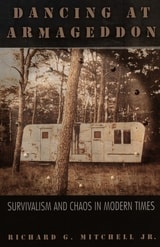
Dancing at Armageddon
Survivalism and Chaos in Modern TimesRichard G. Mitchell Jr.
University of Chicago Press, 2001
Richard G. Mitchell Jr. spent more than a dozen years among survivalists at public conferences, private meetings, and clandestine training camps across America. He takes us inside a compelling, hidden world more connected to the chaos of modern life many of us experience than the label "separatist" suggests. In survivalism Mitchell found a profound and meaningful critique of contemporary industrial society, a subculture in which the real evil is not repressive government but the far more insidious influence of a "Planet Microsoft" mentality with its abundance of empty choices. Survivalists, Mitchell shows us, are seeking resistance, not struggling against it; they are looking for ways to define themselves and test their talents in a society that is becoming devitalized and formless.

Great Gatsby and Modern Times
Ronald Berman
University of Illinois Press, 1994
work. If Fitzgerald could have wished for one reader of The Great Gatsby,
it would have been Ronald Berman. Berman's criticism creates an ideal
companion piece to the novel--as brilliantly illuminating about America
as it is about fiction, and composed with as much thought and style."
-- Roger Rosenblatt
"An impressive study
that brilliantly highlights the oneness of Fitzgerald's art with the overall
context of modernism." -- Milton R. Stern, author of The Golden
Moment: The Novels of F. Scott Fitzgerald
"Citing films, dates,
places, schedules, Broadway newsstands, and the spoils of manufacture,
the author, never lapsing into critical jargon, locates the characters
in 'the moving present.' Gatsby, the first of the great novels
to emerge from B movies, uses the language of commodities, advertisements,
photography, cinematography, and Horatio Alger to present models of identity
for characters absorbed in and by what is communicated. . . . Berman concludes
that Gatsby 'reassembled' rather than 'invented' himself."
-- A. Hirsh, Choice
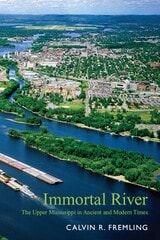
Immortal River
The Upper Mississippi in Ancient and Modern TimesCalvin R. Fremling
University of Wisconsin Press, 2005
Like the Mississippi itself, Immortal River often leaves the main channel to explore the river's backwaters, floodplain, and drainage basin. The book's focus is the Upper Mississippi, from Minneapolis, Minnesota, to Cairo, Illinois. But it also includes information about the river's headwaters in northern Minnesota and about the Lower Mississippi from Cairo south to the river's mouth ninety miles below New Orleans. It offers an understanding of the basic geology underlying the river's landscapes, ecology, environmental problems, and grandeur.
Liberalism in Modern Times
Ernest Gellner
Central European University Press, 1996

Retelling / Rereading
The Fate of Storytelling in Modern TimesKroeber, Karl
Rutgers University Press, 1992
In this highly readable and thoroughly original book, Karl Kroeber questions the assumptions about storytelling we have inherited from the exponents of modernism and postmodernism. These assumptions have led to overly formalistic and universalizing conceptions of narrative that mystify the social functions of storytelling. Even "politically correct" critics have Eurocentrically defined story as too "primitive" to be taken seriously as art. Kroeber reminds us that the fundamental value of storytelling lies in retelling, this paradoxical remaking anew that constitutes story's role as one of the essential modes of discourse. His work develops some recent anthropological and feminist criticism to delineate the participative function of audience in narrative performances.
In depicting how audiences contribute to storytelling transactions, Kroeber carries us into a surprising array of examples, ranging from a Mesopotamian sculpture to Derek Walcott's Omeros; startling juxtapositions, such as Cervantes to Vermeer; and innovative readings of familiar novels and paintings. Tom Wolfe's comparison of his Bonfire of the Vanities to Vanity Fair is critically analyzed, as are the differences between Thackeray's novel and Joyce's Ulysses and Flaubert's Madame Bovary. Other discussions focus on traditional Native American stories, Henry James's The Ambassadors, Calvino's If on a winter's night a traveler, and narrative paintings of Giotto, Holman Hunt, and Roy Lichtenstein. Kroeber deploys the ideas of Ricoeur and Bakhtin to reassess dramatically the field of narrative theory, demonstrating why contemporary narratologists overrate plot and undervalue story's capacity to give meaning to the contingencies of real experience. Retelling/Rereading provides solid theoretical grounding for a new understanding of storytelling's strange role in twentieth-century art and of our need to develop a truly multicultural narrative criticism.
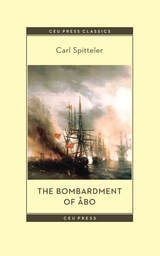
The Bombardment of Åbo
A Novella Based on a Historical Event in Modern TimesCarl Spitteler
Central European University Press, 2022
This farcical tale tells how the British bombing of a Finnish port city changes the life of the Russian governor, his wife, their cook, and the cook's Finnish fiancé. The story takes place during a Nordic offshoot of the Crimean conflict, known as the Åland War, in which a British-French naval force attacked military and civilian facilities on the coast of the Grand Duchy of Finland in 1854–1856. The location of the novella is Åbo, today’s Turku, where soldiers in the Russian garrison enjoy life, Cossacks dance and drink, and the governor’s wife is preoccupied about her cook’s marriage to a local lad, against which the governor and the English admiral devise a plot.
After studies in Swiss and German universities, Carl Spitteler worked in Russia between 1871 and 1879 as the private tutor in the family of a Finnish general. In the process he came to know Finnish and Baltic noble families in Saint Petersburg and Finland. He published this story in 1889, and went on to become, in 1919, the first Swiss winner of the Nobel Prize for literature. The Bombardment of Åbo is an ironic Western gaze on life and culture in the Tsarist Empire. Spitteler’s deeply held pacifism breaks through his otherwise sarcastic description of the characters and episodes in the novella.
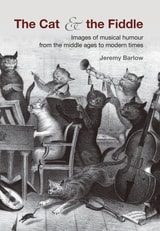
The Cat and the Fiddle
Images of Musical Humour from the Middle Ages to Modern TimesJeremy Barlow
Bodleian Library Publishing, 2005
In The Cat and the Fiddle, Jeremy Barlow explores 700 years of musical humor, a topsy-turvy world in which monkeys fiddle and pigs play the bagpipes. It is a vision of chaos and devilry as depicted in a variety of sources—the illuminated borders of medieval manuscripts, eighteenth-century prints of urban life, and even the illustrations of children's books.
Barlow reveals the shifting meanings behind such images, as they were often symptomatic of larger cultural trend such as rapid industrialization and urbanization, an emerging class system, and the moral movements of the late nineteenth century. As he compellingly argues, the development of the printing press, the popular spectacle of public concerts, and the rise of new political uses for music all played a critical role in musical history and were distinctly evident in images of musical humor.
The archives of Oxford's Bodleian Library provided a rich supply of previously unpublished material for Barlow's research. With full-color images throughout, The Cat and the Fiddle will be a delight for scholars of art and political history as well as lovers of music everywhere.

The Indians of Texas
From Prehistoric to Modern TimesBy William W. Newcomb, Jr.
University of Texas Press, 1961

The Playwright as Thinker
A Study of Drama in Modern Times, Fourth EditionEric Bentley
University of Minnesota Press, 2010
The Venture of Islam, Volume 3
The Gunpowder Empires and Modern TimesMarshall G. S. Hodgson
University of Chicago Press, 1977
In this concluding volume of The Venture of Islam, Hodgson describes the second flowering of Islam: the Safavi, Timuri, and Ottoman empires. The final part of the volume analyzes the widespread Islamic heritage in today's world.
"This is a nonpareil work, not only because of its command of its subject but also because it demonstrates how, ideally, history should be written."—The New Yorker