Results by title
5 books match the query 'Mohabir, Rajiv'
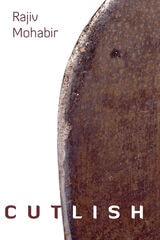
Cutlish
Rajiv Mohabir
Four Way Books, 2021
In Cutlish, a title referencing the rural recasting of the cutlass or machete, Rajiv Mohabir creates a form migrated from Caribbean chutney music in order to verse the precarity of a queer Indo-Caribbean speaker in the newest context of the United States. By joining the disparate threads of his fading, often derided, multilingual Guyanese Creole and Guyanese Bhojpuri linguistic inheritances, Mohabir mingles the ghosts that haunt from the cane fields his ancestors worked with the canonical colonial education of his elders, creating a new syncretic American poetry — pushing through the “post” of postcolonial, the “poet” in the poetic.
[more]
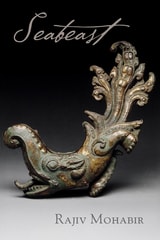
Seabeast
Rajiv Mohabir
Four Way Books, 2025
Organized as an alphabetical bestiary, Seabeast lyrically catalogues whale species by common name and behaviors, resulting in a poetic compendium that defies pathetic fallacy even as it sings the similarities between homo sapiens and the marine mammoths that have long captured our fascination. In his fifth full-length collection, Rajiv Mohabir winds together the threads of cetacean evolution, natural history, animal migration, and human culture and colonization as they concern the endurance of all species. In anthropomorphizing these complex mammals, Mohabir argues, we overwrite and erase their sublime difference and selfhood, their distinct and separate experience of embodiment; yet, in refusing to recognize the familiarities of whale behavior and social patterns, we subjugate these magnificent creatures, affirming a hierarchy that establishes anything inhuman as inherently less than human and enabling cruelty toward all manner of living things.
Mohabir's language ingeniously plumbs the depths, illustrating how the objectification fundamental to the construction and preservation of animal taxonomy mirrors the internecine violence of humankind on both a broad and intimate scale. "We were misnamed / again and again: first Hindu, / then Hindoo, then Indian, then / Coolie, all subhuman / much like this precursory cetacean / of the Eocene, named / in Latin great lizard— / anguilliform, what to make / of twist and tear, teeth / gnashing sharks and durodons / into pulp, judged by fossilized / gouges in enamel and finger / holes on skulls?"
Through the invention of race, the conquest and consumption of land, and the cultural amnesia enforced on the subaltern, imperialism threatens human survival on this planet just as we have misunderstood, taken captive, and hunted whales nearly to extinction. Meditating on the results of genetic testing, Mohabir details how, like his white ex-spouse's "ancestors / from northern Germany / played bone flutes / for their dead at gravesites," a lab "one day exhumed" them all "in perfect pentatonic scales." Meanwhile, he wonders what of his Indo-Caribbean heritage, complicated by the obfuscating forces of indenture, ethnic oppression, and frequent relocation, "can be revived" from this "wastebasket taxon, / us unnamed hoard of no future?" Of the Irrawaddy Dolphin once "known for / herding shoals of fish / for fisherfolk / in whose nets / they now drown," Mohabir observes that "learning human / language opens you // to betrayal." "Trust me," he urges, "though I am no // hairless dolphin— / I once had a husband." Standing at the confluence of these prehistoric, mythological, and contemporary tributaries feeding our attitude toward whales, Mohabir asks, who is the seabeast, really? The namer or the named? The answer prompts us to see that, if we recognize the legacy of human barbarism in the whale's long history with us, we can also locate a new reserve of resilience and survival. It is their example Mohabir uses, not the "bright honey" of their blubber that once would "fuel lanterns," to power his own spiritual refortification. "Maybe I will, from filling my lungs, blood / rushing to my core, / into a finned thing, / transform."
[more]

The Cowherd's Son
Rajiv Mohabir
Tupelo Press, 2017
Rajiv Mohabir uses his queer and mixed-caste identities as grace notes to charm alienation into silence. Mohabir’s inheritance of myths, folk tales, and multilingual translations make a palimpsest of histories that bleed into one another. A descendant of indentureship survivors, the poet-narrator creates an allegorical chronicle of dislocations and relocations, linking India, Guyana, Trinidad, New York, Orlando, Toronto, and Honolulu, combining the amplitude of mythology with direct witness and sensual reckoning, all the while seeking joy in testimony.
[more]
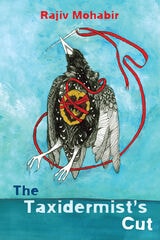
The Taxidermist's Cut
Rajiv Mohabir
Four Way Books, 2016
The Taxidermist’s Cut is a collection that centers the pressures of being a queer brown youth awakening sexually in a racist, anti-immigrant matrix. As an Indo-Caribbean, the queer-countried speaker is illegible as an “Indian” as well as an “American.” Haunted by his migration narrative, the speaker tries to make himself fit into his environment by sloughing off his skin and stretching new ones over his body. At stake here is surviving a palimpsest of violence: violences enacted upon the speaker and violences the speaker enacts upon himself through cutting. Mohabir engages with the body and the land as a series of incisions and overlays to cover the damage of memory of a South Asian brown body dealing with aggressions and joys. This is a collection of twisted love stories-as-slits that exposes the meat and bone of trauma and relief. Drawing from outside source texts such as animal tracking guides and taxidermy manuals, these poems attempt to show the process of how to survive being erased on all fronts.
[more]
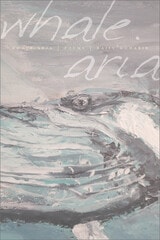
Whale Aria
Rajiv Mohabir
Four Way Books, 0
“For seasons I was faceless // trying to swallow constellations, / to roll a star-map on my tongue,” recounts Rajiv Mohabir’s speaker in “Boy with Baleen for Teeth.” As formally visionary and acoustically attuned as ever, Mohabir has composed an interspecies opera in Whale Aria. This collection examines the humpback whale as a zoomorphic analog of the queer, brown, migratory speaker breaching these pages; just as a person navigates postcolonial queerness across geopolitical boundaries, traveling from India to Guyana to London to New York to Honolulu, these singular cetaceans wander through disparate waters. Undersea, whales call to one another through their marine music, and, using the documented structure of humpback vocalizations, Mohabir translates the syntax of their songs into poetry. In our search for meaning, in our call and response, kinship resonates; “the echo is amniotic.” “Once you immerse yourself in unending strains / the tones will haunt you: // ghosts spouting sohars you’ve called / since childhood.” Fluid and inexorable as the ocean, Whale Aria articulates the confluence of ecological fate and human history. In “Why Whales Are Back in New York City,” Mohabir notes the coincidence of current events: humpback migration returns to Queens for the first time in a century while the state expedites deportations of undocumented people in the same burrough. The language shared by human and marine creatures in these poems, however, promise that the tides will turn. “Our songs will pierce the dark / fathoms,” Mohabir underscores the eternity of water. “Behold the miracle: // what was once lost / now leaps before you.”
[more]