Results by title
5 books match the query 'Mohawk Indians'
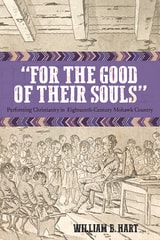
"For the Good of Their Souls"
Performing Christianity in Eighteenth-Century Mohawk CountryWilliam B. Hart
University of Massachusetts Press, 2020
Using the lens of performance theory to explain the ways in which the Mohawks considered converting and participating in Christian rituals, historian William B. Hart contends that Mohawks who prayed, sang hymns, submitted to baptism, took communion, and acquired literacy did so to protect their nation's sovereignty, fulfill their responsibility of reciprocity, serve their communities, and reinvent themselves. Performing Christianity was a means of "survivance," a strategy for sustaining Mohawk life and culture on their terms in a changing world.
Gambling and Survival in Native North America
Paul Pasquaretta
University of Arizona Press, 2003
The Pequots have found success at their southeastern Connecticut casino in spite of the odds. But in considering their story, Paul Pasquaretta shifts the focus from casinos to the political struggles that have marked the long history of indigenous-colonial relations. Viewing the survival of Native communities in the face of genocide and forced assimilation as a high-stakes game of chance, he examines gambling metaphors in historical and literary contexts to reveal strategies employed by several tribes as they participate in various "games" with white society--whether land re-acquisition, political positioning, or resistance to outside dominance.
Through a comparative analysis of texts spanning four centuries—colonial war narratives, nineteenth-century romance fiction, tribal memorials, Native American novels—Pasquaretta provides a framework for understanding Indian-white relations and the role of "chance" in the realm of colonialism. He explores two intertwining themes: the survival of indigenous peoples in the face of the European invasion of North America and the ongoing contest of Natives and newcomers that has transpired in the marketplace, on the battlefield, and in the courts. In so doing, he considers the impact of reservation gambling on the development of contemporary tribal communities and the role of traditional Indian gambling practices and stories in the survival of indigenous cultural traditions.
Gambling and Survival in Native North America is a wide-ranging book that shows how Native Americans have become active participants in their own survival despite the popular belief that Indian tribes, as "conquered peoples," have been rendered helpless for over a century. Working within a system devised to confine and even destroy them, they have found ways to remain in the game—and, against all odds, have learned to play it well.
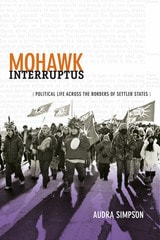
Mohawk Interruptus
Political Life Across the Borders of Settler StatesAudra Simpson
Duke University Press, 2014
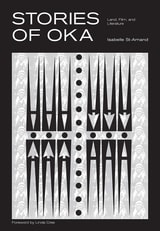
Stories of Oka
Land, Film, and LiteratureIsabelle St-Amand
University of Manitoba Press, 2018
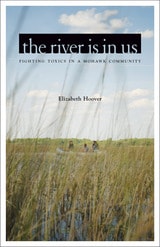
The River Is in Us
Fighting Toxics in a Mohawk CommunityElizabeth Hoover
University of Minnesota Press, 2017
Winner of the Labriola Center American Indian National Book Award 2017
Mohawk midwife Katsi Cook lives in Akwesasne, an indigenous community in upstate New York that is downwind and downstream from three Superfund sites. For years she witnessed elevated rates of miscarriages, birth defects, and cancer in her town, ultimately drawing connections between environmental contamination and these maladies. When she brought her findings to environmental health researchers, Cook sparked the United States’ first large-scale community-based participatory research project.
In The River Is in Us, author Elizabeth Hoover takes us deep into this remarkable community that has partnered with scientists and developed grassroots programs to fight the contamination of its lands and reclaim its health and culture. Through in-depth research into archives, newspapers, and public meetings, as well as numerous interviews with community members and scientists, Hoover shows the exact efforts taken by Akwesasne’s massive research project and the grassroots efforts to preserve the Native culture and lands. She also documents how contaminants have altered tribal life, including changes to the Mohawk fishing culture and the rise of diabetes in Akwesasne.
Featuring community members such as farmers, health-care providers, area leaders, and environmental specialists, while rigorously evaluating the efficacy of tribal efforts to preserve its culture and protect its health, The River Is in Us offers important lessons for improving environmental health research and health care, plus detailed insights into the struggles and methods of indigenous groups. This moving, uplifting book is an essential read for anyone interested in Native Americans, social justice, and the pollutants contaminating our food, water, and bodies.