Results by title
6 books match the query 'Monitoring'
Condition Monitoring of Rotating Electrical Machines
Peter Tavner
The Institution of Engineering and Technology, 2008
Design, Control and Monitoring of Tidal Stream Turbine Systems
Mohamed Benbouzid
The Institution of Engineering and Technology, 2023
Inventing Global Ecology
Tracking the Biodiversity Ideal in India, 1947–1997Michael L. Lewis
Ohio University Press, 2004
Blue jeans, MTV, Coca-Cola, and… ecology? We don't often think of conservation sciences as a U.S. export, but in the second half of the twentieth century an astounding array of scientists and ideas flowed out from the United States into the world, preaching the gospel of conservation-oriented ecology.
Inventing Global Ecology grapples with how we should understand the development of global ecology in the twentieth century—a science that is held responsible for, literally, saving the world. Is the spread of ecology throughout the globe a subtle form of cultural imperialism, as some claim? Or is it a manifestation of an increasingly globalized world, where ideas, people, and things move about with greater freedom than ever before?
Using India as the case study, Professor Michael Lewis considers the development of conservation policies and conservation sciences since the end of World War II and the role of United States scientists, ideas, and institutions in this process. Was India subject to a subtle form of Americanization, or did Indian ecologists develop their own agenda, their own science, and their own way of understanding (and saving) the natural world? Does nationality even matter when doing ecology?
This readable narrative will carry you through the first fifty years of independent India, from the meadows of the Himalayan Mountains to the rainforests of southern India, from Gandhi and Nehru to Project Tiger. Of equal interest to the general reader, to scientists, and to scholars of history and globalization, Inventing Global Ecology combines ethnographic fieldwork and oral history conducted in India and the United States, as well as traditional archival research.
Monitoring and Control using Synchrophasors in Power Systems with Renewables
Innocent Kamwa
The Institution of Engineering and Technology, 2020
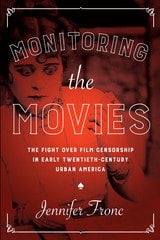
Monitoring the Movies
The Fight over Film Censorship in Early Twentieth-Century Urban AmericaBy Jennifer Fronc
University of Texas Press, 2017
As movies took the country by storm in the early twentieth century, Americans argued fiercely about whether municipal or state authorities should step in to control what people could watch when they went to movie theaters, which seemed to be springing up on every corner. Many who opposed the governmental regulation of film conceded that some entity—boards populated by trusted civic leaders, for example—needed to safeguard the public good. The National Board of Review of Motion Pictures (NB), a civic group founded in New York City in 1909, emerged as a national cultural chaperon well suited to protect this emerging form of expression from state incursions.
Using the National Board’s extensive files, Monitoring the Movies offers the first full-length study of the NB and its campaign against motion-picture censorship. Jennifer Fronc traces the NB’s Progressive-era founding in New York; its evolving set of “standards” for directors, producers, municipal officers, and citizens; its “city plan,” which called on citizens to report screenings of condemned movies to local officials; and the spread of the NB’s influence into the urban South. Ultimately, Monitoring the Movies shows how Americans grappled with the issues that arose alongside the powerful new medium of film: the extent of the right to produce and consume images and the proper scope of government control over what citizens can see and show.
Monitoring, Simulation, and Management of Visitor Landscapes
Randy Gimblett
University of Arizona Press, 2008
Conventional methods used in the planning and management of human-landscape interactions fall far short of the needs of today’s land management professionals. Monitoring, Simulation, and Management of Visitor Landscapes presents a growing body of applied research that provides decision makers with tools to maintain the ecological integrity of public places by evaluating the impacts of humans in various landscapes across space and time. This timely volume, available in both print and electronic editions, presents the latest research in this field, specifically focusing on the intersection of research and applied techniques. The contributors examine environmental management from around the world, including river traffic analysis in Melbourne, Australia; wilderness solitude and land use in the backcountry recreation areas of North America; the spatial modeling of visitor behavior at recreational areas near Vienna, Austria; the application of visibility studies and data from automatic visitor counters to simulation models in Denmark; and the integration of recreation and biodiversity in high-use environments in the Netherlands. This invaluable reference will help land managers and policy makers construct strategies for evaluating interactions between humans and the environment and expand the model of land management to include social and geographic, as well as environmental, factors.