Results by title
6 books match the query 'Monotheism'

Experiments in Mystical Atheism
Godless Epiphanies from Daoism to Spinoza and BeyondBrook Ziporyn
University of Chicago Press, 2024
Western philosophy is stuck in an irresolvable conflict between two approaches to the spiritual malaise of our times: either we need more God (the “turn to religion”) or less religion (the New Atheism). In this book, Brook Ziporyn proposes an alternative that avoids both totalizing theomania and atomizing reductionism. What we need, he argues, is a deeper, more thoroughgoing, even religious rejection of God: an affirmative atheism without either a creator to provide meaning or finite creatures in need of it—a mystical atheism.
In the legacies of Daoism and Buddhism as well as Spinoza, Nietzsche, and Bataille, Ziporyn discovers a critique of theism that develops into a new, positive sensibility—at once deeply atheist and richly religious. Experiments in Mystical Atheism argues that these “godless epiphanies” hold the key to renewing philosophy today.
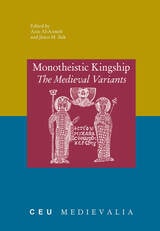
Monotheistic Kingship
The Medieval VariantsAziz Al-Azmeh
Central European University Press, 2004
This volume of essays intends to present diverse aspects of monotheistic kingship during the Middle Ages in two general-theoretical articles and a series of “case studies” on the relationship of religion and rulership. The authors discuss examples of the role of religion—based on both textual and iconic evidence—in Carolingian, Ottonian and late medieval western Europe; in Byzantium and Armenia; Georgia; Hungary; the Khazar Khanate; Poland, and Rus’. Two studies explore the issue in medieval Jewish and Islamic political thought. The editors hope that these special inquiries will engender more comparative studies on the subject.
Of God and Gods
Egypt, Israel, and the Rise of MonotheismJan Assmann
University of Wisconsin Press, 2008
For thousands of years, our world has been shaped by biblical monotheism. But its hallmark—a distinction between one true God and many false gods—was once a new and radical idea. Of God and Gods explores the revolutionary newness of biblical theology against a background of the polytheism that was once so commonplace.
Jan Assmann, one of the most distinguished scholars of ancient Egypt working today, traces the concept of a true religion back to its earliest beginnings in Egypt and describes how this new idea took shape in the context of the older polytheistic world that it rejected. He offers readers a deepened understanding of Egyptian polytheism and elaborates on his concept of the “Mosaic distinction,” which conceives an exclusive and emphatic Truth that sets religion apart from beliefs shunned as superstition, paganism, or heresy.
Without a theory of polytheism, Assmann contends, any adequate understanding of monotheism is impossible.
Best Books for General Audiences, selected by the American Association of School Librarians, and Best Books for Special Interests, selected by the Public Library Association
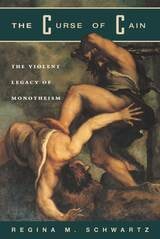
The Curse of Cain
The Violent Legacy of MonotheismRegina M. Schwartz
University of Chicago Press, 1997
"[A] provocative and timely examination of the interrelationship of monotheism and violence. . . . This is a refreshing alternative to criticism-biblical and otherwise-that so often confuses interpretation with closure; it is an invitation to an ethic of possibility, plenitude, and generosity, a welcome antidote to violence, as important for its insights into memory, identity, and place as for its criticism of monotheism's violent legacy."—Booklist
"Brilliant and provocative, this is a work demanding close attention from critics, theologians, and all those interested in the imaginative roots of common life."—Rowan Williams, Bishop of Monmouth
"A stunningly important book."—Walter Brueggemann, Theology Today
"Artfully rendered, endlessly provocative."—Lawrence Weschler, New Yorker
The Only True God
Early Christian Monotheism in Its Jewish ContextJames F. McGrath
University of Illinois Press, 2012
War, Peace, and Prosperity in the Name of God
The Ottoman Role in Europe's Socioeconomic EvolutionMurat Iyigun
University of Chicago Press, 2015
War, Peace, and Prosperity in the Name of God turns the focus on the “big three monotheisms”—Judaism, Islam, and Christianity—to consider these questions. Chronicling the relatively rapid spread of the Abrahamic religions among the Old World, Murat Iyigun shows that societies that adhered to a monotheistic belief in that era lasted longer, suggesting that monotheism brought some sociopolitical advantages. While the inherent belief in one true god meant that these religious communities had sooner or later to contend with one another, Iyigun shows that differences among them were typically strong enough to trump disagreements within. The book concludes by documenting the long-term repercussions of these dynamics for the organization of societies and their politics in Europe and the Middle East.