Results by title
4 books match the query 'Moral panics'

Conspiracy Narratives from Postcolonial Africa
Freemasonry, Homosexuality, and Illicit EnrichmentRogers Orock and Peter Geschiere
University of Chicago Press, 2024
Decoding conspiracy thinking at the nexus of sexuality, Freemasonry, and the occult.
In this book, anthropologists Rogers Orock and Peter Geschiere examine the moral panic over a perceived rise in homosexuality that engulfed Cameroon and Gabon beginning in the early twenty-first century. As they uncover the origins of the conspiratorial narratives that fed this obsession, they argue that the public’s fears were grounded in historically situated assumptions about the entanglement of same-sex practices, Freemasonry, and illicit enrichment.
This specific panic in postcolonial Central Africa fixated on high-ranking Masonic figures thought to lure younger men into sex in exchange for professional advancement. The authors’ thorough account shows how attacks on elites as homosexual predators corrupting the nation became a powerful outlet for mounting populist anger against the excesses and corruption of the national regimes. Unraveling these tensions, Orock and Geschiere present a genealogy of Freemasonry, taking readers from London through Paris to francophone Africa and revealing along the way how the colonial past shapes present-day anxieties linking same-sex practices to enrichment.
[more]
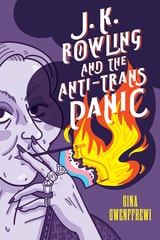
J. K. Rowling and the Anti-Trans Panic
Gina Gwenffrewi
The Ohio State University Press, 2026
A grippingly personal analysis of J. K. Rowling’s rise as an anti-trans activist, its media and pop cultural context, and trans resistance to the moral panic she has stoked.
In J. K. Rowling and the Anti-Trans Panic, Gina Gwenffrewi weaves her own experience as a trans woman living in Edinburgh, Scotland, with analysis of political and pop cultural discourses and artifacts to deliver a trenchant study of how fellow Edinburgh resident J. K. Rowling’s emergence as a major anti-trans campaigner and the years-long entrenchment of existing anti-trans forces have converged. Analyzing Rowling’s output since 2020, a series of anti-trans events at the University of Edinburgh, the transphobic comedy of Ricky Gervais within the British media landscape, YouTube commentaries, and more, Gwenffrewi creates a potent taxonomy of the rhetorical devices and foundational assumptions of anti-trans discourse. While the 2020s UK has proved fertile ground for “gender-critical” feminism, she argues, it has also provided the foundation for sites of resistance and for bolstering transgender voices worldwide. In celebrating trans activism and trans joy amid adversity, Gwenffrewi beautifully captures the light and dark of being out as trans in the city that—if it can fairly be called ground zero for anti-trans fervor—also embodies liberatory possibilities for trans people worldwide.
In J. K. Rowling and the Anti-Trans Panic, Gina Gwenffrewi weaves her own experience as a trans woman living in Edinburgh, Scotland, with analysis of political and pop cultural discourses and artifacts to deliver a trenchant study of how fellow Edinburgh resident J. K. Rowling’s emergence as a major anti-trans campaigner and the years-long entrenchment of existing anti-trans forces have converged. Analyzing Rowling’s output since 2020, a series of anti-trans events at the University of Edinburgh, the transphobic comedy of Ricky Gervais within the British media landscape, YouTube commentaries, and more, Gwenffrewi creates a potent taxonomy of the rhetorical devices and foundational assumptions of anti-trans discourse. While the 2020s UK has proved fertile ground for “gender-critical” feminism, she argues, it has also provided the foundation for sites of resistance and for bolstering transgender voices worldwide. In celebrating trans activism and trans joy amid adversity, Gwenffrewi beautifully captures the light and dark of being out as trans in the city that—if it can fairly be called ground zero for anti-trans fervor—also embodies liberatory possibilities for trans people worldwide.
[more]
Sex Panic Rhetorics, Queer Interventions
Ian Barnard
University of Alabama Press, 2020
Winner of the 2021 Conference on College Composition and Communication Lavender Rhetorics Award for Excellence in Queer Scholarship
Analyzes the rhetoric of contemporary sex panics to expose how homophobia, heterosexism, and transphobia define public, political, and scholarly preoccupations with sexuality and gender
In Sex Panic Rhetorics, Queer Interventions, Ian Barnard makes the counter-intuitive argument that contemporary “sex panics” are undergirded by queerphobia, even when the panics in question don’t appear to have much to do with queerness. Barnard presents six case studies that treat a wide range of sex panic rhetorics around child molesters, sex trafficking, transgenderism, incest, queer kids, and pedagogy to demonstrate this argument. By using examples from academic scholarship, political discourse, and popular culture, including the Kevin Spacey scandal and the award-winning film Moonlight, Barnard shows how homophobia and transphobia continue to pervade contemporary Western culture.
Barnard is concerned not so much with looking at the overt homophobia and transphobia that are the more obvious objects of antihomophobic and antitransphobic critique. The author’s focus, rather, is on excavating the significant traces of these panics in a neoliberal culture that has supposedly demonstrated its civility by its embrace of diversity, renunciation of its homophobic past, and attentiveness to the transgender revolution that has swept popular media and political culture in the United States and elsewhere. During a time of increasing conservative backlashes against advancing LGBTQ rights and human rights discourses in general, this book shows why it is important to attend to the liberal covers for sex panics that are not too far removed from their rhetorically conservative cousins.
[more]
The Fear of Child Sexuality
Young People, Sex, and AgencySteven Angelides
University of Chicago Press, 2019
Continued public outcries over such issues as young models in sexually suggestive ads and intimate relationships between teachers and students speak to one of the most controversial fears of our time: the entanglement of children and sexuality. In this book, Steven Angelides confronts that fear, exploring how emotional vocabularies of anxiety, shame, and even contempt not only dominate discussions of youth sexuality but also allow adults to avoid acknowledging the sexual agency of young people. Introducing case studies and trends from Australia, the United Kingdom, and North America, he challenges assumptions on a variety of topics, including sex education, age-of-consent laws, and sexting. Angelides contends that an unwillingness to recognize children’s sexual agency results not in the protection of young people but in their marginalization.
[more]