Results by title
8 books match the query 'Morrison, James'
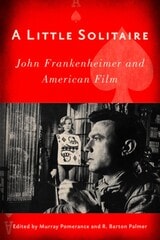
A Little Solitaire
John Frankenheimer and American FilmPomerance, Murray
Rutgers University Press, 2011
Think about some commercially successful film masterpieces--The Manchurian Candidate. Seven Days in May. Seconds. Then consider some lesser known, yet equally compelling cinematic achievements--The Fixer. The Gypsy Moths. Path to War. These triumphs are the work of the best known and most highly regarded Hollywood director to emerge from live TV drama in the 1950s--five-time Emmy-award-winner John Frankenheimer.
Although Frankenheimer was a pioneer in the genre of political thrillers who embraced the antimodernist critique of contemporary society, some of his later films did not receive the attention they deserved. Many claimed that at a midpoint in his career he had lost his touch. World-renowned film scholars put this myth to rest in A Little Solitaire, which offers the only multidisciplinary critical account of Frankenheimer's oeuvre. Especially emphasized is his deep and passionate engagement with national politics and the irrepressible need of human beings to assert their rights and individuality in the face of organizations that would reduce them to silence and anonymity.
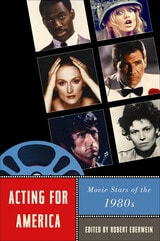
Acting for America
Movie Stars of the 1980sEberwein, Robert
Rutgers University Press, 2010
Scholars employing a variety of useful approaches explore how these movie stars' films speak to an increased audience awareness of advances in feminism, new ideas about masculinity, and the complex political atmosphere in the Age of Reagan. The essays demonstrate the range of these stars' contributions to such conversations in a variety of films, including blockbusters and major genres.
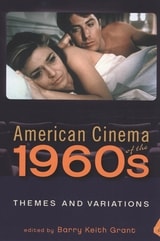
American Cinema of the 1960s
Themes and VariationsGrant, Barry Keith
Rutgers University Press, 2008
At the same time, American cinema underwent radical change as well. The studio system crumbled, and the Production Code was replaced by a new ratings system. Among the challenges faced by the film industry was the dawning shift in theatrical exhibition from urban centers to surburban multiplexes, an increase in runaway productions, the rise of independent producers, and competition from both television and foreign art films. Hollywood movies became more cynical, violent, and sexually explicit, reflecting the changing values of the time.
In ten original essays, American Cinema of the 1960s examines a range of films that characterized the decade, including Hollywood movies, documentaries, and independent and experimental films. Among the films discussed are Elmer Gantry, The Apartment, West Side Story, The Manchurian Candidate, To Kill a Mockingbird, Cape Fear, Bonnie and Clyde, 2001: A Space Odyssey, Midnight Cowboy, and Easy Rider.
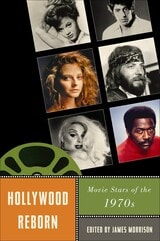
Hollywood Reborn
Movie Stars of the 1970sMorrison, James
Rutgers University Press, 2010
Hollywood Reborn examines this question, with contributors focusing on many of the era's key figures — noteworthy actors such as Jane Fonda, Al Pacino, Faye Dunaway, and Warren Beatty, and unexpected artists, among them Donald Sutherland, Shelley Winters, and Divine. Each essay offers new perspectives through the lens of an important star, illuminating in the process some of the most fascinating and provocative films of the decade.
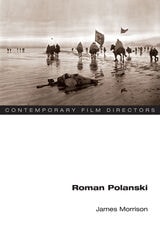
Roman Polanski
James Morrison
University of Illinois Press, 2006
James Morrison's critical study offers a comprehensive and critically engaged treatment on Roman Polanski's immense body of work. Tracing the filmmaker's remarkably diverse career from its beginnings to 2007, the book provides commentary on all of Polanski's major films in their historical, cultural, social, and artistic contexts. Morrison locates Polanski's work within the genres of comedy and melodrama, arguing that he is not merely obsessed with the theme of repression, but that his true interest is in the concrete—what is out in the open—and why we so rarely see it.
The range of Polanski's filmmaking challenges traditional divisions between high and low culture. For example, The Ninth Gate is a brash pastiche of the horror genre, while The Pianist is an Academy Award-winner about the Holocaust. Dubbing Polanski a relentless critic of modernity, Morrison concludes that his career is representative of the fissures, victories, and rehabilitations of the last fifty years of international cinema.
A volume in the series Contemporary Film Directors, edited by James Naremore
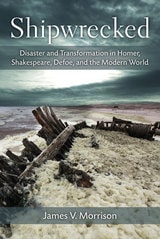
Shipwrecked
Disaster and Transformation in Homer, Shakespeare, Defoe, and the Modern WorldJames V. Morrison
University of Michigan Press, 2014
The recurrent treatment of shipwrecks in the creative arts demonstrates an enduring fascination with this archetypal scene: a shipwreck survivor confronting the elements. It is remarkable, for example, that the characters in the 2004 television show Lost share so many features with those from Homer’s Odyssey and Shakespeare’s The Tempest.
For survivors who are stranded on an island for some period of time, shipwrecks often present the possibility of a change in political and social status—as well as romance and even paradise. In each of the major shipwreck narratives examined, the poet or novelist links the castaways’ arrival on a new shore with the possibility of a new sort of life. Readers will come to appreciate the shift in attitude toward the opportunities offered by shipwreck: older texts such as the Odyssey reveals a trajectory of returning to the previous order. In spite of enticing new temptations, Odysseus—and some of the survivors in The Tempest—revert to their previous lives, rejecting what many might consider paradise. Odysseus is reestablished as king; Prospero travels back to Milan. In such situations, we may more properly speak of potential transformations. In contrast, many recent shipwreck narratives instead embrace the possibility of a new sort of existence. That even now the shipwreck theme continues to be treated, in multiple media, testifies to its long-lasting appeal to a very wide audience.

The Workless
Stigma, Unpaid Labour and the Myth of Economic InactivityJames Morrison
Intellect Books, 2026
A critical analysis of historical and contemporary discourses around worklessness, economic inactivity, and the factors that contribute to people withdrawing from the conventional labor market.
How do we define and respond to worklessness? This book combines analysis of media and political narratives around worklessness and factors that limit individuals’ capacity for conventional paid work—from disability and long-term illness to caring responsibilities—with interviews that shed light on the lived experience of so-called economic inactivity.
In dissecting popular portrayals of “the workless” in the present and tracing the historical evolution of discourses around “inactivity”—especially work-limiting disability—James Morrison draws heavily on sociological theories of stigma and symbolic annihilation. Conceptualising the contemporary narrative about the UK's supposed crisis in economic inactivity as the latest in a continuum of periodic moral panics about worklessness, he argues that neoliberal definitions of work and worklessness are too narrow, as they deny—and render invisible—the importance of various forms of unpaid labor performed by many people classified as “inactive,” notably informal caregiving and volunteering.
Women and New Hollywood
Gender, Creative Labor, and 1970s American CinemaAaron Hunter
Rutgers University Press, 2023
Women and New Hollywood revises our understanding of this important era in American film by examining the contributions that women made not only as directors, but also as screenwriters, editors, actors, producers, and critics. Including essays on film history, film texts, and the decade’s film theory and criticism, this collection showcases the rich and varied cinematic products of women’s creative labor, as well as the considerable barriers they faced. It considers both women working within and beyond the Hollywood film industry, reconceptualizing New Hollywood by bringing it into dialogue with other American cinemas of the 1970s. By valuing the many forms of creative labor involved in film production, this collection offers exciting alternatives to the auteurist model and new ways of appreciating the themes and aesthetics of 1970s American film.