Results by title
4 books match the query 'Mosaics'
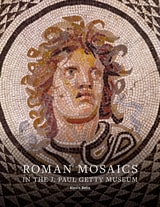
Roman Mosaics in the J. Paul Getty Museum
Alexis Belis
J. Paul Getty Trust, The, 2016
The mosaics in the collection of the J. Paul Getty Museum span the second through the sixth centuries AD and reveal the diversity of compositions found throughout the Roman Empire during this period. Elaborate floors of stone and glass tesserae transformed private dwellings and public buildings alike into spectacular settings of vibrant color, figural imagery, and geometric design. Scenes from mythology, nature, daily life, and spectacles in the arena enlivened interior spaces and reflected the cultural ambitions of wealthy patrons. This online catalogue documents all of the mosaics in the Getty Museum’s collection, presenting their artistry in new color photography as well as the contexts of their discovery and excavation across Rome's expanding empire—from its center in Italy to provinces in southern Gaul, North Africa, and ancient Syria.
Reflecting the Getty's commitment to open content, Roman Mosaics in the J. Paul Getty Museum is available online at www.getty.edu/publications/romanmosaics and may be downloaded free of charge in multiple formats. For readers who wish to have a bound reference copy, a paperback edition has been made available for sale.
The publication of this online catalogue is issued on the occasion of the exhibition, Roman Mosaics across the Empire, on view at the Getty Villa from March 30 through September 12, 2016.
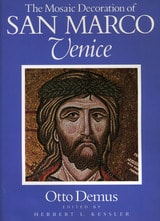
The Mosaic Decoration of San Marco, Venice
Otto Demus
University of Chicago Press, 1988

The Mosaics of San Marco in Venice
Otto Demus
University of Chicago Press, 1984
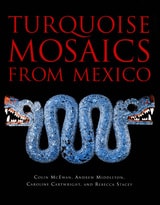
Turquoise Mosaics from Mexico
Colin McEwan, Andrew Middleton, Caroline Cartwright, and Rebecca Stacey
Duke University Press, 2006
Illustrated with more than 160 color images, this book describes the recent scientific findings about the mosaics in detail, revealing them to be rich repositories of information about ancient Mexico. The materials used to construct the mosaics demonstrate their makers’ deep knowledge of the natural world and its resources. The effort that would have been involved in procuring the materials testifies to the mosaics’ value and significance in a society imbued with myths and religious beliefs. The British Museum’s analyses have provided evidence of the way that the materials were prepared and assembled, the tools used, and the choices that were made by artisans. In addition, by drawing on historical accounts including early codices, as well as recent archaeological discoveries, specialists have learned more about the place of the mosaics in ancient Mexican culture.
Filled with information about the religion, art, and natural and cultural history as well as the extraordinary ability of modern science to enable detailed insight into past eras, Turquoise Mosaics from Mexico offers an overview of the production, utilization, and eventual fate of these beautiful and mysterious objects.