Results by title

10 books match the query 'Moscow'
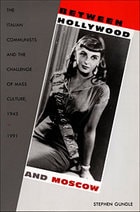
cover of Between Hollywood and Moscow: The Italian Communists and the Challenge of Mass Culture, 1943-1991

Between Hollywood and Moscow

The Italian Communists and the Challenge of Mass Culture, 1943-1991

Stephen Gundle

Duke University Press, 2000

In the postwar years, Italy underwent a far-reaching process of industrialization that transformed the country into a leading industrial power. Throughout most of this period, the Italian Communist Party (PCI) remained a powerful force in local government and civil society. However, as Stephen Gundle observes, the PCI was increasingly faced with challenges posed by modernization, particularly by mass communication, commercial cultural industries, and consumerism. Between Hollywood and Moscow is an analysis of the PCI’s attempts to cope with these problems in an effort to maintain its organization and subculture.

Gundle focuses on the theme of cultural policy, examining how the PCI’s political strategies incorporated cultural policies and activities that were intended to respond to the Americanization of daily life in Italy. In formulating this policy, Gundle contends, the Italian Communists were torn between loyalty to the alternative values generated by the Communist tradition and adaptation to the dominant influences of Italian modernization. This equilibrium eventually faltered because the attractive aspects of Americanization and pop culture proved more influential than the PCI’s intellectual and political traditions.

The first analysis in English of the cultural policies and activities of the PCI, this book will appeal to readers with an interest in modern Italy, the European left, political science, and media studies.
[more]
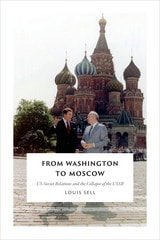
cover of From Washington to Moscow: US-Soviet Relations and the Collapse of the USSR

From Washington to Moscow

US-Soviet Relations and the Collapse of the USSR

Louis Sell

Duke University Press, 2016

When the United States and the Soviet Union signed the first Strategic Arms Limitation Talks accords in 1972 it was generally seen as the point at which the USSR achieved parity with the United States. Less than twenty years later the Soviet Union had collapsed, confounding experts who never expected it to happen during their lifetimes. In From Washington to Moscow veteran US Foreign Service officer Louis Sell traces the history of US–Soviet relations between 1972 and 1991 and explains why the Cold War came to an abrupt end. Drawing heavily on archival sources and memoirs—many in Russian—as well as his own experiences, Sell vividly describes events from the perspectives of American and Soviet participants. He attributes the USSR's fall not to one specific cause but to a combination of the Soviet system's inherent weaknesses, mistakes by Mikhail Gorbachev, and challenges by Ronald Reagan and other US leaders. He shows how the USSR's rapid and humiliating collapse and the inability of the West and Russia to find a way to cooperate respectfully and collegially helped set the foundation for Vladimir Putin’s rise.
 
[more]
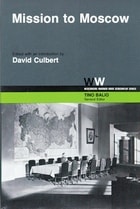
cover of Mission to Moscow

Mission to Moscow

Edited by David Culbert; Tino T. Balio, Series Editor

University of Wisconsin Press, 1980

Mission to Moscow  is a notorious classic among propaganda films produced in the United States. Never has another feature film been made with such explicit direction from the federal government, although the result failed to persuade every viewer.
[more]
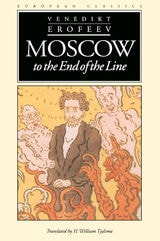
cover of Moscow to the End of the Line

Moscow to the End of the Line

Venedikt Erofeev, translated from the Russian by H. William Tjalsma

Northwestern University Press, 1992
In this classic of Russian humor and social commentary, a fired cable fitter goes on a binge and hopes a train to Petushki (where his "most beloved of trollops" awaits). On the way he bestows upon angels, fellow passengers, and the world at large a magnificent monologue on alcohol, politics, society, alcohol, philosophy, the pains of love, and, of course, alcohol.
[more]
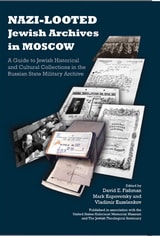
cover of Nazi-Looted Jewish Archives in Moscow: A Guide to Jewish Historical and Cultural Collections in the Russian State Military Archive

Nazi-Looted Jewish Archives in Moscow

A Guide to Jewish Historical and Cultural Collections in the Russian State Military Archive

Edited by David E. Fishman, Mark Kupovetsky, and Vladimir Kuzelenkov

University of Scranton Press, 2010
During their ascendency and subsequent occupation of much of Europe, the Nazis plundered the documents and cultural treasures of Jewish organizations as well as other groups and individuals they deemed to be enemies of the Reich. When the Nazis were crushed, many of these looted collections, as well as records of Nazi state agencies that persecuted and murdered Jews, were discovered by the Soviet Army, then transferred to Moscow and held for decades in closed, secret archives. This catalog and guide supplies the first comprehensive, collection-by-collection English-language description of this historical and cultural documentation, which the Nazis meant to be among the only vestiges of the millions of victims they annihilated.  Scholars and lay researchers will find this reference a unique and indispensable guide to the invaluable remains of a rich world brutally destroyed.
[more]
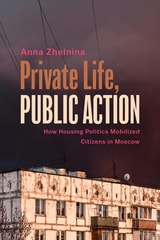
cover of Private Life, Public Action: How Housing Politics Mobilized Citizens in Moscow

Private Life, Public Action

How Housing Politics Mobilized Citizens in Moscow

Anna Zhelnina

Temple University Press, 2026

Renovation, an urban renewal plan in Moscow that was announced in the spring of 2017, proposed to demolish thousands of socialist-era apartment buildings. In a country where it is rare under an authoritarian government, residents supported or opposed the redevelopment by mobilizing and organizing into local alliances. They were often shocked by their neighbors who were excited about the new housing or those suspicious of being displaced.
 
Private Life, Public Action traces how residents impacted by the relocation plan became activists despite having little to no experience organizing or even forming political affiliations and opinions. Author Anna Zhelnina details the ways in which neighbors engaged in collective action, as well as the individual and structural changes these interactions caused.

Zhelnina develops the concept of “housing strategies” to explain how residents’ debates with their neighbors about housing were shaped by their private life strategies. She applies her findings about housing in Moscow to ongoing questions about political mobilization, demonstrating how public engagement is shaped by historical and social contexts.

Examining the intersection of housing, politics, and citizenship in contemporary Russia, Private Life, Public Action offers a new way to look at urban change.

In the series Politics, History, and Social Change
[more]
cover of Street Fashion Moscow

Street Fashion Moscow

Elena Siemens

Intellect Books, 2017
Few cities in the world offer the diversity of stunning visuals that can be found on the streets of Moscow, from famous landmarks like Red Square to the Boulevard Ring and Kamergersky Lane and the residential areas beyond the Garden Ring. For this book, former Moscow resident Elena Siemens traveled them all as an urban flâneur, taking photographs of contemporary fashion in action and setting it alongside explorations of modern and historic representations of fashion and beauty as seen in a wide variety of products of Russian culture. Through her photos and analysis, Siemens considers the question of how contemporary Russians understand their post-Soviet identity and express it through the ways they present themselves in public.
 
[more]
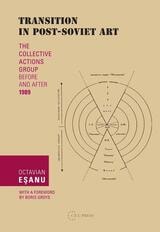
cover of Transition in Post-Soviet Art: The Collective Actions Group Before and After 1989

Transition in Post-Soviet Art

The Collective Actions Group Before and After 1989

Octavian Esanu

Central European University Press, 2013
The artistic tradition that emerged as a form of cultural resistance in the 1970s changed during the transition from socialism to capitalism. This volume presents the evolution of the Moscow-based conceptual artist group called Collective Actions, proposing it as a case-study for understanding the transformations that took place in Eastern European art after the fall of the Berlin Wall. Esanu introduces Moscow Conceptualism by performing a close examination of the Collective Actions group's ten-volume publication Journeys Outside the City and of the Dictionary of Moscow Conceptualism. He analyzes above all the evolution of Collective Actions through ten consecutive phases, discussing changes that occur in each new volume of the Journeys. Compares the part of the Journeys produced in the Soviet period with those volumes assembled after the dissolution of the USSR. The concept of "transition" and the activities of Soros Centers for Contemporary Art are also analyzed.
[more]
cover of Trying to Make Law Matter: Legal Reform and Labor Law in the Soviet Union

Trying to Make Law Matter

Legal Reform and Labor Law in the Soviet Union

Kathryn Hendley

University of Michigan Press, 1996

One of the most pressing issues of our time is the possibility of rebuilding the rule of law in former Leninist countries as a part of the transition to a market democracy. Despite formal changes in legislation and an increased attention to law in the rhetoric of policymakers, instituionalization of the rule of law has proven to be an immensely difficult challenge. Leninist regimes destroyed popular faith in law and legal institutions and, like other transitional regimes, contemporary post-communist Russia lacks the necessary institutional infrastructure to facilitate the growth of the rule of law.
Trying to Make Law Matter provides unique insight into the possibility of creating the rule of law. It is based on Kathryn Hendley's pathbreaking field research into the actual practices of Russian trial courts, lawyers, factory managers, and labor unions, contrasting the idealistic legal pronouncements of workers' rights during the Gorbachev era with tawdry reality of inadequate courts and dispirited workers.
Hendley frames her study of Russian law in action with a lively theoretical analysis of the fundamental prerequisites of the rule of law not only as a set of ideals but as a legal system that rests on the participation of rights-bearing citizens. This work will appeal to law, political science, and sociology scholars as well as area specialists and those who study transitions to market democracy.
Kathryn Hendley is Professor, Law and Political Science, University of Wisconsin, Madison.
[more]
cover of World Film Locations: Moscow

World Film Locations

Moscow

Edited by Birgit Beumers

Intellect Books, 2014

A megalopolis of more than twelve million inhabitants, Moscow is a city with a rich and varied history. In 1918, following the Revolution, Moscow became the capital of the Soviet Union, and it remained capital of the Russian Federation after 1991. Moscow’s status as capital, from 1918 to the present, more or less coincides with its life on the silver screen, since there are very few preserved filmic depictions of the city from pre-Revolutionary years. In the Soviet era, film often served propaganda purposes; therefore, the image of Moscow on celluloid echoes the political ambitions of the country, and film locations and settings reflect the cultural agenda of the times.

World Film Locations: Moscow compares and contrasts images from the past and present, giving the forty-six carefully selected scene reviews and seven spotlight essays a historical focus. With an inside look at the city’s film studio, Mosfilm, the book is essential for all armchair travelers and cinephiles alike.
[more]