Results by title
5 books match the query 'Mosques'
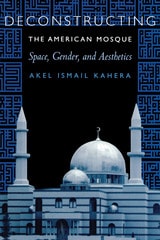
Deconstructing the American Mosque
Space, Gender, and AestheticsBy Akel Ismail Kahera
University of Texas Press, 2002
From the avant-garde design of the Islamic Cultural Center in New York City to the simplicity of the Dar al-Islam Mosque in Abiquiu, New Mexico, the American mosque takes many forms of visual and architectural expression. The absence of a single, authoritative model and the plurality of design nuances reflect the heterogeneity of the American Muslim community itself, which embodies a whole spectrum of ethnic origins, traditions, and religious practices.
In this book, Akel Ismail Kahera explores the history and theory of Muslim religious aesthetics in the United States since 1950. Using a notion of deconstruction based on the concepts of "jamal" (beauty), "subject," and "object" found in the writings of Ibn Arabi (d. 1240), he interprets the forms and meanings of several American mosques from across the country. His analysis contributes to three debates within the formulation of a Muslim aesthetics in North America—first, over the meaning, purpose, and function of visual religious expression; second, over the spatial and visual affinities between American and non-American mosques, including the Prophet's mosque at Madinah, Arabia; and third, over the relevance of culture, place, and identity to the making of contemporary religious expression in North America.

Got Religion?
How Churches, Mosques, and Synagogues Can Bring Young People BackNaomi Schaefer Riley
Templeton Press, 2014
The traditional markers of growing up are getting married and becoming financially independent. But young adults are delaying these milestones, sometimes for a full decade longer than their parents and grandparents. This new phase of “emerging adulthood” is diminishing the involvement of young people in religious institutions, sapping the strength and vitality of faith communities, and creating a more barren religious landscape for the young adults who do eventually decide to return to it. Yet, clearly there are some churches, synagogues, and mosques that are making strides in bringing young people back to religion.
Got Religion? offers in-depth, on-the-ground reporting about the most successful of these institutions and shows how many of the structural solutions for one religious group can be adapted to work for another.
The faith communities young people attach themselves to are not necessarily the biggest or the most flashy. They are not the wealthiest or the ones employing the latest technology. Rather, they are the ones that create stability for young people, that give them real responsibility in a community and that help them form the habits of believers that will last a lifetime.
Houses of God
Region, Religion, and Architecture in the United StatesPeter W. Williams
University of Illinois Press, 1997
Mosques in the Metropolis
Incivility, Caste, and Contention in EuropeElisabeth Becker
University of Chicago Press, 2021
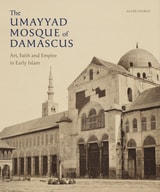
The Umayyad Mosque of Damascus
Art, Faith and Empire in Early IslamAlain George
Gingko, 2020
The Umayyad Mosque of Damascus is one of the oldest continuously used religious sites in the world. The mosque we see today was built in 705 CE by the Umayyad caliph al-Walid on top of a fourth-century Christian church that had been erected over a temple of Jupiter. Incredibly, despite the recent war, the mosque has remained almost unscathed, but over the centuries has been continuously rebuilt after damage from earthquakes and fires. In this comprehensive biography of the Umayyad Mosque, Alain George explores a wide range of sources to excavate the dense layers of the mosque’s history, also uncovering what the structure looked like when it was first built with its impressive marble and mosaic-clad walls. George incorporates a range of sources, including new information he found in three previously untranslated poems written at the time the mosque was built, as well as in descriptions left by medieval scholars. He also looks carefully at the many photographs and paintings made by nineteenth-century European travelers, particularly those who recorded the building before the catastrophic fire of 1893.