Results by title
3 books match the query 'Mosquitoes'
Mosquito Work
Vectors of Global HealthAnn H. Kelly and Javier Lezaun
Duke University Press, 2026
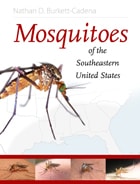
Mosquitoes of the Southeastern United States
Nathan D. Burkett-Cadena
University of Alabama Press, 2013
The definitive guide to the Southeast’s most persistent—and medically important—tiny predators.
Mosquitoes of the Southeastern United States is a full-color, highly illustrated guide to the sixty-four known species of mosquitoes in eleven genera that populate the South—from the Gulf Coastal states to the Carolinas. In addition to detailed and fully illustrated identification keys for both larvae and adults, it includes information on the mosquito’s lifecycle, interaction with humans, and biological diversity in the southeast.
This area of the country has a rich mosquito fauna with diverse species ranging from the tiny pitcher plant mosquito to the brilliantly colored cannibal mosquito. Close-up photographs of live adults showcase their widely varied and beautiful bodies while remarkable images made with the aid of a microaquarium reveal the differences in larval stages of the subjects. For each species described, Nathan D. Burkett-Cadena provides biological information including distribution maps, habitat associations of the larvae and adults, range of animals fed upon, and importance from a medical standpoint.
This book’s usefulness to mosquito control programs in the Southeast and beyond cannot be overstated. Not only for native species, but for new species introduced from exotic locales, mosquitoes must be properly identified in order to know how best to control them. This volume will also be valuable to medical and public health specialists working on mosquito-borne diseases, such as malaria, dengue, yellow fever, West Nile virus, and filariasis. Mosquitoes of the Southeastern United States is the first guide to integrate full-color photography, illustrated keys, and current information on the biology of mosquitoes into one definitive resource.
The Mosquito Crusades
A History of the American Anti-Mosquito Movement from the Reed Commission to the First Earth DayPatterson, Gordon
Rutgers University Press, 2009
Providing readers with a fascinating exploration of the relationship between science, technology, and public policy, Gordon Patterson's narrative begins in New Jersey with John B. Smith's effort to develop a comprehensive plan and solution for mosquito control, one that would serve as a national model. From the Reed Commission's 1900 yellow fever experiment to the first Earth Day seventy years later, Patterson provides an eye-opening account of the crusade to curtail the deadly mosquito population.