Results by title
16 books match the query 'Mother'
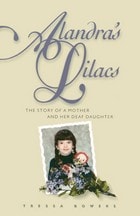
Alandra's Lilacs
The Story of a Mother and Her Deaf DaughterTressa Bowers
Gallaudet University Press, 1999
When, in 1968, 19-year-old Tressa Bowers took her baby daughter to an expert on deaf children, he pronounced that Alandra was “stone deaf,” she most likely would never be able to talk, and she probably would not get much of an education because of her communication limitations. Tressa refused to accept this stark assessment of Alandra’s prospects. Instead, she began the arduous process of starting her daughter’s education.
Economic need forced Tressa to move several times, and as a result, she and Alandra experienced a variety of learning environments: a pure oralist approach, which discouraged signing; Total Communication, in which the teachers spoke and signed simultaneously; a residential school for deaf children, where Signed English was employed; and a mainstream public school that relied upon interpreters. Changes at home added more demands, from Tressa’s divorce to her remarriage, her long work hours, and the ongoing challenge of complete communication within their family. Through it all, Tressa and Alandra never lost sight of their love for each other, and their affection rippled through the entire family. Today, Tressa can triumphantly point to her confident, educated daughter and also speak with pride of her wonderful relationship with her deaf grandchildren. Alandra’s Lilacs is a marvelous story about the resiliency and achievements of determined, loving people no matter what their circumstances might be.
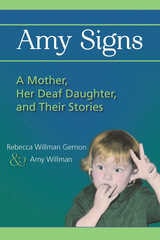
Amy Signs
A Mother, Her Deaf Daughter, and Their StoriesRebecca Willman Gernon
Gallaudet University Press, 2012
“Thirty-seven years ago, I vowed to write a truthful book about raising a deaf child.” Rebecca Willman Gernon followed through on her promise with her deaf daughter Amy Willman in this extraordinary new narrative. Many stories have been told about a parent’s struggle to help her deaf child succeed in a mostly hearing world. Amy Signs marks a signature departure in that both Rebecca and Amy relate their perspectives on their journey together.
When she learns of 11-month-old Amy’s deafness in 1969, Rebecca fully expresses her anguish, and traces all of the difficulties she endured in trying to find the right educational environment for Amy. The sacrifices of the rest of her family weighed heavily on her, also. Though she resolved to place four-year-old Amy in Nebraska’s residential school for deaf students, the emotional toll seemed too much to bear.
Amy’s view acts as the perfect counterpoint. Interwoven with her mother’s story, Amy’s account confirms that signing served her best. She summarizes life in boarding school as “laughter and homesickness.” She laughed with all of her deaf friends, though felt homesick at times. Amy thanks her mother for the gift of sign, asserting that a mainstream education would never have led her to earn a master’s degree and later teach American Sign Language at the University of Nebraska. Amy Signs is a positive albeit cautionary tale for parents of deaf children today whose only choice is a mainstreamed education.
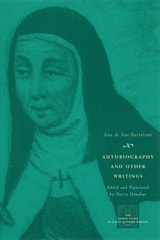
Autobiography and Other Writings
Ana de San Bartolomé
University of Chicago Press, 2008
Her autobiography, clearly inseparable from her religious vocation, expresses the tensions and conflicts that often accompanied the lives of women whose relationship to the divine endowed them with an authority at odds with the temporary powers of church and state. Last translated into English in 1916, Ana’s writings give modern readers fascinating insights into the nature of monastic life during the highly charged religious and political climate of late-sixteenth- and early-seventeenth-century Spain.
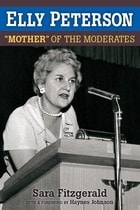
Elly Peterson
"Mother" of the ModeratesSara Fitzgerald
University of Michigan Press, 2012
"A magisterially written, well-researched, informative, and entertaining biography of a woman who helped throw open the doors to broader participation and power for women in the Republican Party and American politics."
---Dave Dempsey, author of William G. Milliken: Michigan's Passionate Moderate
"Elly Peterson will be a text to which historians and researchers turn for insight into the yin and yang of mainstream politics in the mid-century."
---Patricia Sullivan, past president, Journalism and Women Symposium
"This lively portrait of a leading woman in the Republican Party between 1952 and 1982 also charts the party's shift to the right after 1964, revealingly viewed through the eyes of liberal Republican women. Intensively researched with ethnographic attention to the subtleties of political culture, Fitzgerald's book is essential reading for anyone interested in how the Republican Party changed during the turbulent decades after 1960 and how women and women's issues shaped those changes."
---Kathryn Kish Sklar, Distinguished Professor of History, State University of New York, Binghamton
"Sara Fitzgerald tells Peterson's story in this superb and timely biography. It carries a message that deserves the widest audience as the nation struggles to find needed consensus on critical issues amid poisonous political partisanship that has made it increasingly difficult for public officials to bridge their differences. I hope that every American reads it."
---Pulitzer Prize winner Haynes Johnson, from the Foreword
"To understand the quest for equal rights in America you really need to meet those women who were active at the time of transition. In this gripping biography we meet one woman who entered a male dominated world and triumphed."
---Francis X. Blouin Jr., Director, Bentley Historical Library
"Sara Fitzgerald's writing is as intelligent as it is entertaining."
---Best-selling novelist Diane Chamberlain
Elly Peterson was one of the highest ranking women in the Republican Party. In 1964 she ran for a Michigan seat in the U.S. Senate and became the first woman to serve as chair of the Michigan Republican Party. During the 1960s she grew disenchanted with the increasing conservatism of her party, united with other feminists to push for the Equal Rights Amendment and reproductive choice, battled Phyllis Schlafly to prevent her from gaining control of the National Federation of Republican Women, and became an independent.
Elly Peterson's story is a missing chapter in the political history of Michigan, as well as the United States. This new biography, written by Sara Fitzgerald (a Michigan native and former Washington Post editor), finally gives full credit to one of the first female political leaders in this country.
When Peterson resigned in 1970 as assistant chairman of the Republican National Committee, David Broder of the Washington Post wrote that "her abilities would have earned her the national chairmanship, were it not for the unwritten sex barrier both parties have erected around that job."
From Mother and Daughter
Poems, Dialogues, and Letters of Les Dames des RochesMadeleine and Catherine des Roches
University of Chicago Press, 2006
Madeleine and Catherine spent their entire lives in civil war–torn Poitiers, where a siege of the city, vandalism, and desecration of churches fueled their political and religious commentary. Members of an elite literary circle that would inspire salon culture during the next century, the Dames des Roches addressed the issues of the day, including the ravages of religious civil wars, the weak monarchy, education for women, marriage and the family, violence against women, and the status of women intellectuals. Through their collaborative engagement in shared public discourse, both mother and daughter were models of moral, political, and literary agency.
In the Name of the Mother
Italian Americans, African Americans, and Modernity from Booker T. Washington to Bruce SpringsteenSamuele F. S. Pardini
Dartmouth College Press, 2017
Mary, Mother and Warrior
The Virgin in Spain and the AmericasBy Linda B. Hall
University of Texas Press, 2004
A Mother who nurtures, empathizes, and heals... a Warrior who defends, empowers, and resists oppression... the Virgin Mary plays many roles for the peoples of Spain and Spanish-speaking America. Devotion to the Virgin inspired and sustained medieval and Renaissance Spaniards as they liberated Spain from the Moors and set about the conquest of the New World. Devotion to the Virgin still inspires and sustains millions of believers today throughout the Americas.
This wide-ranging and highly readable book explores the veneration of the Virgin Mary in Spain and the Americas from the colonial period to the present. Linda Hall begins the story in Spain and follows it through the conquest and colonization of the New World, with a special focus on Mexico and the Andean highlands in Peru and Bolivia, where Marian devotion became combined with indigenous beliefs and rituals. Moving into the nineteenth century, Hall looks at national cults of the Virgin in Mexico, Bolivia, and Argentina, which were tied to independence movements. In the twentieth century, she examines how Eva Perón linked herself with Mary in the popular imagination; visits contemporary festivals with significant Marian content in Spain, Peru, and Mexico; and considers how Latinos/as in the United States draw on Marian devotion to maintain familial and cultural ties.
Mary, Mother of God's Word Made Flesh
Dylan Schrader
Catholic University of America Press, 2025
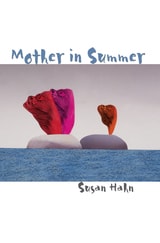
Mother in Summer
Susan Hahn
Northwestern University Press, 2002

Mother of Detective Fiction
The Life and Works of Anna Katharine GreenPatricia D. Maida
University of Wisconsin Press, 1989
In examining the life and works of Anna Katharine Green, one discovers a slice of American life: in the social events of New York City, in the plight of young working women, in the moral dilemmas of upright citizens pursuing the American dream.
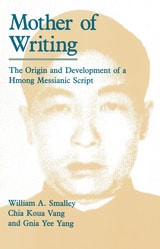
Mother of Writing
The Origin and Development of a Hmong Messianic ScriptWilliam A. Smalley, Chia Koua Vang, and Gnia Yee Yang
University of Chicago Press, 1990
An anthropological linguist who has worked among the Hmong, William A. Smalley joins Shong Lue's chief disciple, Chia Koua Vang, and one of his associates, to tell the fascinating story of how the previously unschooled farmer developed his remarkable writing system through four stages of increasing sophistication. The uniqueness of Shong Lue's achievement is highlighted by a comparison of Shong Lue's writing system to other known Hmong systems and to the history of writing as a whole.
In addition to a nontechnical linguistic analysis of the script and a survey of its current use, Mother of Writing provides an intriguing cultural account of Shong Lue's life. The book traces the twenty-year-long struggle to disseminate the script after Shong Lue's death, first by handwriting, then by primitive moveable type, an abortive attempt to design a wooden typewriter, and finally by modern wordprocessing. In a moving concluding chapter, Smalley discusses his own complex feelings about his coauthors' story.
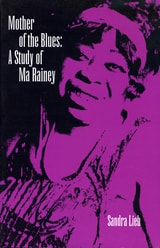
Mother of the Blues
A Study of Ma RaineySandra R. Lieb
University of Massachusetts Press, 1981
Mother of the Blues is the first substantive biography of Gertrude "Ma" Rainey, the pioneering blues vocalist that dominated blues in the 1920s. Through a comprehensive study of Rainey's remarkable career, Sandra R. Lieb analyzes how Rainey combined African American folk traditions with emerging blues styles to help establish and popularize the blues as a national musical phenomenon in the early twentieth century. With close attention to Rainey's recordings, performances, and cultural significance as a Black female artist, Lieb explores the impact of Ma Rainey distinctive deep-throated voice, mesmerizing presence, and songs of love, desire, sexuality, and society in American music history and blues culture.
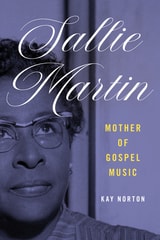
Sallie Martin, Mother of Gospel Music
Kay Norton
University of Illinois Press, 2026
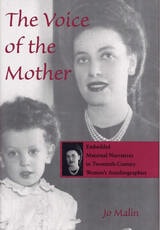
The Voice of the Mother
Embedded Maternal Narratives in Twentieth-Century Women's AutobiographiesJo Malin
Southern Illinois University Press, 2000
Every woman autobiographer is a daughter who writes and establishes her identity through her autobiographical narrative. In The Voice of the Mother, Jo Malin argues that many twentieth-century autobiographies by women contain an intertext, an embedded narrative, which is a biography of the writer/daughter’s mother.
Analyzing this narrative practice, Malin examines ten texts by women who seem particularly compelled to tell their mothers’ stories: Virginia Woolf, Sara Suleri, Kim Chernin, Drusilla Modjeska, Joan Nestle, Carolyn Steedman, Dorothy Allison, Adrienne Rich, Cherríe Moraga, and Audre Lorde. Each author is, in fact, able to write her own autobiography only by using a narrative form that contains her mother’s story at its core. These texts raise interesting questions about autobiography as a genre and about a feminist writing practice that resists and subverts the dominant literary tradition.
Malin theorizes a hybrid form of autobiographical narrative containing an embedded narrative of the mother. The textual relationship between the two narratives is unique among texts in the auto/biographical canon. This alternative narrative practice—in which the daughter attempts to talk both to her mother and about her—is equally an autobiography and a biography rather than one or the other. The technique is marked by a breakdown of subject/object categories as well as auto/biographical dichotomies of genre. Each text contains a “self” that is more plural than singular, yet neither.
In addition to being a theoretical and textual analysis, Malin’s book is also a mother-daughter autobiography and biography itself. She shares her own story and her mother’s story as a way to connect directly with readers and as a way to bridge the gap between theory and practice.
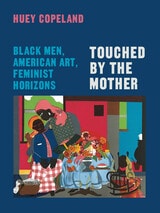
Touched by the Mother
Black Men, American Art, Feminist HorizonsHuey Copeland
University of Chicago Press, 2026
Collecting twenty years of incisive essays, articles, and interviews—including four published here for the first time—by art historian Huey Copeland, this book affirms the extraordinary depth of black men’s cultural production and the diversity of artistic practices that explore visual black masculinity in the United States. Part history, part memoir, part critical manifesto, Touched by the Mother offers a multi-faceted look at American art and discourse of the past fifty years, a personal meditation on navigating the world as a black gay man, and a feminist perspective on the ways transatlantic slavery continues to mark African and African diasporic men. Focusing on how the black maternal shapes black masculinity, Copeland confronts the dynamics that position African-American men—after their mothers—as sites of violence, creativity, and contestation in the cultural imagination.
Richly illustrated throughout, Touched by the Mother considers an exciting range of assemblage, painting, performance, photography, sculpture, and video works by more than twenty renowned practitioners, along with interviews featuring Hilton Als, Thelma Golden, Frank B. Wilderson, III, and other influential figures in contemporary art, culture, and criticism. Works by artists including Mark Bradford, Theaster Gates, David Hammons, Barkley L. Hendricks, Arthur Jafa, Glenn Ligon, Kerry James Marshall, Howardena Pindell, Sun Ra, and Lorna Simpson represent modes of making and thinking that are uniquely “touched by the mother,” Copeland argues, moving us toward the promise of black feminist futures.
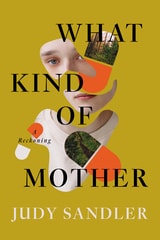
What Kind of Mother
A ReckoningJudy Sandler
West Virginia University Press, 2026
A mother’s memoir that reckons with her son’s descent into severe mental illness. What appears to be substance use disorder in high school later becomes a dual diagnosis as bipolar disorder emerges. Her son soon grows disillusioned with prescribed pharmaceuticals and participates in a residential treatment program that assists people in forgoing medication altogether. However, the program ultimately ejects him from the community for the very behaviors that the medication once managed. The book chronicles Sandler's initial denial of her truth, her painful awakening to mental illness in her family, and her eventual acceptance that she cannot save her son—only he can save himself.