Results by title
3 books match the query 'Mother goddesses'
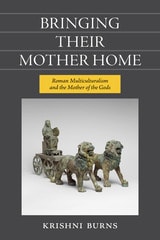
Bringing Their Mother Home
Roman Multiculturalism and the Mother of the GodsKrishni Burns
University of Michigan Press, 2025
Drawing on historical, literary, and archaeological evidence, Bringing Their Mother Home reevaluates the semiotics and practices of the Magna Mater cult as a way to perform the multicultural Roman identity and explores the political and military climate of the Mediterranean leading up to the cult's adoption in 204 BCE.
Mother Earth
An American StorySam D. Gill
University of Chicago Press, 1987
Attributed to Tecumseh in the early 1800s, this statement is frequently cited to uphold the view, long and widely proclaimed in scholarly and popular literature, that Mother Earth is an ancient and central Native American figure. In this radical and comprehensive rethinking, Sam D. Gill traces the evolution of female earth imagery in North America from the sixteenth century to the present and reveals how the evolution of the current Mother Earth figure was influenced by prevailing European-American imagery of America and the Indians as well as by the rapidly changing Indian identity.
Gill also analyzes the influential role of scholars in creating and establishing the imagery that underlay the recent origins of Mother Earth and, upon reflection, he raises serious questions about the nature of scholarship.
"Mother Earth might be modern, stressing the supposed biological ground of native life and its rich mythic tradition, but it hardly frees the native people from their long, lamentable involvement with the white man. For making this point clear, Gill deserves high praise."—Bernard W. Sheehan, Journal of the American Academy of Religion
"In one of the finest studies of recent years we have an ambitious attempt to satisfy scholar, Native American, popular reader, and truth."—Thomas McElwain, Western Folklore
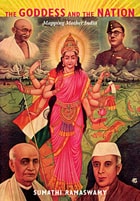
The Goddess and the Nation
Mapping Mother IndiaSumathi Ramaswamy
Duke University Press, 2010
By exploring the mutual entanglement of the scientifically mapped image of India and a (Hindu) mother/goddess, Sumathi Ramaswamy reveals Mother India as a figure who relies on the British colonial mapped image of her dominion to distinguish her from the other goddesses of India, and to guarantee her novel status as embodiment, sign, and symbol of national territory. Providing an exemplary critique of ideologies of gender and the science of cartography, Ramaswamy demonstrates that images do not merely reflect history; they actively make it. In The Goddess and the Nation, she teaches us about pictorial ways of learning the form of the nation, of how to live with it—and ultimately to die for it.