Results by title
4 books match the query 'Moths'
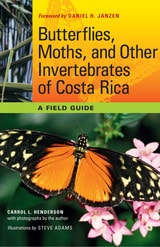
Butterflies, Moths, and Other Invertebrates of Costa Rica
A Field GuideBy Carrol L. Henderson, with photographs by the author
University of Texas Press, 2010
At the biological crossroads of the Americas, Costa Rica hosts an astonishing array of plants and animals—over half a million species! Ecotourists, birders, and biologists come from around the world, drawn by the likelihood of seeing more than three or four hundred species of birds and other animals during even a short stay. To help all these visitors, as well as local residents, identify and enjoy the wildlife of Costa Rica, Carrol Henderson published Field Guide to the Wildlife of Costa Rica in 2002, and it instantly became the indispensable guide.
Now Henderson has created a dedicated field guide to more than one hundred tropical butterflies, moths, and other invertebrates that travelers are most likely to see while exploring the wild lands of Costa Rica. He includes fascinating information on their natural history, ecology, identification, and behavior gleaned from his forty years of travels and wildlife viewing, as well as details on where to see these remarkable and beautiful creatures. The butterflies, moths, and other invertebrates are illustrated by over 180 stunning and colorful photographs—most of which were taken in the wild by Henderson. A detailed and invaluable appendix that identifies many of Costa Rica's best wildlife-watching destinations, lodges, and contact information for trip-planning purposes completes the volume.
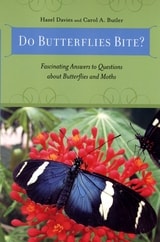
Do Butterflies Bite?
Fascinating Answers to Questions about Butterflies and MothsDavies, Hazel
Rutgers University Press, 2008
Every year, thousands of people visit butterfly conservatories to stand in quiet awe of the simple beauty displayed by these magical creatures. Hazel Davies and Carol A. Butler capture the sense of wonderment and curiosity experienced by adults and children alike in this book about butterflies and their taxonomic cousins, the moths and the skippers. Beautifully illustrated with color and black and white photographs, and drawings by renowned artist William Howe, this book is an essential resource for parents, teachers, students, or anyone who has ever been entranced by these fascinating, fluttering creatures.
Covering everything from their basic biology to their complex behaviors at every stage of life to issues in butterfly conservation, Davies and Butler explore wide-ranging topics and supply a trove of intriguing facts. You'll find tips on how to attract more butterflies to your garden, how to photograph them, and even how to raise them in your own home. Arranged in a question and answer format, the book provides detailed information written in an accessible style that brings to life the science and natural history of these insects. In addition, sidebars throughout the book detail an assortment of butterfly trivia, while extensive appendices direct you to organizations, web sites, and more than 200 indoor and outdoor public exhibits, where you can learn more or connect with other lepidopterophiles (butterfly lovers).
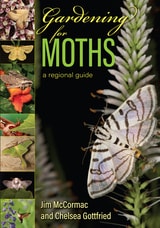
Gardening for Moths
A Regional GuideJim McCormac
Ohio University Press, 2023
This guide to moths, native plants, and their environmental roles is an indispensable resource for gardeners, conservationists, and nature enthusiasts across the midwestern United States.
Gardening for Moths is the first book to show midwestern gardeners and naturalists why they should attract specific moth species to their properties and how to do it. The book’s stunning color photographs and intriguing facts reveal the fascinating world of these insects, inspiring readers to incorporate moth-loving native plants into their landscapes. The authors emphasize the importance of moths and their caterpillars to ecological food webs, widening the book’s appeal to birders and bat lovers as well.
The book consists of three main sections, beginning with a thorough overview of moths, including their
- population decline and conservation,
- importance in ecosystems,
- relationship with native plants, and
- predators and defenses
In the next section the authors profile about 140 plant species, providing brief background, natural history, habitat, and growing notes for each along with lists of potential moths the plants may attract.
The third section highlights approximately 150 moth species, ordered taxonomically. These accounts include interesting facts about the life history of both the caterpillar and adult moth of each species. Each account also features a list of the species’ common host plants.
Throughout the volume, inset text boxes provide additional fascinating moth facts. Beautiful photographs (most by the authors) illustrate every included plant and moth species. Select references, online resources, and quick reference tables round out this valuable resource.
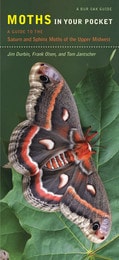
Moths in Your Pocket
A Guide to the Saturn and Sphinx Moths of the Upper MidwestJim Durbin, Frank Olsen, and Tom Jantscher
University of Iowa Press, 2014
The Saturniid, or Giant Silk moths, are well named. Their large size—up to 6.5 inches for the cecropia moth—and the soft silky browns, greens, and oranges of their wings are unforgettable when they appear at a lighted window at night. Equally well named are the Sphinx or Hawk moths, important pollinators that hover like hummingbirds when nectar-feeding at dusk and even in daylight. The caterpillars of both families can be just as distinctive as the adults, as anyone who has ever come upon a tobacco or a tomato hornworm can attest.
For each species the authors have included common and scientific names, wingspan, and time of flight for the adults at this final stage in their life cycle. Striking photographs of the adult moths and of their larval stages make this guide as beautiful as it is useful.
For all naturalists captivated by the clear window eyespots of a Swallow-tailed Luna moth, the dark eyespots and bright yellow “pupils” of an Io moth, or the extendable proboscis of a White-lined Sphinx moth flitting from one moss rose to another, the photographs and descriptions in Moths in Your Pocket will be an invaluable reference.