Results by title

29 books match the query 'Motion picture audiences'
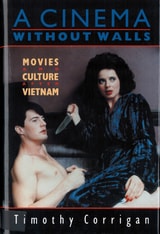
cover of A Cinema Without Walls: Movies and Culture after Vietnam

A Cinema Without Walls

Movies and Culture after Vietnam

Corrigan, Timothy

Rutgers University Press, 1991

"One of the sharpest and most productive analyses of our contemporaneity and the place of cinema within it and of our new historical relations as spectators to the imaginary universe on the movie screen. This is a study that will be of intense interest to film theorists and historians, cultural critics, mass media analysts, and anyone concerned with the complicated place of culture in our world today."--Dana Polan, English and Film Studies, University of Pittsburgh

How have modern advertising techniques, the widespread use of VCRs, conglomerate takeovers of studios and film archives, cable TV, and media coverage of the Vietnam war changed the ways we watch movies? And how, in turn, have those different habits and patterns of viewing changed the ways in which films address their viewers? Drawing on a wide variety of American and European films and on many theoretical models, Timothy Corrigan investigates what he calls "a cinema without walls," taking a close look at particular films in order to see how we watch them differently in the post-Vietnam era. He examines cult audiences, narrative structure, genre films (road movies, in particular), and contemporary politics as they engage new models of film making and viewing. He thus provides a rare, serious attempt to deal with contemporary movies. Corrigan discusses filmmakers from a variety of backgrounds and cultures, including Martin Scorsese, Raoul Ruiz, Michael Cimino, Alexander Kluge, Francis Ford Coppola, Stephen Frears, and Wim Wenders. He offers detailed analyses of films such as Platoon; Full Metal Jacket; 9-1/2 Weeks; The Singing Detective; Choose Me; After Hours; Badlands; The King of Comedy; Paris, Texas; and My Beautiful Laundrette. Orchestrating this diversity, Corrigan provides a critical basis for making sense of contemporary film culture and its major achievements.
[more]
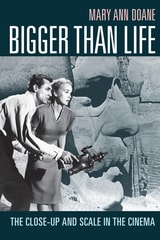
cover of Bigger Than Life: The Close-Up and Scale in the Cinema

Bigger Than Life

The Close-Up and Scale in the Cinema

Mary Ann Doane

Duke University Press, 2021
In Bigger Than Life Mary Ann Doane examines how the scalar operations of cinema, especially those of the close-up, disturb and reconfigure the spectator's sense of place, space, and orientation. Doane traces the history of scalar transformations from early cinema to the contemporary use of digital technology. In the early years of cinema, audiences regarded the monumental close-up, particularly of the face, as grotesque and often horrifying, even as it sought to expose a character's interiority through its magnification of detail and expression. Today, large-scale technologies such as IMAX and surround sound strive to dissolve the cinematic frame and invade the spectator's space, “immersing” them in image and sound. The notion of immersion, Doane contends, is symptomatic of a crisis of location in technologically mediated space and a reconceptualization of position, scale, and distance. In this way, cinematic scale and its modes of spatialization and despatialization have shaped the modern subject, interpolating them into the incessant expansion of commodification.
[more]
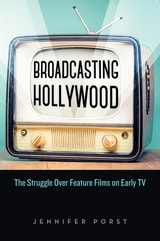
cover of Broadcasting Hollywood: The Struggle over Feature Films on Early TV

Broadcasting Hollywood

The Struggle over Feature Films on Early TV

Jennifer Porst

Rutgers University Press, 2021
Broadcasting Hollywood: The Struggle Over Feature Films on Early Television uses extensive archival research into the files of studios, networks, advertising agencies, unions and guilds, theatre associations, the FCC, and key legal cases to analyze the tensions and synergies between the film and television industries in the early years of television. This analysis of the case study of the struggle over Hollywood’s feature films appearing on television in the 1940s and 1950s illustrates that the notion of an industry misunderstands the complex array of stakeholders who work in and profit from a media sector, and models a variegated examination of the history of media industries. Ultimately, it draws a parallel to the contemporary period and the introduction of digital media to highlight the fact that history repeats itself and can therefore play a key role in helping media industry scholars and practitioners to understand and navigate contemporary industrial phenomena.
[more]
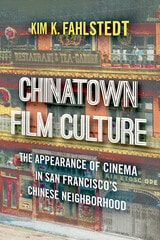
cover of Chinatown Film Culture: The Appearance of Cinema in San Francisco’s Chinese Neighborhood

Chinatown Film Culture

The Appearance of Cinema in San Francisco’s Chinese Neighborhood

Kim K. Fahlstedt

Rutgers University Press, 2020
Chinatown Film Culture provides the first comprehensive account of the emergence of film and moviegoing in the transpacific hub of San Francisco in the early twentieth century. Working with materials previously left in the margins of grand narratives of history, Kim K. Fahlstedt uncovers the complexity of a local entertainment culture that offered spaces where marginalized Chinese Americans experienced and participated in local iterations of modernity. At the same time, this space also fostered a powerful Orientalist aesthetic that would eventually be exported to Hollywood by San Francisco showmen such as Sid Grauman. Instead of primarily focusing on the screen-spectator relationship, Fahlstedt suggests that immigrant audiences' role in the proliferation of cinema as public entertainment in the United States saturated the whole moviegoing experience, from outside on the street to inside the movie theater. By highlighting San Francisco and Chinatown as featured participants rather than bit players, Chinatown Film Culture provides an historical account from the margins, alternative to the more dominant narratives of U.S. film history.
[more]
cover of Cinemas and Cinema-Going in the United Kingdom: Decades of Decline, 1945–1965

Cinemas and Cinema-Going in the United Kingdom

Decades of Decline, 1945–1965

Sam Manning

University of London Press, 2020

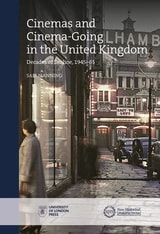
Cinema-going was the most popular commercial leisure activity in the United Kingdom during the first half of the twentieth century, with attendance growing significantly during World War II and peaking in 1946 with 1.6 billion recorded admissions. Though “going to the pictures” remained a popular pastime for the remainder of the forties, the transition from war to peacetime altered citizens’ leisure habits. During the fifties, a range of factors led to rapid declines in attendance, and by 1965, admissions had plummeted to 327 million.

Cinema attendance fell in all regions, but the speed, nature, and extent of this decline varied widely across the United Kingdom. By presenting detailed case studies of two similarly-sized industrial cities, Belfast and Sheffield, this book adds nuance and detail to the discussion of regional variations in film exhibition and audience habits. Using a wide range of sources, such as oral testimony, box-office data, newspapers, and trade journals, Cinemas and Cinema-Going in the United Kingdom conveys the diverse and ever-changing nature of the cinema industry.
[more]
cover of Contemporary African Screen Worlds

Contemporary African Screen Worlds

Lindiwe Dovey, Añulika Agina, and Michael W. Thomas, editors

Duke University Press, 2025

Contemporary African Screen Worlds brings together a new generation of African screen media scholars who explore and theorize the dynamic, interactive screen worlds that have arisen in contemporary Africa due to dramatic global changes in technology. Drawing on long-term fieldwork, extensive interviews, and specific case studies, the contributors bring to life the complex materialities and entanglements of film spectatorship, fandom, production, and circulation in Africa. They particularly attend to the interfaces among film audiences, actors, makers, platforms, and screens both small and large. Engaging with more than a dozen national contexts across the continent, the book reveals the diversity of African screen media practices and the creativity and agency of the people who passionately generate them, from film craftworkers in Nigeria and film students in Ghana to film fans in Rwanda and Burkina Faso. By focusing on the work of powerful platforms (such as Netflix and MTVShuga) and ordinary people (such as domestic workers watching Nollywood films in rural Kenya), this volume grapples with the effects and affects of digitization, mobile screens, media convergence, and the televisual turn in Africa.

Contributors. Moradewun Adejunmobi, Añulika Agina, Alexander Bud, Lindiwe Dovey, Femi Eromosele, Pier Paolo Frassinelli, Alexandra Grieve, Jonathan Haynes, Joe Jackson, Alessandro Jedlowski, Dennis-Brook Prince Lotsu, Alison MacAulay, Elastus Mambwe, Asteway M. Woldemichael, Nedine Moonsamy, Elizabeth Olayiwola, Temitayo Olofinlua, Rashida Resario, Estrella Sendra, Robin Steedman, Michael W. Thomas, Stefanie Van de Peer, Solomon Waliaula
[more]
cover of Discorrelated Images

Discorrelated Images

Shane Denson

Duke University Press, 2020
In Discorrelated Images Shane Denson examines how computer-generated digital images displace and transform the traditional spatial and temporal relationships that viewers had with conventional analog forms of cinema. Denson analyzes works ranging from the Transformers series and Blade Runner 2049 to videogames and multimedia installations to show how what he calls discorrelated images—images that do not correlate with the abilities and limits of human perception—produce new subjectivities, affects, and potentials for perception and action. Denson's theorization suggests that new media theory and its focus on technological development must now be inseparable from film and cinema theory. There's more at stake in understanding discorrelated images, Denson contends, than just a reshaping of cinema, the development of new technical imaging processes, and the evolution of film and media studies: discorrelated images herald a transformation of subjectivity itself and are essential to our ability to comprehend nonhuman agency.
[more]
cover of Disney's Most Notorious Film: Race, Convergence, and the Hidden Histories of Song of the South

Disney's Most Notorious Film

Race, Convergence, and the Hidden Histories of Song of the South

By Jason Sperb

University of Texas Press, 2012

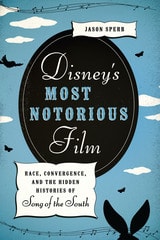
The Walt Disney Company offers a vast universe of movies, television shows, theme parks, and merchandise, all carefully crafted to present an image of wholesome family entertainment. Yet Disney also produced one of the most infamous Hollywood films, Song of the South. Using cartoon characters and live actors to retell the stories of Joel Chandler Harris, SotS portrays a kindly black Uncle Remus who tells tales of Brer Rabbit, Brer Fox, and the “Tar Baby” to adoring white children. Audiences and critics alike found its depiction of African Americans condescending and outdated when the film opened in 1946, but it grew in popularity—and controversy—with subsequent releases. Although Disney has withheld the film from American audiences since the late 1980s, SotS has an enthusiastic fan following, and pieces of the film—such as the Oscar-winning “Zip-a-Dee-Doo-Dah”—remain throughout Disney’s media universe.

Disney’s Most Notorious Film examines the racial and convergence histories of Song of the South to offer new insights into how audiences and Disney have negotiated the film’s controversies over the last seven decades. Jason Sperb skillfully traces the film’s reception history, showing how audience perceptions of SotS have reflected debates over race in the larger society. He also explores why and how Disney, while embargoing the film as a whole, has repurposed and repackaged elements of SotS so extensively that they linger throughout American culture, serving as everything from cultural metaphors to consumer products.
[more]
cover of Early Cinema in Russia and Its Cultural Reception

Early Cinema in Russia and Its Cultural Reception

Yuri Tsivian

University of Chicago Press, 1998

Early Cinema in Russia chronicles one of the great lost periods in cinema history, that of Pre-Revolutionary Russia. In contrast to standard film histories, Yuri Tsivian focuses on reflected images: it features the historical film-goer and early writings on film as well as examining the physical elements of cinematic performance.

"Tsivian casts a probing beam of illumination into some of the most obscure areas of film history. And the terrain he lights up with his careful assembly and insightful reading of the records of early film viewing in Russia not only changes our sense of the history of this period but also . . . causes us to re-evaluate some of our most basic theoretical and historical assumptions about what a film is and how it affects its audiences."—Tom Gunning, from the Foreword

"Early Cinema in Russia . . . reveals Tsivian's strengths very well and demonstrates why he is . . . the finest film historian of his generation in the former Soviet Union."—Denise Y. Youngblood, Historical Journal of Film, Radio, and Television

"A work of fundamental importance."—Julian Graffy, Recent Studies of Russian and Soviet Cinema
[more]
cover of Fan Sites: Film Tourism and Contemporary Fandom

Fan Sites

Film Tourism and Contemporary Fandom

Abby S. Waysdorf

University of Iowa Press, 2021

Theme parks break attendance numbers with the promise of “stepping inside” a film’s world. Pop-up “experiences” are a regular part of promotional cycles. All this is accepted in the contemporary media environment—but why? What is the appeal of film tourism, and what can its rise tell us about contemporary fandom? Fan Sites explores why and how we experience film and television-related places, and what the growth of this practice means for contemporary fandom. Through four case studies—Game of Thrones tourism in Dubrovnik, Croatia and Northern Ireland, the Wizarding World of Harry Potter theme parks in Orlando, Florida, fandom of The Prisoner in Portmeirion, Wales, and Friends events in the United Kingdom and United States—this book presents a multifaceted look at the ways place and fandom interact today.

Fan Sites explores the different relationships that fans build with these places of fandom, from the exploratory knowledge-building of Game of Thrones fans on vacation, the appreciative evaluations of Harry Potter fans at the Wizarding World of Harry Potter, to the frequent “homecoming” visits of Prisoner fans, who see Portmeirion as a “safe vault” and the home of their fandom. Including engaging accounts of real fans at each location, Fan Sites addresses what the rise of fan tourism and places of fandom might mean for the future of fandom and its relationship with the media industry.
 
[more]
cover of From SWEETBACK to SUPER FLY: Race and Film Audiences in Chicago's Loop

From SWEETBACK to SUPER FLY

Race and Film Audiences in Chicago's Loop

Gerald R. Butters, Jr.

University of Missouri Press, 2014
 
Racial politics and capitalism found a way to blend together in 1970s Chicago in the form of movie theaters targeted specifically toward African Americans. In From Sweetback to Super Fly, Gerald Butters examines the movie theaters in Chicago’s Loop that became, as he describes them, “black spaces” during the early 1970s with theater managers making an effort to gear their showings toward the African American community by using black-themed and blaxploitation films.


Butters covers the wide range of issues that influenced the theaters, from changing racial patterns to the increasingly decrepit state of Chicago’s inner city and the pressure on businesses and politicians alike to breathe life into the dying area. Through his extensive research, Butters provides an in-depth look at this phenomenon, delving into an area that has not previously been explored. His close examination of how black-themed films were marketed and how theaters showing these films tried to draw in crowds sheds light on race issues both from an industrial standpoint on the side of the theaters and movie producers, as well as from a cultural standpoint on the side of the moviegoers and the city of Chicago as a whole. Butters provides a wealth of information on a very interesting yet underexamined part of history, making From Sweetback to Super Fly a supremely enjoyable and informative book.
[more]
cover of House Full: Indian Cinema and the Active Audience

House Full

Indian Cinema and the Active Audience

Lakshmi Srinivas

University of Chicago Press, 2016

India is the largest producer and consumer of feature films in the world, far outstripping Hollywood in the number of movies released and tickets sold every year. Cinema quite simply dominates Indian popular culture, and has for many decades exerted an influence that extends from clothing trends to music tastes to everyday conversations, which are peppered with dialogue quotes.
            With House Full, Lakshmi Srinivas takes readers deep into the moviegoing experience in India, showing us what it’s actually like to line up for a hot ticket and see a movie in a jam-packed theater with more than a thousand seats. Building her account on countless trips to the cinema and hundreds of hours of conversation with film audiences, fans, and industry insiders, Srinivas brings the moviegoing experience to life, revealing a kind of audience that, far from passively consuming the images on the screen, is actively engaged with them. People talk, shout, whistle, cheer; others sing along, mimic, or dance; at times audiences even bring some of the ritual practices of Hindu worship into the cinema, propitiating the stars onscreen with incense and camphor. The picture Srinivas paints of Indian filmgoing is immersive, fascinating, and deeply empathetic, giving us an unprecedented understanding of the audience’s lived experience—an aspect of Indian film studies that has been largely overlooked.
[more]
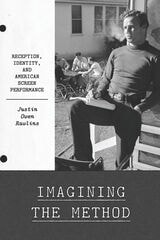
cover of Imagining the Method: Reception, Identity, and American Screen Performance

Imagining the Method

Reception, Identity, and American Screen Performance

Justin Owen Rawlins

University of Texas Press, 2024

A revisionist history of Method acting that connects the popular reception of “methodness” to entrenched understandings of screen performance still dominating American film discourse today.

Only one performance style has dominated the lexicon of the casual moviegoer: “Method acting.” The first reception-based analysis of film acting, Imagining the Method investigates how popular understandings of the so-called Method—what its author Justin Rawlins calls "methodness"—created an exclusive brand for white, male actors while associating such actors with rebellion and marginalization. Drawing on extensive archival research, the book maps the forces giving shape to methodness and policing its boundaries.

Imagining the Method traces the primordial conditions under which the Method was conceived. It explores John Garfield's tenuous relationship with methodness due to his identity. It considers the links between John Wayne's reliance on "anti-Method" stardom and Marlon Brando and James Dean's ascribed embodiment of Method features. It dissects contemporary emphases on transformation and considers the implications of methodness in the encoding of AI performers. Altogether, Justin Rawlins offers a revisionist history of the Method that shines a light on the cultural politics of methodness and the still-dominant assumptions about race, gender, and screen actors and acting that inform how we talk about performance and performers.
[more]
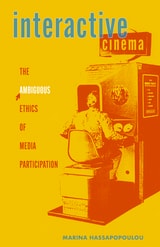
cover of Interactive Cinema: The Ambiguous Ethics of Media Participation

Interactive Cinema

The Ambiguous Ethics of Media Participation

Marina Hassapopoulou

University of Minnesota Press, 2024

Connecting interactive cinema to media ethics and global citizenship


Interactive Cinema explores various cinematic practices that work to transform what is often seen as a primarily receptive activity into a participatory, multimedia experience. Surveying a multitude of unorthodox approaches throughout the history of motion pictures, Marina Hassapopoulou offers insight into a range of largely ephemeral and site-specific projects that consciously assimilate viewers into their production.


Analyzing examples of early cinema, Hollywood B movies, museum and gallery installations, virtual-reality experiments, and experimental web-based works, Hassapopoulou travels across numerous platforms, highlighting a diverse array of strategies that attempt to unsettle the allegedly passive spectatorship of traditional cinema. Through an exploration of these radically inventive approaches to the medium, many of which emerged out of sociopolitical crises and periods of historical transition, she works to expand notions of interactivity by considering it in both technological and phenomenological terms. 


Deliberately revising and expanding Eurocentric scholarship to propose a much broader, transnational scope, the book emphasizes the ethical dimensions of interactive media and their links to larger considerations around community building, citizenship, and democracy. By combining cutting-edge theory with updated conventional film studies methodologies, Interactive Cinema presses at the conceptual limits of cinema and offers an essential road map to the rapidly evolving landscape of contemporary media.
[more]
cover of Love Rules: Silent Hollywood And The Rise Of The Managerial Class

Love Rules

Silent Hollywood And The Rise Of The Managerial Class

Mark Garrett Cooper

University of Minnesota Press, 2003

Traces the surprising connections between silent films and the rise of bureaucracy

Arguing for a sweeping new consideration of the shift from print to cinema as a governing system for organizing modern American social relations, this book uncovers an intimate connection between Hollywood romances of the silent era and the empowerment of a managerial class.

During the 1910s and 1920s, American movies told love stories through what rapidly became ubiquitous images. Again and again, silent features showed lovers separated by seeming happenstance and reunited as if by magical forces. Mark Garrett Cooper argues that this “magic” implies the expertise of the corporate movie studio with its hierarchies of professional experts. In other words, the Hollywood love story amounts to a managerial technique. Through close study of such films as Birth of a Nation, Enoch Arden, The Crowd, Why Change Your Wife? and The Jazz Singer, Love Rules shows how cinematic romance offers an object lesson in how to arrange American society—a lesson that implies that such work can be accomplished only by a managerial class.Love Rules offers a boldly original account of how the Hollywood feature film supplanted the “imagined community” of print culture and, in doing so, played a key role in the transformation of American mass culture.
[more]
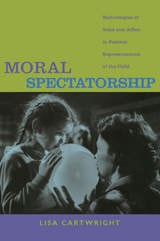
cover of Moral Spectatorship: Technologies of Voice and Affect in Postwar Representations of the Child

Moral Spectatorship

Technologies of Voice and Affect in Postwar Representations of the Child

Lisa Cartwright

Duke University Press, 2008

Why were theories of affect, intersubjectivity, and object relations bypassed in favor of a Lacanian linguistically oriented psychoanalysis in feminist film theory in the 1980s and 1990s? In Moral Spectatorship, Lisa Cartwright rethinks the politics of spectatorship in film studies. Returning to impasses reached in late-twentieth-century psychoanalytic film theory, she focuses attention on theories of affect and object relations seldom addressed during that period. Cartwright offers a new theory of spectatorship and the human subject that takes into account intersubjective and affective relationships and technologies facilitating human agency. Seeking to expand concepts of representation beyond the visual, she develops her theory through interpretations of two contexts in which adult caregivers help bring children to voice. She considers several social-problem melodramas about deaf and nonverbal girls and young women, including Johnny Belinda, The Miracle Worker, and Children of a Lesser God. Cartwright also analyzes the controversies surrounding facilitated communication, a technological practice in which caregivers help children with communication disorders achieve “voice” through writing facilitated by computers. This practice has inspired contempt among professionals and lay people who charge that the facilitator can manipulate the child’s speech.

For more than two decades, film theory has been dominated by a model of identification tacitly based on the idea of feeling what the other feels or of imagining oneself to be the other. Building on the theories of affect and identification developed by André Green, Melanie Klein, Donald W. Winnicott, and Silvan Tomkins, Cartwright develops a model of spectatorship that takes into account and provides a way of critically analyzing the dynamics of a different kind of identification, one that is empathetic and highly intersubjective.
[more]
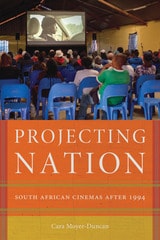
cover of Projecting Nation: South African Cinemas after 1994

Projecting Nation

South African Cinemas after 1994

Cara Moyer-Duncan

Michigan State University Press, 2020
In 1994, not long after South Africa made its historic transition to multiracial democracy, the nation’s first black-majority government determined that film had the potential to promote social cohesion, stimulate economic development, and create jobs. In 1999 the new National Film and Video Foundation was charged with fostering a vibrant, socially engaged, and self-sufficient film industry. What are the results of this effort to create a truly national cinematic enterprise? Projecting Nation: South African Cinemas after 1994 answers that question by examining the ways in which national and transnational forces have shaped the representation of race and nation in feature-length narrative fiction films. Offering a systematic analysis of cinematic texts in the context of the South African film industry, author Cara Moyer-Duncan analyzes both well-known works like District 9 (2009) and neglected or understudied films like My Shit Father and My Lotto Ticket (2008) to show how the ways filmmakers produce cinema and the ways diverse audiences experience it—whether they watch major releases in theaters in predominantly white suburban enclaves or straight-to-DVD productions in their own homes—are informed by South Africans’ multiple experiences of nation in a globalizing world.
[more]
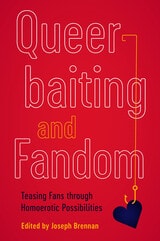
cover of Queerbaiting and Fandom: Teasing Fans through Homoerotic Possibilities

Queerbaiting and Fandom

Teasing Fans through Homoerotic Possibilities

Joseph Brennan

University of Iowa Press, 2019

In this first-ever comprehensive examination of queerbaiting, fan studies scholar Joseph Brennan and his contributors examine cases that shed light on the sometimes exploitative industry practice of teasing homoerotic possibilities that, while hinted at, never materialize in the program narratives. Through a nuanced approach that accounts for both the history of queer representation and older fan traditions, these essayists examine the phenomenon of queerbaiting across popular TV, video games, children’s programs, and more.

Contributors: Evangeline Aguas, Christoffer Bagger, Bridget Blodgett, Cassie Brummitt, Leyre Carcas, Jessica Carniel, Jennifer Duggan, Monique Franklin, Divya Garg, Danielle S. Girard, Mary Ingram-Waters, Hannah McCann, Michael McDermott, E. J. Nielsen, Emma Nordin, Holly Eva Katherine Randell-Moon, Emily E. Roach, Anastasia Salter, Elisabeth Schneider, Kieran Sellars, Isabela Silva, Guillaume Sirois, Clare Southerton
[more]
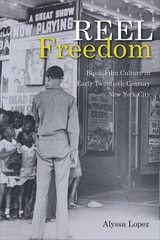
cover of Reel Freedom: Black Film Culture in Early Twentieth-Century New York City

Reel Freedom

Black Film Culture in Early Twentieth-Century New York City

Alyssa Lopez

Temple University Press, 2025

Reel Freedom intimately captures the relationship between Black film culture and space in New York City. Alyssa Lopez argues that Black film culture, from its origins in the early twentieth century to its firm establishment in the 1930s, was necessarily both entertainment and resistance, connected as it was to Black New Yorkers’ demands for access and equality in the city.

Lopez investigates how ordinary people, labor activists, journalists, filmmakers, theater managers, and owners all shaped Black film culture. Black girls and women used moviegoing as a means of independence and control over their lives. Race filmmaker Oscar Micheaux fought with New York State’s censorship board to get his films screened with limited edits in local theaters. And Harlem’s Black projectionists battled for unionization and fair pay, while journalists linked cinema to Black New Yorkers’ lived experiences.

In Reel Freedom, Lopez chronicles the wide-ranging and remarkable pervasiveness of Black film culture in New York City, redefining a period and place most associated with the Harlem Renaissance.  In doing so, she illustrates how Black New Yorkers leveraged cinema to make the city their own and to enjoy urban living to its fullest.

In the series Urban Life, Landscape, and Policy

[more]
cover of Reel Pleasures: Cinema Audiences and Entrepreneurs in Twentieth-Century Urban Tanzania

Reel Pleasures

Cinema Audiences and Entrepreneurs in Twentieth-Century Urban Tanzania

Laura Fair

Ohio University Press, 2017

Reel Pleasures brings the world of African moviehouses and the publics they engendered to life, revealing how local fans creatively reworked global media—from Indian melodrama to Italian westerns, kung fu, and blaxploitation films—to speak to local dreams and desires. In it, Laura Fair zeroes in on Tanzanians’ extraordinarily dynamic media cultures to demonstrate how the public and private worlds of film reception brought communities together and contributed to the construction of genders, generations, and urban citizenship over time. Radically reframing the literatures on media exhibition, distribution, and reception, Reel Pleasures demonstrates how local entrepreneurs and fans worked together to forge the most successful cinema industry in colonial sub-Saharan Africa. The result is a major contribution to the literature on transnational commodity cultures.
[more]
cover of Savage Theory: Cinema as Modern Magic

Savage Theory

Cinema as Modern Magic

Rachel O. Moore

Duke University Press, 2000

Savage Theory articulates the powerful mythology of cinema as the premier medium for magic in modern times. Envisioning the cinema as a form of magical ritual that possesses the power to enliven, heal, and enchant, Rachel O. Moore explores modernity’s relationship to the primitive by analyzing understandings of primitive belief and ritual in early film theory alongside illustrative scenes from popular as well as avant-garde film.
Moore mines the theories of language, spectatorship, and cinematic expression in the writings of Vachel Lindsay, Sergei Eisenstein, Siegfried Kracauer, and Walter Benjamin, among others. Illuminating the links between these theorists’ preoccupations with cinema as a form of primal communication and the numbing effects of modernity, she demonstrates how movies are uniquely able to negotiate the fragmentary and isolating nature of a modern world. In constructing an alternative to cognitive, psychoanalytic, and ideological approaches to film analysis, Moore provides eye-opening discussions of films such as Kenneth Anger’s Scorpio Rising, Hollis Frampton’s Nostalgia, and Robert Bresson’s l’Argent. Drawing from Marx’s theory of the commodity and Lukács’s work on second nature, she outlines the fetish character of the film image and reveals the emergence of the camera as a magical tool replete with animistic powers otherwise lost in the storm of progress.
Bound to influence the way future scholars think about the connection between modernism and primitivism, as well as the role of cinema therein during the early twentieth century, Savage Theory will be welcomed by scholars of film theory and anthropology and will also appeal to a wider cultural studies audience.
[more]
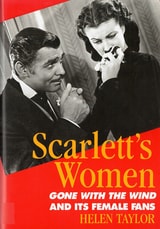
cover of Scarlett's Women: Gone With the Wind and Its Female Fans

Scarlett's Women

Gone With the Wind and Its Female Fans

Taylor, Helen

Rutgers University Press, 1989
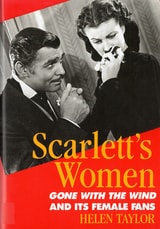
One of the most successful books ever published and the basis of one of the most popular and highly praised Hollywood films, Gone with the Wind has entered world culture in a way that few other stories have. The book was published in June 1936; the film premiered on December 15, 1939. The book has sold 25 million copies, has been translated into twenty-seven languages, and won the 1936 Pulitzer Prize. The film received eight Oscars and has been called the greatest movie ever made. Everyone has heard of GWTW. Most of us have seen the movie or read the novel. In this entertaining and informative book, Helen Taylor is the first to seek reasons for the film/novel's success among viewers/readers. The author asked GWTW fans to relate their experiences with the works, to explain their fascination with the story, to describe the impact GWTW has had on their lives. The results are astonishing and illuminating. In the United States and England, where the author conducted her research, women have to a remarkable degree claimed the story Margaret Mitchell wrote as their own. They name their children Rhett and Scarlett. They see in the lives of the men and women of GWTW their own lives, their own restlessness, their own aspirations for something better than marriage and motherhood. Helen Taylor not only explains the enduring appeal of the work, but also identifies different kinds of response at particular historical moments (especially World War II) and through the past five decades by women of different classes, races, and generations. The author also looks at the contemporary implications of the work's political conservatism, racism, and--paradoxically--feminism. The result is a book that is sophisticated, accessible, and revealing. Scarlett's Women is a book for eery fan, and for all students of film and popular culture.
[more]
cover of Scarlett's Women: Gone With the Wind and Its Female Fans

Scarlett's Women

Gone With the Wind and Its Female Fans

Taylor, Helen

Rutgers University Press, 1969
One of the most successful books ever published and the basis of one of the most popular and highly praised Hollywood films, Gone with the Wind has entered world culture in a way that few other stories have. The book was published in June 1936; the film premiered on December 15, 1939. The book has sold 25 million copies, has been translated into twenty-seven languages, and won the 1936 Pulitzer Prize. The film received eight Oscars and has been called the greatest movie ever made. Everyone has heard of GWTW. Most of us have seen the movie or read the novel. In this entertaining and informative book, Helen Taylor is the first to seek reasons for the film/novel's success among viewers/readers. The author asked GWTW fans to relate their experiences with the works, to explain their fascination with the story, to describe the impact GWTW has had on their lives. The results are astonishing and illuminating. In the United States and England, where the author conducted her research, women have to a remarkable degree claimed the story Margaret Mitchell wrote as their own. They name their children Rhett and Scarlett. They see in the lives of the men and women of GWTW their own lives, their own restlessness, their own aspirations for something better than marriage and motherhood. Helen Taylor not only explains the enduring appeal of the work, but also identifies different kinds of response at particular historical moments (especially World War II) and through the past five decades by women of different classes, races, and generations. The author also looks at the contemporary implications of the work's political conservatism, racism, and--paradoxically--feminism. The result is a book that is sophisticated, accessible, and revealing. Scarlett's Women is a book for eery fan, and for all students of film and popular culture.
[more]
cover of Screen Traffic: Movies, Multiplexes, and Global Culture

Screen Traffic

Movies, Multiplexes, and Global Culture

Charles R. Acland

Duke University Press, 2003

In Screen Traffic, Charles R. Acland examines how, since the mid-1980s, the U.S. commercial movie business has altered conceptions of moviegoing both within the industry and among audiences. He shows how studios, in their increasing reliance on revenues from international audiences and from the ancillary markets of television, videotape, DVD, and pay-per-view, have cultivated an understanding of their commodities as mutating global products. Consequently, the cultural practice of moviegoing has changed significantly, as has the place of the cinema in relation to other sites of leisure.

Integrating film and cultural theory with close analysis of promotional materials, entertainment news, trade publications, and economic reports, Acland presents an array of evidence for the new understanding of movies and moviegoing that has developed within popular culture and the entertainment industry. In particular, he dissects a key development: the rise of the megaplex, characterized by large auditoriums, plentiful screens, and consumer activities other than film viewing. He traces its genesis from the re-entry of studios into the movie exhibition business in 1986 through 1998, when reports of the economic destabilization of exhibition began to surface, just as the rise of so-called e-cinema signaled another wave of change. Documenting the current tendency toward an accelerated cinema culture, one that appears to arrive simultaneously for everyone, everywhere, Screen Traffic unearths and critiques the corporate and cultural forces contributing to the “felt internationalism” of our global era.
[more]
cover of Spectacular Passions: Cinema, Fantasy, Gay Male Spectatorships

Spectacular Passions

Cinema, Fantasy, Gay Male Spectatorships

Brett Farmer

Duke University Press, 2000

The image of the movie-obsessed gay man is a widely circulating and readily recognizable element of the contemporary cultural landscape. Using psychoanalytic theory as his guide while inflecting it with insights from both film theory and queer theory, Brett Farmer moves beyond this cliché to develop an innovative exploration of gay spectatorship. The result, Spectacular Passions, reveals how cinema has been engaged by gay men as a vital forum for “fantasmatic performance”—in this case, the production of specifically queer identities, practices, and pleasures.
Building on the psychoanalytic concept of the fantasmatic, Farmer works to depathologize gay male subjectivity. While discussing such films as Kiss of the Spider Woman, The Pirate, Suddenly Last Summer, and Sunset Boulevard, and stars ranging from Mae West to Montgomery Clift, Farmer argues that the particularities of gay men’s social and psychic positionings motivate unique receptions of and investments in film. The Hollywood musical, gay camp readings of the extravagant female star, and the explicit homoeroticism of the cinematic male body in gay fanzines are further proof, says Farmer, of how the shifting libidinal profiles of homosexual desire interact with the fantasy scenarios of Hollywood film to produce a range of variable queer meanings.
This fascinating and provocative study makes a significant new contribution to discussions of cinema, spectatorship, and sexuality. As such, it will be welcomed by those in the fields of film theory, queer theory, and cultural studies.
[more]
cover of The Cult Film Experience: Beyond All Reason

The Cult Film Experience

Beyond All Reason

Edited by J. P. Telotte

University of Texas Press, 1991

"Play it again, Sam" is the motto of cult film enthusiasts, who will watch their favorite movie over and over, "beyond all reason." What is the appeal of cult movies? Why do fans turn up in droves at midnight movies or sit through the same three-hanky classics from Hollywood's golden era? These are some of the questions J. P. Telotte and twelve other noted film scholars consider in this groundbreaking study of the cult film.

The book identifies two basic types of cult films—older Hollywood movies, such as Casablanca, that have developed a cult following and "midnight movies," most notably The Rocky Horror Picture Show. Telotte, Bruce Kawin, and Timothy Corrigan offer thought-provoking discussions about why these two types of movies become cult films, the sort of audience they attract, and the needs they fulfill for that audience. Subsequent essays employ a variety of cultural, feminist, ideological, and poststructural strategies for exploring these films.

In a section on the classical cult film, the movie Casablanca receives extensive treatment. An essay by T. J. Ross considers Beat the Devil as a send-up of cult films, while another essay by Wade Jennings analyzes the cult star phenomenon as personified in Judy Garland.

"Midnight movie madness" is explored in essays on The Rocky Horror Picture Show, movie satires of the 1950s, science fiction double features, and horror thrillers.

Illustrated with scenes from favorite movies and written for both fans and scholars, The Cult Film Experience will appeal to a wider audience than the "usual suspects."
[more]
cover of Viewing Positions: Ways of Seeing Film

Viewing Positions

Ways of Seeing Film

Williams, Linda

Rutgers University Press, 1994
The essays in this volume represent some of the best new thinking about the crucial relations between visual representation in film and human subjectivity. No amount of empirical research into the sociology of actual audiences will displace the desire to speculate about the effects of visual culture, and especially moving images, on viewing subjects. These notions of spectatorship, however hypothetical, become extremely compelling metaphors for the workings of vision within the institution of cinema. Viewing Positions examines the tradition of a centered, unitary, distanced, and objectifying spectator's gaze; investigates the period when film spectatorship as an idea began; and analyses gender- and sexuality-based challenges to the homogeneous classical theory of spectatorship. It makes available critical understandings of spectatorship that have, until now, largely eluded cinema studies.
[more]
cover of Viewing Positions: Ways of Seeing Film

Viewing Positions

Ways of Seeing Film

Williams, Linda

Rutgers University Press, 1994

The essays in this volume represent some of the best new thinking about the crucial relations between visual representation in film and human subjectivity. No amount of empirical research into the sociology of actual audiences will displace the desire to speculate about the effects of visual culture, and especially moving images, on viewing subjects. These notions of spectatorship, however hypothetical, become extremely compelling metaphors for the workings of vision within the institution of cinema. Viewing Positions examines the tradition of a centered, unitary, distanced, and objectifying spectator's gaze; investigates the period when film spectatorship as an idea began; and analyses gender- and sexuality-based challenges to the homogeneous classical theory of spectatorship. It makes available critical understandings of spectatorship that have, until now, largely eluded cinema studies.
[more]
cover of Watching Films: New Perspectives on Movie-Going, Exhibition and Reception

Watching Films

New Perspectives on Movie-Going, Exhibition and Reception

Edited by Albert Moran and Karina Aveyard

Intellect Books, 2013

 
Whether we stream them on our laptops, enjoy them in theaters, or slide them into DVD players to watch on our TVs, movies are part of what it means to be socially connected in the twenty-first century.  Despite its significant role in our lives, the act of watching films remains an area of social activity that is little studied, and thus, little understood. 
 
In Watching Films, an international cast of contributors correct this problem with a comprehensive investigation of movie going, cinema exhibition, and film reception around the world. With a focus on the social, economic, and cultural factors that influence how we watch and think about movies, this volume centers its investigations on four areas of inquiry: Who watches films? Under what circumstances? What consequences and affects follow? And what do these acts of consumption mean? Responding to these questions, the contributors provide both historical perspective and fresh insights about the ways in which new viewing arrangements and technologies influence how films get watched everywhere from Canada to China to Ireland.
 
A long-overdue consideration of an important topic, Watching Films provides an engrossing overview of how we do just that in our homes and across the globe.
[more]
