Results by title
4 books match the query 'Motion pictures and comic books'

Comic Book Film Style
Cinema at 24 Panels per SecondBy Dru Jeffries
University of Texas Press, 2017
Superhero films and comic book adaptations dominate contemporary Hollywood filmmaking, and it is not just the storylines of these blockbuster spectacles that have been influenced by comics. The comic book medium itself has profoundly influenced how movies look and sound today, as well as how viewers approach them as texts. Comic Book Film Style explores how the unique conventions and formal structure of comic books have had a profound impact on film aesthetics, so that the different representational abilities of comics and film are put on simultaneous display in a cinematic work.
With close readings of films including Batman: The Movie, American Splendor, Superman, Hulk, Spider-Man 2, V for Vendetta, 300, Scott Pilgrim vs. the World, Watchmen, The Losers, and Creepshow, Dru Jeffries offers a new and more cogent definition of the comic book film as a stylistic approach rather than a genre, repositioning the study of comic book films from adaptation and genre studies to formal/stylistic analysis. He discusses how comic book films appropriate comics’ drawn imagery, vandalize the fourth wall with the use of graphic text, dissect the film frame into discrete panels, and treat time as a flexible construct rather than a fixed flow, among other things. This cinematic remediation of comic books’ formal structure and unique visual conventions, Jeffries asserts, fundamentally challenges the classical continuity paradigm and its contemporary variants, placing the comic book film at the forefront of stylistic experimentation in post-classical Hollywood.
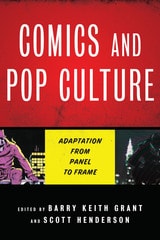
Comics and Pop Culture
Adaptation from Panel to FrameBy Barry Keith Grant and Scott Henderson
University of Texas Press, 2019
It is hard to discuss the current film industry without acknowledging the impact of comic book adaptations, especially considering the blockbuster success of recent superhero movies. Yet transmedial adaptations are part of an evolution that can be traced to the turn of the last century, when comic strips such as “Little Nemo in Slumberland” and “Felix the Cat” were animated for the silver screen. Representing diverse academic fields, including technoculture, film studies, theater, feminist studies, popular culture, and queer studies, Comics and Pop Culture presents more than a dozen perspectives on this rich history and the effects of such adaptations.
Examining current debates and the questions raised by comics adaptations, including those around authorship, style, and textual fidelity, the contributors consider the topic from an array of approaches that take into account representations of sexuality, gender, and race as well as concepts of world-building and cultural appropriation in comics from Modesty Blaise to Black Panther. The result is a fascinating re-imagination of the texts that continue to push the boundaries of panel, frame, and popular culture.
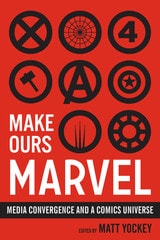
Make Ours Marvel
Media Convergence and a Comics UniverseEdited by Matt Yockey
University of Texas Press, 2017
The creation of the Fantastic Four effectively launched the Marvel Comics brand in 1961. Within ten years, the introduction (or reintroduction) of characters such as Spider-Man, the Hulk, Iron Man, Captain America, and the X-Men catapulted Marvel past its primary rival, DC Comics, for domination of the comic book market. Since the 2000s, the company’s iconic characters have leaped from page to screens with the creation of the Marvel Cinematic Universe, which includes everything from live-action film franchises of Iron Man and the Avengers to television and streaming media, including the critically acclaimed Netflix series Daredevil and Jessica Jones. Marvel, now owned by Disney, has clearly found the key to transmedia success.
Make Ours Marvel traces the rise of the Marvel brand and its transformation into a transmedia empire over the past fifty years. A dozen original essays range across topics such as how Marvel expanded the notion of an all-star team book with The Avengers, which provided a roadmap for the later films, to the company’s attempts to create lasting female characters and readerships, to its regular endeavors to reinvigorate its brand while still maintaining the stability that fans crave. Demonstrating that the secret to Marvel’s success comes from adeptly crossing media boundaries while inviting its audience to participate in creating Marvel’s narrative universe, this book shows why the company and its characters will continue to influence storytelling and transmedia empire building for the foreseeable future.
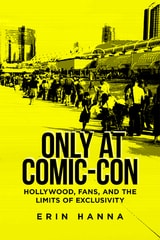
Only at Comic-Con
Hollywood, Fans, and the Limits of ExclusivityErin Hanna
Rutgers University Press, 2020