Results by title
6 books match the query 'Motion pictures and theater'

American Theatrical Film
Stages of DevelopmentUniversity of Wisconsin Press, 1985
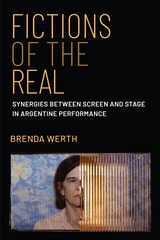
Fictions of the Real
Synergies Between Screen and Stage in Argentine PerformanceBrenda Werth
University of Michigan Press, 2026
Brenda Werth’s Fictions of the Real traces the transformation of “the real” and its transnational conceptualization by Argentine artists in the twenty-first century, focusing on artists who engage in both documentary theater and filmmaking. Werth places the work of Lola Arias, Romina Paula, Federico León, Mariano Pensotti, and Grupo Krapp in dialogue with the distinct but intertwined lineages of theater and film, exploring the intermedial dimensions of these artists’ theatrical work, resonances in their documentary films, and the transmedial relationships between their documentary plays and films. Focusing on the dynamic and shifting context of Argentina between 1998 and 2023, a period roughly bookmarked by the economic crisis of 2001 and the COVID-19 pandemic, this book explores how these artists disrupt the relations of power and counter political manipulation with their own evocative fictions of the real as they engage in the roles of translators, curators, researchers, archivists, and collaborators.
Plays, Movies, and Critics
Jody McAuliffe, ed.
Duke University Press, 1993
DeLillo's interview play is accompanied in this collection by interviews with theater director Roberta Levitow, Martin Scorsese, and film/theater critic Stanley Kauffmann. Other contributions include a critical look at the current American theater scene, analyses of the place of politics in the careers of G. B. Shaw and Luigi Pirandello, a compelling reading of Chekhov's "The Seagull", a detailed inquiry into the obsessions that energize the works of Sam Shepard, provocative reinterpretations of the films Mean Streets and The Sheltering Sky, and a translation of André Bazin's important piece on theology and film.
Contributors. André Bazin, Robert Brustein, Bert Cardullo, Anthony DeCurtis, Don DeLillo, Jesse Ward Engdhal, Richard Gilman, Jim Hosney, Mame Hunt, Jonathan Kalb, Stanley Kauffmann, Jody McAuliffe, Mary Ann Frese Witt, Jacquelyn Wollman, David Wyatt
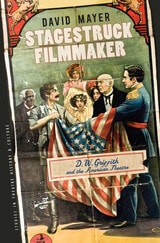
Stagestruck Filmmaker
D. W. Griffith and the American TheatreDavid Mayer
University of Iowa Press, 2009
Combining the raw materials of theatre, circus, minstrelsy, and dance with the newer visual codes of motion pictures, Griffith became the first acknowledged artist of American film. Birth of a Nation in particular demonstrates the degree to which he was influenced by the racist justifications and distorting interpretations of the Civil War and the Reconstruction era. Moving through the major phases of Griffith’s career in chapters organized around key films or groups of films, Mayer provides a mesmerizing account of the American stage and cinema in the final years of the nineteenth century and the first three decades of the twentieth century.
Griffith’s relationship to the theatre was intricate, complex, and enduring. Long recognized as the dominant creative figure of American motion pictures, throughout twenty-six years of making more than five hundred films he pillaged, adapted, reshaped, revitalized, preserved, and extolled. By historicizing his representations of race, ethnicity, and otherness, Mayer places Griffith within an overall template of American life in the years when film rivaled and then surpassed the theatre in popularity.

The Sensible Stage
Staging and the Moving ImageEdited by Bridget Crone
Intellect Books, 2017
This revised and expanded edition includes two new chapters that offer an updated look at how these ideas continue to develop in contemporary art practice.
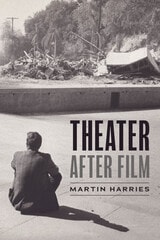
Theater after Film
Martin Harries
University of Chicago Press, 2025
In Theater after Film, Martin Harries argues that after 1945, as cinema became omnipresent in popular culture, theater had to respond to cinema’s hegemony. Theater couldn’t break that hegemony, but it could provide a zone of contestation. Theater made film’s domination of the cultural field visible through hyperbole, refusal, and other strategies, thereby unsettling its power. Postwar theatrical experiment, Harries shows, often channeled and represented film’s mass cultural force, while knowing that it could never possess that force. Throughout the book, Harries brings critical theory into contact with theories of performance. Although Theater after Film treats the theatrical work of many figures, its central focus falls on Tennessee Williams, Samuel Beckett, and Adrienne Kennedy. Discussions of these dramatists consider their ways of addressing spectators, the politics of race between film and theater, and the place of the theatrical apparatus. Readings of these central figures in twentieth-century theater exemplify the book’s historical engagement with the media surround that drama confronted. This confrontation, Harries shows, was central to the development of some of the most continually compelling postwar drama.