Results by title

9 books match the query 'Motion pictures and women'
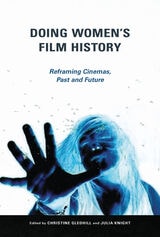
cover of Doing Women's Film History: Reframing Cinemas, Past and Future

Doing Women's Film History

Reframing Cinemas, Past and Future

Edited by Christine Gledhill and Julia Knight

University of Illinois Press, 2015
Research into and around women's participation in cinematic history has enjoyed dynamic growth over the past decade. A broadening of scope and interests encompasses not only different kinds of filmmaking--mainstream fiction, experimental, and documentary--but also practices--publicity, journalism, distribution and exhibition--seldom explored in the past. Cutting-edge and inclusive, Doing Women's Film History ventures into topics in the United States and Europe while also moving beyond to explore the influence of women on the cinemas of India, Chile, Turkey, Russia, and Australia. Contributors grapple with historiographic questions that cover film history from the pioneering era to the present day. Yet the writers also address the very mission of practicing scholarship. Essays explore essential issues like identifying women's participation in their cinema cultures, locating previously unconsidered sources of evidence, developing methodologies and analytical concepts to reveal the impact of gender on film production, distribution and reception, and reframing film history to accommodate new questions and approaches. Contributors include: Kay Armatage, Eylem Atakav, Karina Aveyard, Canan Balan, Cécile Chich, Monica Dall'Asta, Eliza Anna Delveroudi, Jane M. Gaines, Christine Gledhill, Julia Knight, Neepa Majumdar, Michele Leigh, Luke McKernan, Debashree Mukherjee, Giuliana Muscio, Katarzyna Paszkiewicz, Rashmi Sawhney, Elizabeth Ramirez Soto, Sarah Street, and Kimberly Tomadjoglou.
[more]
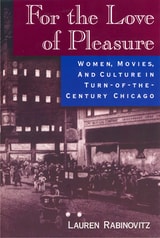
cover of For the Love of Pleasure: Women, Movies, and Culture in Turn-of-the-Century Chicago

For the Love of Pleasure

Women, Movies, and Culture in Turn-of-the-Century Chicago

Rabinovitz, Lauren

Rutgers University Press, 1998

"One of the most readable books on early cinema I have ever encountered. . . . Rabinovitz ably brings together a wealth of information about the exciting era of social change that marked the beginning of U.S. cinema."
--Gaylyn Studlar, atuhor of This Mad Masquerade: Stardom and Masculinity in the Jazz Age

The period from the 1880s until the 1920s saw the making of a consumer society, the inception of the technological, economic, and social landscape in which we currently live. Cinema played a key role in the changing urban landscape. For working-class women, it became a refuge from the factory. For middle-class women, it presented a new language of sexual danger and pleasure. Women found greater freedom in big cities, entering the workforce in record numbers and moving about unchaperoned in public spaces. Turn-of-the-century Chicago surpassed even New York as a proving ground for pleasure and education, attracting women workers at three times the national rate. Using Chicago as a model, Lauren Rabinovitz analyzes the rich interplay among demographic, visual, historical, and theoretical materials of the period. She skillfully links cinema theory and women's studies for a fuller understanding of cultural history. She also demonstrates how cinema dramatically affected social conventions, ultimately shaping modern codes of masculinity and feminity.
[more]
cover of Gender Meets Genre in Postwar Cinemas

Gender Meets Genre in Postwar Cinemas

Edited by Christine Gledhill

University of Illinois Press, 2012

This remarkable collection uses genre as a fresh way to analyze the issues of gender representation in film theory, film production, spectatorship, and the contexts of reception. With a uniquely global perspective, these essays examine the intersection of gender and genre in not only Hollywood films but also in independent, European, Indian, and Hong Kong cinemas. Working in the area of postcolonial cinema, contributors raise issues dealing with indigenous and global cinemas and argue that contemporary genres have shifted considerably as both notions of gender and forms of genre have changed. The volume addresses topics such as the history of feminist approaches to the study of genre in film, issues of female agency in postmodernity, changes taking place in supposedly male-dominated genres, concepts of genre and its use of gender in global cinema, and the relationship between gender and sexuality in film.
Contributors are Ira Bhaskar, Steven Cohan, Luke Collins, Pam Cook, Lucy Fischer, Jane Gaines, Christine Gledhill, Derek Kane-Meddock, E. Ann Kaplan, Samiha Matin, Katie Model, E. Deidre Pribram, Vicente Rodriguez Ortega, Adam Segal, Chris Straayer, Yvonne Tasker, Deborah Thomas, and Xiangyang Chen.
[more]
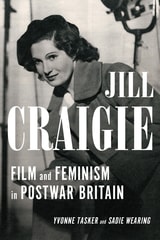
cover of Jill Craigie: Film and Feminism in Postwar Britain

Jill Craigie

Film and Feminism in Postwar Britain

Yvonne Tasker and Sadie Wearing

University of Illinois Press, 2026

The career and craft of a woman filmmaker in a male-dominated industry
 
From the mid-1940s to the late 1950s, Jill Craigie wrote, produced, and directed the innovative films that stood at the center of her diverse career in British cinema, radio, television, and print journalism. Yvonne Tasker and Sadie Wearing analyze Craigie’s oeuvre while delving into the filmmaker’s use of the medium as the space for her distinctive feminist engagement with key cultural, social, and political questions.

Tasker and Wearing reconsider Craigie’s place and reputation in the history of British Cinema. Craigie created work that showed a strong critical voice and at the same time challenged contemporary modes of filmmaking with both documentary and drama. Tasker and Wearing examine her feminist and working-class influences and also emphasize the democratic impulse that drove Craigie to include her subjects’ participation, and her commitment to representing them on screen. Throughout, Tasker and Wearing analyze Craigie’s work against the backdrop of postwar concerns and preoccupations.

Distinctive and nuanced, Jill Craigie reconsiders the career of a groundbreaking woman director.
[more]
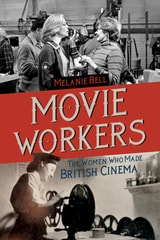
cover of Movie Workers: The Women Who Made British Cinema

Movie Workers

The Women Who Made British Cinema

Melanie Bell

University of Illinois Press, 2021

Winner of the Theatre Library Association’s Richard Wall Memorial Award Special Jury Prize for an exemplary work in the field of recorded performance

After the advent of sound, women in the British film industry formed an essential corps of below-the-line workers, laboring in positions from animation artist to negative cutter to costume designer. Melanie Bell maps the work of these women decade-by-decade, examining their far-ranging economic and creative contributions against the backdrop of the discrimination that constrained their careers. Her use of oral histories and trade union records presents a vivid counter-narrative to film history, one that focuses not only on women in a male-dominated business, but on the innumerable types of physical and emotional labor required to make a motion picture. Bell's feminist analysis looks at women's jobs in film at important historical junctures while situating the work in the context of changing expectations around women and gender roles.

Illuminating and astute, Movie Workers is a first-of-its-kind examination of the unsung women whose invisible work brought British filmmaking to the screen.
[more]
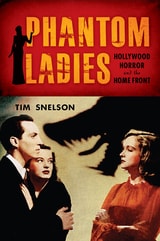
cover of Phantom Ladies: Hollywood Horror and the Home Front

Phantom Ladies

Hollywood Horror and the Home Front

Snelson, Tim

Rutgers University Press, 2014
Defying industry logic and gender expectations, women started flocking to see horror films in the early 1940s. The departure of the young male audience and the surprise success of the film Cat People convinced studios that there was an untapped female audience for horror movies, and they adjusted their production and marketing strategies accordingly.
 
Phantom Ladies reveals the untold story of how the Hollywood horror film changed dramatically in the early 1940s, including both female heroines and female monsters while incorporating elements of “women’s genres” like the gothic mystery. Drawing from a wealth of newly unearthed archival material, from production records to audience surveys, Tim Snelson challenges long-held assumptions about gender and horror film viewership. 
 
Examining a wide range of classic horror movies, Snelson offers us a new appreciation of how dynamic this genre could be, as it underwent seismic shifts in a matter of months. Phantom Ladies, therefore, not only includes horror films made in the early 1940s, but also those produced immediately after the war ended, films in which the female monster was replaced by neurotic, psychotic, or hysterical women who could be cured and domesticated. Phantom Ladies is a spine-tingling, eye-opening read about gender and horror, and the complex relationship between industry and audiences in the classical Hollywood era. 
[more]
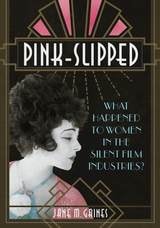
cover of Pink-Slipped: What Happened to Women in the Silent Film Industries?

Pink-Slipped

What Happened to Women in the Silent Film Industries?

Jane M Gaines

University of Illinois Press, 2018
Women held more positions of power in the silent film era than at any other time in American motion picture history. Marion Leonard broke from acting to cofound a feature film company. Gene Gauntier, the face of Kalem Films, also wrote the first script of Ben-Hur. Helen Holmes choreographed her own breathtaking on-camera stunt work. Yet they and the other pioneering filmmaking women vanished from memory. Using individual careers as a point of departure, Jane M. Gaines charts how women first fell out of the limelight and then out of the film history itself. A more perplexing event cemented their obscurity: the failure of 1970s feminist historiography to rediscover them. Gaines examines how it happened against a backdrop of feminist theory and her own meditation on the limits that historiography imposes on scholars. Pondering how silent era women have become absent in the abstract while present in reality, Gaines sees a need for a theory of these artists' pasts that relates their aspirations to those of contemporary women. A bold journey through history and memory, Pink-Slipped pursues the still-elusive fate of the influential women in the early years of film.
[more]
cover of Subject to Reality: Women and Documentary Film

Subject to Reality

Women and Documentary Film

Shilyh Warren

University of Illinois Press, 2019

Revolutionary thinking around gender and race merged with new film technologies to usher in a wave of women's documentaries in the 1970s. Driven by the various promises of second-wave feminism, activist filmmakers believed authentic stories about women would bring more people into an imminent revolution. Yet their films soon faded into obscurity.

Shilyh Warren reopens this understudied period and links it to a neglected era of women's filmmaking that took place from 1920 to 1940, another key period of thinking around documentary, race, and gender. Drawing women’s cultural expression during these two explosive times into conversation, Warren reconsiders key debates about subjectivity, feminism, realism, and documentary and their lasting epistemological and material consequences for film and feminist studies. She also excavates the lost ethnographic history of women's documentary filmmaking in the earlier era and explores the political and aesthetic legacy of these films in more explicitly feminist periods like the Seventies.

Filled with challenging insights and new close readings, Subject to Reality sheds light on a profound and unexamined history of feminist documentaries while revealing their influence on the filmmakers of today.
[more]
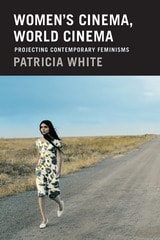
cover of Women's Cinema, World Cinema: Projecting Contemporary Feminisms

Women's Cinema, World Cinema

Projecting Contemporary Feminisms

Patricia White

Duke University Press, 2015

In Women’s Cinema, World Cinema, Patricia White explores the dynamic intersection of feminism and film in the twenty-first century by highlighting the work of a new generation of women directors from around the world:  Samira and Hana Makhmalbaf, Nadine Labaki, Zero Chou, Jasmila Zbanic, and Claudia Llosa, among others. The emergence of a globalized network of film festivals has enabled these young directors to make and circulate films that are changing the aesthetics and politics of art house cinema and challenging feminist genealogies. Extending formal analysis to the production and reception contexts of a variety of feature films, White explores how women filmmakers are both implicated in and critique gendered concepts of authorship, taste, genre, national identity, and human rights. Women’s Cinema, World Cinema revitalizes feminist film studies as it argues for an alternative vision of global media culture.
[more]