Results by title
19 books match the query 'Motivational & Inspirational'

A Psalm for Cottondale
PoemsSharony A. Green
University of Alabama Press, 2026
A lyrical journey through memory, place, and resilience in the heart of Alabama
A Psalm for Cottondale is a lyrical meditation on memory, place, and survival in the American South. Through a sequence of interconnected free-verse poems, Sharony Green reflects on life in Cottondale, Alabama, where change unfolds in ways that can be both poignant and unexpected. Rooted in the histories, landscapes, and cultural currents of an Alabama college town, the collection explores how one place can evoke the memory of many others, inviting readers to consider broader questions of identity, belonging, and endurance.
Written in a clear, steady voice, these poems balance intimacy with historical awareness, allowing inherited stories, silences, and everyday moments to emerge with quiet power. Green’s careful craftsmanship and emotional restraint lend authority to the collection, while a subtle psalmic undercurrent adds spiritual depth without sacrificing nuance. As the poems move through themes of joy, grief, witness, and renewal, Cottondale becomes both a physical community and a symbolic terrain shaped by race, land, memory, and hope.
Inspired by writings that engage history, geography, and culture, A Psalm for Cottondale offers an elegant and deeply attentive reflection on Southern and American life, illuminating the ways people endure, adapt, and find meaning in a changing world. Ideal for readers of contemporary poetry, Southern literature, African American studies, place-based writing, and works that explore history, memory, faith, and community through a lyrical lens.
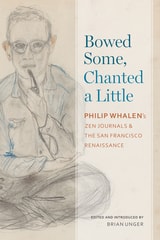
Bowed Some, Chanted a Little
Philip Whalen's Zen Journals and the San Francisco RenaissanceEdited and Introduced by Brian Unger
University of Alabama Press, 2023
The literary journals of a key figure in both the Beat and San Francisco Renaissance movements of the New American Poetry, and an ordained Zen Buddhist priest
Philip Whalen (1923–2002) authored twenty collections of verse, more than twenty broadsides, two novels, a huge assemblage of autobiographical literary journals, nine or ten experimental prose works, and dozens of critical essays, lectures, commentaries, introductions, prefaces, and interviews. But he came to regard his literary journals as his most important prose legacy.
Whalen’s literary work represents a significant turn in American letters, as he and his closest colleagues immersed themselves in East Asian literature and religion, reinvigorating strikingly new linguistic and aesthetic paths for North American writers and artists. However, until now Whalen’s forty-plus years of journals—sixty small eight-by-six-inch notebooks—have been largely inaccessible, archived in the rare book and manuscript library at the University of California, Berkeley, undigitized and unavailable online. Thus, the publication of a critical scholarly edition of Whalen’s journals and notebooks constitutes an important literary event and an invaluable resource for scholars, teachers, poets, and lay readers who follow twentieth-century North American poetry.
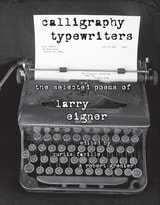
Calligraphy Typewriters
The Selected Poems of Larry EignerLarry Eigner, Edited and introduced by Curtis Faville and Robert Grenier, Foreword by Charles Bernstein
University of Alabama Press, 2016
The first and only single-volume collection of Larry Eigner’s most significant poems, gathering in one place the most celebrated of the several thousand poems that constitute his remarkable life’s work
Larry Eigner began writing poetry at age eight and was first published at age nine. Revered by poets and artists across a broad spectrum of generations and schools, Eigner’s remarkably moving poetry was created through enormous effort: because of severe physical disabilities, he produced his texts by typing with only one index finger and thumb on a 1940 Royal manual typewriter, creating a body of work that is unparalleled in its originality.
Calligraphy Typewriters showcases the most celebrated of Eigner's several thousand poems, which are an important part of the Black Mountain/Projectivist movement that began in the 1950s and which remain a primary inspiration for many younger writers, including those in the Language movement that began in the 1970s. In its two sections—Swampscott and Berkeley, named for the two locales where Eigner lived and worked—the volume traces his fantastic perception of the ordinary and his zeal for language. Eigner’s use of visual space, metaphor, and description provide fascinating insights into both his own life and the world that surrounded him. This volume maintains the distinctive visual spacing of his original typescripts, reminders of his method, aesthetic sensibility, and creative ability to compose on the typewriter.
A collection that reimagines the ordinary, Calligraphy Typewriters is the definitive selection of Eigner’s poems, and will serve well not only poets and students of poetry, but readers and writers of every vein.
Dead Weight
A Memoir in EssaysRandall Horton
Northwestern University Press, 2022
The memoir begins with a conversation between Horton and Ralph Ellison’s Invisible Man statue in New York City. Their imagined dialogue examines the psychological impact of racism on Black men and boys, including Horton’s separation from his mother, immediately after his birth, in a segregated Alabama hospital. From his current life as a professor and prison reformer, Horton looks back on his experiences as a drug smuggler and trafficker during the 1980s–1990s as well as the many obstacles he faced after his release. He also examines the lasting impact of his drug activity on those around him, reflecting on the allure of economic freedom and the mental escapism that cocaine provided, an allure so strong that both sellers and users were willing to risk prison. Horton shares historical context and vivid details about people caught in the war on drugs who became unsuspecting protagonists in somebody else’s melodrama.
Lyrical and gripping, Dead Weight reveals the lifelong effects of one man’s incarceration on his psyche, his memories, and his daily experience of American society.
Discovering the Laws of Life
Sir John Templeton
Templeton Press, 2009
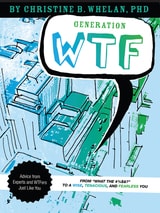
Generation WTF
From What the #$%&! to a Wise, Tenacious, and Fearless You: Advice on How to Get There from Experts and WTFers Just Like YouChristine B. Whelan
Templeton Press, 2011
We all know what “WTF” usually means: it’s an exclamation of frustration, anger, and an understandable reaction to the brutal new economic realities that have hit young adults harder than any other group. WTF happened to promises of a bright future? What happened to the jobs? And what do we do now that the rules have changed?
Recent college grads were raised in a time of affluence and entitlement, lulled into thinking that a golden future would happen. Young adults with few role models to teach values like thrift, perseverance, and self-control are ill-equipped to cope with sacrifice and failure. Their dismal employment prospects are merely the most visible symptom of more significant challenges. Fortunately, it’s not too late to change course. This optimistic, reflective, and technologically savvy generation already possesses the tools to thrive—if only they learn to harness the necessary skills for success.
In Generation WTF, Christine Whelan does just that. Dr. Whelan, one of the foremost authorities on the history of the self-help genre, worked with more than one hundred young people to test and tweak the best old-school advice and personalize it for the modern twenty-something. After a decade of researching the industry—and years advising “WTFers” as they struggle to make their way in the “real world”—Dr. Whelan knows firsthand what advice works and what Generation WTF has to offer.
Rather than focusing on the frustration that “WTF” usually stands for, Dr. Whelan leads the charge to reclaim the acronym as a battle cry for a positive future: Generation WTF will be a wise, tenacious, and fearless generation, strengthened by purpose and hope. This practical new guide will show these WTFers the way to success and instill lasting habits that will serve them well in both good times and bad.
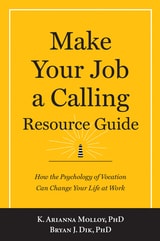
Make Your Job a Calling Resource Guide
Bryan J. Dik
Templeton Press, 2014
It is designed to assist instructors, book study leaders, career counselors, human resources professionals, and individual readers who seek to delve deeper into the book, Make Your Job a Calling. In each chapter of the guide, the reader is given (1) a chapter summary, (2) general themes, (3) discussion questions, and (4) suggested activities. The suggested activities often involve a free write where you are encouraged to write your thoughts down without editing yourself. In a free-write you are not concerned with proper grammar or punctuation. Rather, you write your immediate thoughts down in a free-flowing manner. This allows for deep exploration and can inform rich discussion of ideas in a productive learning environment.
The elements in this guide are designed to facilitate the reflection and discussion process, providing readers with useful starting points. Of course, not all group leaders will find every question or activity useful for their particular group, which is why we encourage flexible use of the material. By all means, pick, choose, add to, and adapt according to your sense of what will be most helpful for the group you are leading.
Whether you feel stuck or overwhelmed, hopeful or uncertain, or energized and ready to go, this guide can assist you in that journey.
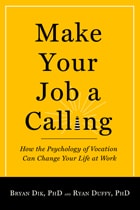
Make Your Job a Calling
How the Psychology of Vocation Can Change Your Life at WorkBryan J. Dik
Templeton Press, 2013
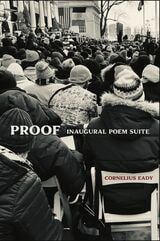
Proof
Inaugural Poem SuiteCornelius Eady
Tupelo Press, 2026
Cornelius Eady turns the inaugural poem into an instrument of reckoning.
First delivered to mark the historic inauguration of New York City’s mayor Zohran Mamdani on January 1, 2026, the title poem is not ceremony—it is summons. “You have to imagine it,” Eady insists, and from that insistence rises a chorus: those called too dark, too queer, too poor, too loud; those renamed invisible; those told “not now.” What if joy could wear down the rock of no? What if imagination were not escape, but evidence?
Moving from Robert Frost squinting into winter glare, to Elizabeth Alexander straightening her back before history, to Aretha Franklin beneath her church-crown hat, Eady braids civic pageantry with private memory. He summons the Colored Conventions of 1830, the 911 call that ricocheted through racial panic, the mock rifles on a Brooklyn rooftop, the “knife in sheep’s clothes.” Each poem widens the frame. Each poem refuses to look away.
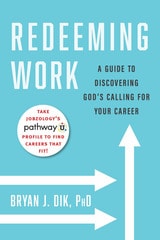
Redeeming Work
A Guide to Discovering God's Calling for Your CareerBryan J. Dik
Templeton Press, 2020
The author, Bryan Dik, PhD, is one of the leading psychologists in the world who specializes in vocation. A professor, entrepreneur, and follower of Christ, Dik wrote this book as a labor of love after devoting his career to research and development of practical strategies for helping others find purposeful work. His message: there are abundant opportunities for Christians to forge careers that answer God’s calling for their lives. In Redeeming Work, he shares the tools you need to find these opportunities and pursue them successfully.
Your purchase of Redeeming Work comes with a special bonus: free access to an evidence-based online career assessment system called PathwayU. By taking this assessment, you’ll learn about what makes you unique, including what you enjoy (interests), what matters to you (values), your general tendencies (personality), and what you most need from an organization (workplace preferences). Then, you’ll be able to explore career paths (and current job openings) that fit the pattern of gifts God has given you.
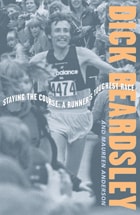
Staying The Course
A Runner’s Toughest RaceDick Beardsley
University of Minnesota Press, 2004
Templeton Plan
21 Steps to Personal Success and Real HappinessSir John Templeton
Templeton Press, 2013
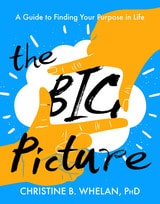
The Big Picture
A Guide to Finding Your Purpose in LifeChristine B. Whelan
Templeton Press, 2016
“If young adults could be guided in the right direction for a life journey of meaning and purpose, we would be grooming the leaders of tomorrow for a better world. This book is the perfect guide.” —Deepak Chopra, MD, FACP, founder of the Chopra Center for Wellbeing
What am I going to do for the rest of my life?
This question is familiar for young people at a turning point—whether it’s facing the end of high school, college, graduate school, or just a dead-end job. Maybe they have the degree they want but don’t know where to start their job search. Perhaps they’re still choosing a major and, given the range—from “Biochemistry” to “Adventure Education”—are lost in the options. Maybe they’re facing a mountain of debt but don’t want to get locked into a job they hate.
While other books might advise writing resumes or preparing for interviews, they only go so far. Young people want more than just another job—they want a life, and a meaningful one at that.
Enter The Big Picture. Created by the leading authority on self-help research and reviewed by over six hundred college students, Dr. Christine B. Whelan’s The Big Picture offers a guide to discovering one’s talents, dreams, and desires that can lead one to a fulfilling career but fulfilling life. It guides young people to take a step back and look at the “big picture” of who they are, what they want, and why they’re here.
Through quizzes and questionnaires which college students have vetted, Whelan guides the reader through “big picture” questions like,
- What are my talents—and how can I use those to help others and create meaning?
- How have my life experiences shaped who I am and what I can give?
- What do I value—and how can I be happy while being true to those values?
Although there are endless books on finding a job, this is the first book that presents research-based and tested material to help young people answer the question, What will I do with my life? The Big Picture provides the resources needed to find—and live—a purposeful life. An excellent gift for a graduate or a guide for yourself.
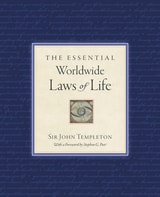
The Essential Worldwide Laws of Life
Sir John Templeton
Templeton Press, 2012
What does it mean to live a good life?
The major scriptures of the world, various schools of philosophical thought, storytellers, scientists, artists, and historians have all offered answers to this question. Surprisingly, these answers are common among nearly all sources. Famed investor and philanthropist Sir John Templeton called these commonalities the “laws of life.”
Templeton gathers the best of these teachings in The Essential Worldwide Laws of Life. This handsome volume shows readers of all ages, from all parts of the world, how to make their lives more joyous and useful by learning the universal truths that transcend time and culture.
Each law is presented in an essay format, with stories, commentary, and quotations to illustrate its importance. The material is designed to inspire the reader to put these laws into practice and to enjoy the rewarding life that will result.
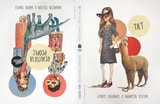
Tilt / Beautiful People
Denise Duhamel, Maureen Seaton, and Aaron Smith
Bridwell Press, 2024
In Tilt, Denise Duhamel and Maureen Seaton (1947-2023) write through climate change, Maureen’s illness, and the pandemic with their signature wit and poignancy. Their feminist curiosity leads them to poems about gender identity, marriage equality, and the complexities of national politics. Assembled shortly before Maureen’s death, the poems in Tilt tell the story of a friendship rooted in collaborative artistic play. The title of the book gives a nod to the earth’s tilt, which gives us seasons, but also hints that the poems were written at full tilt, these poets hyperaware they only had so much time left to write with one another.
Beautiful People was written back and forth over the course of several months by poets Maureen Seaton and Aaron Smith. Bold and inventive, it moves from sonnets and sestinas to prose poems and so much more. While its center is a love for poetry and art and laughter, the poets also grapple with mortality, sadness, and what it means to be alive on a broken but beautiful planet. Through their literary friendship, they put a mirror to all our lovely faces.
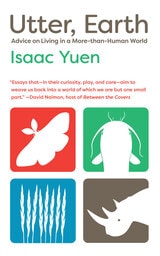
Utter, Earth
Advice on Living in a More-than-Human WorldIsaac Yuen
West Virginia University Press, 2024
Honorable Mention, Alanna Bondar Prize, 2026, Association for Literature, Environment, and Culture in Canada (ALECC)
Part nature guide, part self-help column, and all love letter to the more-than-human world, Utter, Earth is an exercise in wonder. For animal lovers and readers of Brian Doyle, Aimee Nezhukumatathil, and Amy Leach.
A light, literary take on an animal book for grown-ups, a tongue-in-cheek self-help column with lessons drawn from nature, a sort of hitchhiker’s guide to the more-than-human world—Isaac Yuen’s Utter, Earth is a celebration, through wordplay and earthplay, of our planet’s riotous wonders.
In a time of dirges and elegies for the natural world, Utter, Earth features odes to sloths, tributes to trilobites, and ringing endorsements for lichen. For animal lovers and readers of Brian Doyle, Aimee Nezhukumatathil, and Amy Leach, each essay of this one-of-a-kind collection combines joyous language, whimsical tangents, and scientific findings to remind us of and reconnect us with those to whom we are inextricably bound. Highlighting life that once was, still is, and all that we stand to lose, this living and lively mini encyclopedia (complete with glossary) shines the spotlight on the motley, fantastical, and astonishing denizens with whom we share this planet.
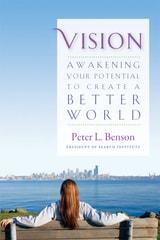
Vision
Awakening Your Potential to Create a Better WorldPeter Benson
Templeton Press, 2009
According to Peter L. Benson, the capacity to generate vision is among life's most beautiful and unheralded gifts. To him, a vision is more than just a goal, more than just a dream of what could be—it is a summons, a pull towards the future, an inspired call to make real that which should be. In Vision: Awakening Your Potential to Create a Better World, Benson takes readers on an uplifting exploration of this powerful concept.
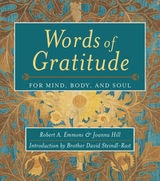
Words Of Gratitude Mind Body & Soul
Robert A. Emmons
Templeton Press, 2001
"The test of all happiness,” said G.K. Chesterton, “is gratitude."
Learning to experience gratitude involves being grateful as an attitude, not as a reaction when good things occur. To be grateful, one does not need to wait until things are perfect. In fact, practicing gratitude makes one receptive to life's blessings, and these blessings continue as we continue to be thankful.
In one study, described by author Robert Emmons, participants who wrote about five things for which they were grateful experienced more positive emotional states and were more likely to help others over a period of ten weeks than were participants who wrote about the hassles and stressors they experienced during the same time.
"Love wholeheartedly,” says Brother David Steindl-Rast, “be surprised, give thanks and praise—then you will discover the fullness of your life."
Gratitude provides gifts to both the giver and the receiver, and this illuminating book will inspire readers to recognize just how truly blessed we are.
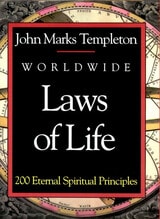
Worldwide Laws Of Life
200 Eternal Spiritual PrinciplesJohn Marks Templeton
Templeton Press, 1998
Worldwide Laws of Life is full of wisdom drawn from the major sacred Scriptures of the world and various schools of philosophical thought, as well as from scientists, artists, historians, and others. Its aim is to assist people of all ages to learn more about the universal truths of life that transcend modern times or particular cultures.