Results by title
7 books match the query 'Moundville Archaeological Park (Moundville, Ala.)'
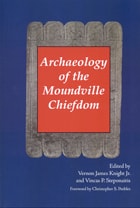
Archaeology of the Moundville Chiefdom
Edited by Vernon James Knight Jr. and Vincas P. Steponaitis, with a foreword by Chistopher S. Peebles
University of Alabama Press, 2007
Built on a flat terrace overlooking the Black Warrior River in Alabama, the Moundville ceremonial center was at its height a densely occupied town of approximately 1,000 residents, with at least 29 earthen mounds surrounding a central plaza. Today Moundville is not only one of the largest and best-preserved Mississippian sites in the United States but also one of the most intensively studied. This volume brings together nine Moundville specialists who trace the site’s evolution and eventual decline.
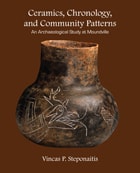
Ceramics, Chronology, and Community Patterns
An Archaeological Study at MoundvilleVincas P. Steponaitis
University of Alabama Press, 2009
Moundville, located on the Black Warrior River in west-central Alabama, is one of the best known and most intensively studied archaeological sites in North America. Yet, in spite of all these investigations, many aspects of the site's internal chronology remained unknown until the original 1983 publication of this volume. The author embarked on a detailed study of Moundville ceramics housed in museums and collections, and hammered out a new chronology for Moundville.This volume is a clearly written description of the analytical procedures employed on these ceramic samples and the new chronology this study revealed. Using the refined techniques outlined in this volume, it was possible for the author to trace changes in community patterns, which in turn shed light on Moundville's internal development and its place among North America's ancient cultures.
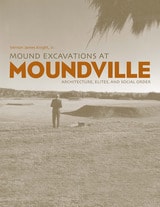
Mound Excavations at Moundville
Architecture, Elites and Social OrderVernon James Knight, Jr.
University of Alabama Press, 2010
How social and political power was wielded in order to build Moundville
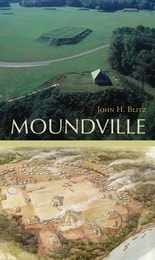
Moundville
John H. Blitz
University of Alabama Press, 2008
Exploring the legacy of America’s great mound builders.
In the 13th century, Moundville was one of the largest Native American settlements north of Mexico. Spread over 325 acres were 29 earthen mounds arranged around a great plaza, a mile-long stockade, and dozens of dwellings for thousands of people. Moundville, in size and complexity second only to the Cahokia site in Illinois, was a heavily populated town, as well as a political and religious center.
Moundville was sustained by tribute of food and labor provided by the people who lived in the nearby floodplain as well as other smaller mound centers. The immediate area appears to have been thickly populated, but by about A.D. 1350, Moundville retained only ceremonial and political functions. A decline ensued, and by the 1500s the area was abandoned. By the time the first Europeans reached the Southeast in the 1540s, the precise links between Moundville's inhabitants and what became the historic Native American tribes had become a mystery.
Illustrated with 50 color photos, maps, and figures, Moundville tells the story of the ancient people who lived there, the modern struggle to save the site from destruction, and the scientific saga of the archaeologists who brought the story to life. Moundville is the book to read before, during, or after a visit to Alabama’s prehistoric metropolis.
Moundville's Economy
Paul D. Welch
University of Alabama Press, 1991
A Dan Josselyn Memorial Publication
Anthropologists have long talked about chiefdoms as a form of sociopolitical organization, and for several decades Elman Service's description of chiefdoms has been widely accepted as definitive. Nevertheless, in the 1970s, scholars began to question whether all, or any, chiefdoms had the entire range of characteristics described by Service. Most of the questions focused on the (nonmarket) economic organization of these polities, and several contrasting economic models were suggested. None of the models, however, was comprehensively tested against actual chiefdom economies.
This study examines the economic organization of the late prehistoric (A.D. 1000 to 1540) chiefdom centered at Moundville, Alabama. Rather than attempting to show that this case fits one or another model, the economic organization is determined empirically using archaeological data. The pattern of production and distribution of subsistence goods, domestic nonutilitarian goods, and imported prestige goods does not fit precisely any of the extant models. Because Moundville's economy was organized in a way that promoted stability, it may be no accident that Moundville was the dominant regional polity for several hundred years. This research opens a new field of archaeological investigation: the relationship between fine details of economic organization and large-scale political fortunes.

The Archaeology of Everyday Life at Early Moundville
Gregory D. Wilson
University of Alabama Press, 2007
Complex Mississippian polities were neither developed nor sustained in a vacuum. A broad range of small-scale social groups played a variety of roles in the emergence of regionally organized political hierarchies that governed large-scale ceremonial centers. Recent research has revealed the extent to which interactions among corporately organized clans led to the development, success, and collapse of Moundville. These insights into Moundville’s social complexity are based primarily on the study of monumental architecture and mortuary ceremonialism. Less is known about how everyday domestic practices produced and were produced by broader networks of power and inequality in the region.
Wilson’s research addresses this gap in our understanding by analyzing and interpreting large-scale architectural and ceramic data sets from domestic contexts. This study has revealed that the early Mississippian Moundville community consisted of numerous spatially discrete multi-household groups, similar to ethnohistorically described kin groups from the southeastern United States. Hosting feasts, dances, and other ceremonial events were important strategies by which elite groups created social debts and legitimized their positions of authority. Non-elite groups, on the other hand, maintained considerable economic and ritual autonomy through diversified production activities, risk sharing, and household ceremonialism. Organizational changes in Moundville’s residential occupation highlight the different ways kin groups defined and redefined their corporate status and identities over the long term.

The Moundville Expeditions of Clarence Bloomfield Moore
Clarence Bloomfield MooreClarence Bloomfield Moore, edited and introduced by Vernon James Knight, Jr.
University of Alabama Press, 1996
The Moundville Expeditions of Clarence Bloomfield Moore brings together, in a handsome facsimile edition, two landmark studies documenting the first large-scale archaeological investigations of Alabama's most important prehistoric Native American site. Originally published in 1905 and 1907 and presented here with an introduction by noted archaeologist Vernon James Knight Jr., the volume preserves the pioneering work of Clarence Bloomfield Moore, one of the most influential figures in American archaeology, whose river expeditions helped establish the foundations of Southeastern archaeological research.
Focusing on Moundville, one of the most important ceremonial centers of the Mississippian world, this richly illustrated work offers readers an unparalleled window into the discovery and interpretation of a site that shapes our understanding of Indigenous history in the American South.
Produced in an oversized format that showcases Moore's photographs, maps, plates, and field documentation, this volume is both a vital scholarly resource and an impressive keepsake worthy of any personal or institutional library. Of interest to archaeologists, historians, anthropologists, students of Native American history, Alabama history enthusiasts, museum professionals, collectors of regional history, and readers fascinated by the exploration of America's ancient past.
Other books in this same series include sites in Florida, Georgia, Mississippi, Arkansas, and Louisiana.