Results by title
4 books match the query 'Mraz, John'

History and Modern Media
A Personal JourneyJohn Mraz
Vanderbilt University Press, 2021
The book interweaves an autobiographical narrative with concrete research. Mraz describes the resistance he encountered in US academia to this new way of showing and describing the past in films and photographs, as well as some illuminating experiences as a visiting professor at several US universities. More importantly, he reflects on what it has meant to move to Mexico and become a Mexican. Mexico is home to a thriving school of photohistorians perhaps unequaled in the world. Some were trained in art history, and a few continue to pursue that discipline. However, the great majority work from the discipline known as "photohistory" which focuses on vernacular photographs made outside of artistic intentions.
A central premise of the book is that knowing the cultures of the past and of the other is crucial in societies dominated by short-term and parochial thinking, and that today's hyper-audiovisuality requires historians to use modern media to offer their knowledge as alternatives to the "perpetual present" in which we live.
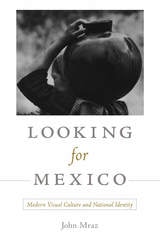
Looking for Mexico
Modern Visual Culture and National IdentityJohn Mraz
Duke University Press, 2009
Turning to film, Mraz compares portrayals of the Mexican Revolution by Fernando de Fuentes to the later movies of Emilio Fernández and Gabriel Figueroa. He considers major stars of Golden Age cinema as gender archetypes for mexicanidad, juxtaposing the charros (hacienda cowboys) embodied by Pedro Infante, Pedro Armendáriz, and Jorge Negrete with the effacing women: the mother, Indian, and shrew as played by Sara García, Dolores del Río, and María Félix. Mraz also analyzes the leading comedians of the Mexican screen, representations of the 1968 student revolt, and depictions of Frida Kahlo in films made by Paul Leduc and Julie Taymor. Filled with more than fifty illustrations, Looking for Mexico is an exuberant plunge into Mexico’s national identity, its visual culture, and the connections between the two.
Nacho Lopez, Mexican Photographer
John Mraz
University of Minnesota Press, 2003
Reveals the career of an influential but under-appreciated photojournalist
Photographer Nacho López was Mexico’s Eugene Smith, fusing social commitment with searing imagery to dramatize the plight of the helpless, the poor, and the marginalized in the pages of glossy illustrated magazines. Even today, López’s photographs forcefully belie the picturesque exoticism that is invariably presented as the essence of Mexico.
In Nacho López, Mexican Photographer, John Mraz offers the first full-length study in English of this influential photojournalist and provides a close visual analysis of more than fifty of López’s most important photographs. Mraz first sets López’s work in the historical and cultural context of the authoritarian presidentialism that characterized Mexican politics in the 1950s, the cult of wealth and celebrity promoted by Mexico’s professional photographers, and the government’s attempts to modernize and industrialize Mexico at almost any cost. Mraz skillfully explores the implications of López's imagery in this setting: the extent to which his photographs might constitute further victimization of his downtrodden subjects, the relationship between them and the middle-class readers of the magazines for which López worked, and the success with which his photographs challenged Mexico's economic and political structures. Mraz contrasts the photos López took with those that were selected by his editors for publication. He also compares López’s images with his theories about documentary photography, and considers López’s photographs alongside the work of Robert Capa, Dorothea Lange, Henri Cartier-Bresson, and Sebastião Salgado. López’s imagery is further analyzed in relation to the Mexican Golden Age cinema inspired by Sergei Eisenstein, the pioneering digital imagery of Pedro Meyer, and the work of Manuel Álvarez Bravo, who Mraz provocatively argues was the first Mexican photographer to take an anti-picturesque stance. The definitive English-language assessment of Nacho López’s career, this volume also explores such broader topics as the nature of the photographic essay and the role of the media in effecting social change.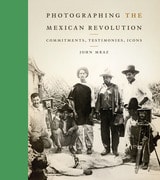
Photographing the Mexican Revolution
Commitments, Testimonies, IconsBy John Mraz
University of Texas Press, 2012
The Mexican Revolution of 1910–1920 is among the world’s most visually documented revolutions. Coinciding with the birth of filmmaking and the increased mobility offered by the reflex camera, it received extraordinary coverage by photographers and cineastes—commercial and amateur, national and international. Many images of the Revolution remain iconic to this day—Francisco Villa galloping toward the camera; Villa lolling in the presidential chair next to Emiliano Zapata; and Zapata standing stolidly in charro raiment with a carbine in one hand and the other hand on a sword, to mention only a few. But the identities of those who created the thousands of extant images of the Mexican Revolution, and what their purposes were, remain a huge puzzle because photographers constantly plagiarized each other’s images.
In this pathfinding book, acclaimed photography historian John Mraz carries out a monumental analysis of photographs produced during the Mexican Revolution, focusing primarily on those made by Mexicans, in order to discover who took the images and why, to what ends, with what intentions, and for whom. He explores how photographers expressed their commitments visually, what aesthetic strategies they employed, and which identifications and identities they forged. Mraz demonstrates that, contrary to the myth that Agustín Víctor Casasola was “the photographer of the Revolution,” there were many who covered the long civil war, including women. He shows that specific photographers can even be linked to the contending forces and reveals a pattern of commitment that has been little commented upon in previous studies (and completely unexplored in the photography of other revolutions).