Results by title
2 books match the query 'Muhammad, Bahiyyah M.'
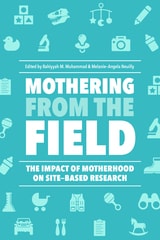
Mothering from the Field
The Impact of Motherhood on Site-Based ResearchEdited by Bahiyyah Miallah Muhammad and Mélanie-Angela Neuilly
Rutgers University Press, 2019
Mothering from the Field offers both a mosaic of perspectives from current women scientists’ experiences of conducting field research across a variety of sub-disciplines while raising children, and an analytical framework to understand how we can redefine methodological and theoretical contributions based on mothers’ experiences in order not just to promote healthier, more inclusive, nurturing, and supportive environments in physical, life, and social sciences, but also to revolutionize how we conceptualize research.
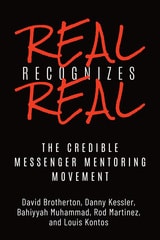
Real Recognizes Real
The Credible Messenger Mentoring MovementDavid C. Brotherton, Danny Kessler, Bahiyyah M. Muhammad, Rodrigo Martinez, and Louis Kontos
Temple University Press, 2027
The Credible Messenger Mentoring Initiative (CMMI), launched in New York City in 2012, is a transformative program where adults who had been in the justice system serve as mentors, role models, and life coaches for 16- to 24-year-olds. The program socializes and empowers these at-risk and formerly incarcerated youth offenders, diverting them from juvenile justice institutions and rehabilitation centers. It aims to build trust, deepen their ties to their community and family, and help them become peacemakers and role models for other youths.
Real Recognizes Real is the first in-depth study of the CMMI, focusing on the Washington, DC branch of the program, which is becoming a model for a new movement of anti-violent interventions. It shows the advantages of the CMMI being built on the love that members of a community have for one another rather than on outside intervention. The authors also explain how this state-run, non-profit program reduced recidivism rates and helped its participants, youth and mentors alike, develop more meaningful and lasting relationships.
Featuring interviews with youths and their mentors, Real Recognizes Real evaluates the successes, challenges, failures, and lessons of the CMMI, while emphasizing its value in the campaign for juvenile justice reform.
In the series Studies in Transgression