Results by title
4 books match the query 'Multidisciplinary Perspectives'

Defining the Delta
Multidisciplinary Perspectives on the Lower Mississippi River DeltaJanelle Collins
University of Arkansas Press, 2015
Inspired by the Arkansas Review’s “What Is the Delta?” series of articles, Defining the Delta collects fifteen essays from scholars in the sciences, social sciences, and humanities to describe and define this important region.
Here are essays examining the Delta’s physical properties, boundaries, and climate from a geologist, archeologist, and environmental historian. The Delta is also viewed through the lens of the social sciences and humanities—historians, folklorists, and others studying the connection between the land and its people, in particular the importance of agriculture and the culture of the area, especially music, literature, and food.
Every turn of the page reveals another way of seeing the seven-state region that is bisected by and dependent on the Mississippi River, suggesting ultimately that there are myriad ways of looking at, and defining, the Delta.
[more]
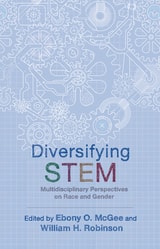
Diversifying STEM
Multidisciplinary Perspectives on Race and GenderEbony O. McGee
Rutgers University Press, 2020
2020 Choice Outstanding Academic Title
Research frequently neglects the important ways that race and gender intersect within the complex structural dynamics of STEM. Diversifying STEM fills this void, bringing together a wide array of perspectives and the voices of a number of multidisciplinary scholars. The essays cover three main areas: the widely-held ideology that science and mathematics are “value-free,” which promotes pedagogies of colorblindness in the classroom as well as an avoidance of discussions around using mathematics and science to promote social justice; how male and female students of color experience the intersection of racist and sexist structures that lead to general underrepresentation and marginalization; and recognizing that although there are no quick fixes, there exists evidence-based research suggesting concrete ways of doing a better job of including individuals of color in STEM. As a whole this volume will allow practitioners, teachers, students, faculty, and professionals to reimagine STEM across a variety of educational paradigms, perspectives, and disciplines, which is critical in finding solutions that broaden the participation of historically underrepresented groups within the STEM disciplines.
Research frequently neglects the important ways that race and gender intersect within the complex structural dynamics of STEM. Diversifying STEM fills this void, bringing together a wide array of perspectives and the voices of a number of multidisciplinary scholars. The essays cover three main areas: the widely-held ideology that science and mathematics are “value-free,” which promotes pedagogies of colorblindness in the classroom as well as an avoidance of discussions around using mathematics and science to promote social justice; how male and female students of color experience the intersection of racist and sexist structures that lead to general underrepresentation and marginalization; and recognizing that although there are no quick fixes, there exists evidence-based research suggesting concrete ways of doing a better job of including individuals of color in STEM. As a whole this volume will allow practitioners, teachers, students, faculty, and professionals to reimagine STEM across a variety of educational paradigms, perspectives, and disciplines, which is critical in finding solutions that broaden the participation of historically underrepresented groups within the STEM disciplines.
[more]
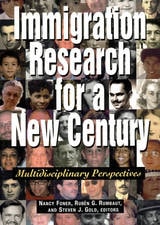
Immigration Research for a New Century
Multidisciplinary PerspectivesNancy Foner
Russell Sage Foundation, 2000
The rapid rise in immigration over the past few decades has transformed the American social landscape, while the need to understand its impact on society has led to a burgeoning research literature. Predominantly non-European and of varied cultural, social, and economic backgrounds, the new immigrants present analytic challenges that cannot be wholly met by traditional immigration studies. Immigration Research for a New Century demonstrates how sociology, anthropology, history, political science, economics, and other disciplines intersect to answer questions about today's immigrants. In Part I, leading scholars examine the emergence of an interdisciplinary body of work that incorporates such topics as the social construction of race, the importance of ethnic self-help and economic niches, the influence of migrant-homeland ties, and the types of solidarity and conflict found among migrant populations. The authors also explore the social and national origins of immigration scholars themselves, many of whom came of age in an era of civil rights and ethnic reaffirmation, and may also be immigrants or children of immigrants. Together these essays demonstrate how social change, new patterns of immigration, and the scholars' personal backgrounds have altered the scope and emphases of the research literature, allowing scholars to ask new questions and to see old problems in new ways. Part II contains the work of a new generation of immigrant scholars, reflecting the scope of a field bolstered by different disciplinary styles. These essays explore the complex variety of the immigrant experience, ranging from itinerant farmworkers to Silicon Valley engineers. The demands of the American labor force, ethnic, racial, and gender stereotyping, and state regulation are all shown to play important roles in the economic adaptation of immigrants.The ways in which immigrants participate politically, their relationships among themselves, their attitudes toward naturalization and citizenship, and their own sense of cultural identity are also addressed. Immigration Research for a New Century examines the complex effects that immigration has had not only on American society but on scholarship itself, and offers the fresh insights of a new generation of immigration researchers.
[more]
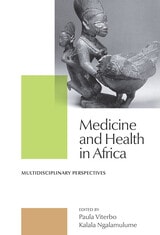
Medicine and Health in Africa
Multidisciplinary PerspectivesPaula Viterbo
Michigan State University Press, 2011
Over the last two decades, the implosion of economies under the burden of debt, the negative repercussions of structural adjustment programs, the crisis of legitimacy, civil wars, and the collapse of some states have resulted in serious health issues across the African continent. Newly emerging diseases, such as Ebola virus and HIV/AIDS have killed and disabled millions. Some “old diseases,” such as yellow fever, tuberculosis, and polio have reappeared. Malaria, cholera, and meningitis continue to kill thousands. In many countries, the medical infrastructure has collapsed, while an increasing number of physicians and nurses have migrated to more hospitable places. Stigmatization of the affected people has exacerbated social and racial discrimination and has affected the implementation of national and international public health programs. The complexity of the situation requires an interdisciplinary approach. This collection, including contributions by historians, sociologists, anthropologists, and biologists, emphasizes the social and cultural contexts of African health, paying particular attention to the history of the colonial public health system and its legacy.
[more]