Results by title
16 books match the query 'Multigenerational'
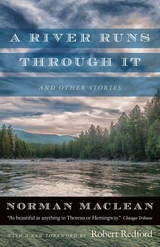
A River Runs through It and Other Stories
Norman Maclean
University of Chicago Press, 2017
Elegantly redesigned, A River Runs through It includes a new foreword by Robert Redford, director of the Academy Award-winning 1992 film adaptation of River. Based on Maclean’s own experiences as a young man, the book’s two novellas and short story are set in the small towns and mountains of western Montana. It is a world populated with drunks, loggers, card sharks, and whores, but also one rich in the pleasures of fly-fishing, logging, cribbage, and family. By turns raunchy and elegiac, these superb tales express, in Maclean’s own words, “a little of the love I have for the earth as it goes by.”
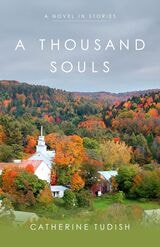
A Thousand Souls
A Novel in StoriesCatherine Tudish
Acre Books, 2026
Catching sight of the village of Neptune nestled in a remote Vermont valley, a traveler likens it to “a lost kingdom.” The fourteen stories in Catherine Tudish’s gorgeously crafted volume interweave the lives of three generations in this “embarrassingly pretty town” of “upward of a thousand souls” as they inevitably touch the outside world. A boy born of a secret affair travels by train to South Carolina for a first-time meeting with his respected father. A recent widow and Boston transplant solves the mystery of a teen girl gone missing. A beloved sheriff breaks up a drug operation, only to get busted himself for helping undocumented workers evade ICE. The disappointed wife of a rural mail driver presents him with a nude portrait—of herself. A shy girl with a speech impediment loses her stutter when she befriends and speaks to a black bear. Another boy has nightmares that seem to be the memories of a distant stranger’s tragedy.
Even as their loyalties and traditions are tested through loss, betrayal, and startling discovery, the characters in A Thousand Souls embody the belonging that comes from a close-knit community. Sharply observed, wry, and deeply tender, these stories resonate with both the intricacy and cost of interconnection as the years pass, and ordinary lives take unexpected turns.
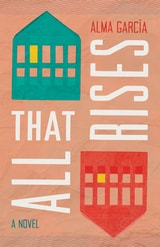
All That Rises
A NovelAlma García
University of Arizona Press, 2023
What follows is a story in which mysteries are unraveled, odd alliances are forged, and the boundaries between lives blur in destiny-changing ways—all in a place where the physical border between two countries is as palpable as it is porous, and the legacies of history are never far away. There are no easy solutions to the issues the characters face in this story, and their various realities—as undocumented workers, Border Patrol agents, the American supervisor of a Mexican factory employing an impoverished workforce—never play out against a black-and-white moral canvas. Instead, they are complex human beings with sometimes messy lives who struggle to create a place for themselves in a part of the world like no other, even as they are forced to confront the lives they have made.
All That Rises is about secrets, lies, border politics, and discovering where you belong—within a family, as well as in the world beyond. It is a novel for the times we live in, set in a place many people know only from the news.

Another Kind of Symmetry
Angela Jane Fountas
University of Alaska Press, 2026
Agni and Effie, identical twins, are inseparable until Agni is sent to Greece one summer to visit their grandmother after their grandfather’s sudden death. Until now the more conventional and accommodating of the two, Agni refuses to return to college, choosing instead to remain in their family’s Greek village.
She is drawn into the daily routines and rural traditions that her parents left behind in exchange for the American dream. But the haunting presence of her grandfather’s ghost is a sign of unresolved family grief.
Without her sister’s companionship, Effie abruptly abandons the stability of her life so far and moves to the East Village to live as an artist. But when Agni’s absence become unbearable for her, a personal crisis brings the sisters together again, this time even closer than before.
Alternating between the sisters’ points of view, letters between them, and stories Agni writes in secret, Another Kind of Symmetry explores the sometimes uneasy relationship that children of immigrants have with their parents’ version of the American dream. It reflects on the challenges of living with cross-cultural traditions and how individuals’ different responses to them can disrupt even the closest of relationships.
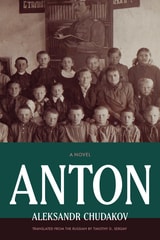
Anton
A NovelAleksandr Chudakov, Timothy D. Sergay
Northwestern University Press, 2027
A landmark work of contemporary Russian literature, now in English for the first time
Set in a fictitious town in North Kazakhstan settled by political and ethnic exiles, this panoramic narrative follows the relationship between the titular character Anton, a Moscow historian of the vital “1960s generation,” and his grandfather, Leonid, a titan of physical and intellectual rigor who is now on the verge of death. As Anton contemplates the fading away of that once-powerful vitality, he lets his thoughts plunge deep into the past, presented in a series of fine-grained sketches, scattered reminiscences, and subtly interconnected episodes, back and forth from childhood to present day. The resulting novel is a “Soviet family Robinson”: the history of rugged and free-thinking intellectuals eking out a tolerable, even enviable homestead existence despite the difficulties of the Stalin years. One of the most vibrant works of literary fiction created since the fall of the Soviet Union, Aleksandr Chudakov’s Anton is a testament to humanity's tenacity and tenderness.
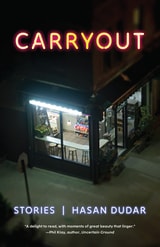
Carryout
Hasan Dudar
University of Iowa Press, 2026
A Poets & Writers First Fiction 2026 Debut Selection
In the late 1970s, Ziad Idilbi, a Palestinian refugee from Lebanon, marries Salma, a Lebanese refugee escaping the war in Beirut. Resolving to start over for the very last time, the couple opens a corner store in Toledo, Ohio, across from the General Motors factory, where Toledo’s Arab community intermingles with the working class. Over the decades, whether it’s bigotry (pre- and post-9/11), financial ruin, or terminal illness, the Idilbis find themselves on life’s outskirts, attempting to build something new.
Achingly poignant and slyly funny, the linked stories in Carryout follow the Idilbis and their children as they teeter on the brink of catastrophe. Walid, the youngest child of Ziad and Salma, navigates the heartbreaks of youth as well as the colorful characters who haunt his parents’ corner store. As he grows up into a writer, Walid’s gaze fixes on his father and the long shadow of displacement and occupation. Mustafa, the eldest son, is forever trying to outrun the disasters that seem to seek him out, while Nawal, the only daughter, is dumped by a friend and hatches a scheme to win her back. Unsure whether to run toward each other or away from each other, the characters in Dudar’s exquisite debut suffer the absurdities and indignities of life in America with wry obstinance and striking wisdom.

In the Shadow of the Architect
Bradley Bazzle
University of Wisconsin Press, 2026
Coalescing around themes of family and belonging, the past’s influence on the present, and the ways we define ourselves, these stories show us people forced to grapple with who they are—and who they could become. A closeted teenager learns from the nude model in his life-drawing class what it might mean to be a gay man in Fort Worth. A lifestyle blogger looking to expand her influence hires a photographer whose work destabilizes her family. A boy finds friendship in the precocious daughter of a recently deceased architect whose fame and force of personality continue to dominate their lives. In Bradley Bazzle’s deft hands, these characters—on the cusp of change, willingly or not—discover truths about themselves, some of which they might regret learning.
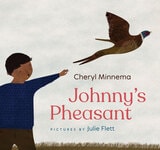
Johnny's Pheasant
Cheryl Minnema
University of Minnesota Press, 2019
An encounter with a pheasant (which may or may not be sleeping) takes a surprising turn in this sweetly serious and funny story of a Native American boy and his grandma
"Pull over, Grandma! Hurry!” Johnny says. Grandma does, and Johnny runs to show her what he spotted near the ditch: a sleeping pheasant. What Grandma sees is a small feathery hump. When Johnny wants to take it home, Grandma tries to tell him that the pheasant might have been hit by a car. But maybe she could use the feathers for her craftwork? So home with Grandma and Johnny the pheasant goes . . .
It’s hard to say who is most surprised by what happens next—Grandma, Johnny, or the pheasant. But no one will be more delighted than the reader at this lesson about patience and kindness and respect for nature, imparted by Grandma’s gentle humor, Johnny’s happy hooting, and all the quiet wisdom found in Cheryl Minnema’s stories of Native life and Julie Flett’s remarkably evocative and beautiful illustrations.
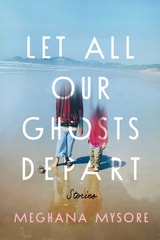
Let All Our Ghosts Depart
StoriesMeghana Mysore
West Virginia University Press, 2026
In this powerful debut collection, present-day women of the South Asian diaspora grapple with belonging and are haunted by intergenerational inheritances. Meghana Mysore, herself the daughter of Indian immigrants, spins her stories around narrators struggling to assimilate into the surreal world around them. At times, this disorientation skews speculative, where deceased mothers reappear as chiding, broken-down cars. At turns absurd and darkly humorous, the women in Mysore’s stories all experience transformation, be it small or monumental, where they find spaces of freedom and delight within their circumstances.
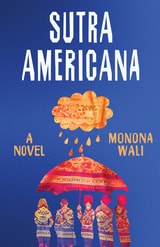
Sutra Americana
Monona Wali
University of Wisconsin Press, 2026
In 1960 S. K. Sharma, a brilliant young astrophysicist at the beginning of his academic career, has finally succeeded in bringing his wife, Sushila, from India to America. Intensely drawn to one another as star university students, the couple pursue an unlikely affair and marriage that crosses caste lines. Their sweeping, decades-long story of love, forgiveness, and coming of age takes place in a country that is both fascinated by and shuns them. The United States, with its exaltation of individualism, offers immense opportunities, but its looser sexual mores threaten to undermine the family’s happiness and devotion to one another.
As their three daughters become young women, they must navigate the tumultuous decades of the Vietnam War, the civil rights movement, and the women’s liberation movement. In their journeys of self-discovery, they upend their parents’ hold on them to craft radically new identities for themselves. As they discover their parents’ faults they grow increasingly puzzled by their devotion to one another, eventually learning how love and forgiveness have the power to overcome the most uncomfortable truths.
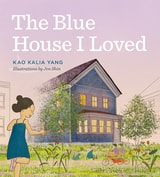
The Blue House I Loved
Kao Kalia Yang
University of Minnesota Press, 2026
A Hmong girl tells the story of her beloved aunt and uncle’s first home in America—long gone, but still alive in the family’s memories
The Blue House I Loved centers on a family of newly arrived Hmong refugees who move into the lower level of a duplex in St. Paul, Minnesota. The narrator loves her aunt and uncle’s home with its mismatched furniture, but it is too small for the large family. The boy cousins sleep in the three-season porch, where their wet hair freezes in wintertime, and the rest of the family crowds into two bedrooms. Yet this is the cherished home where they live and love, their own small corner of a very large and unfamiliar place, and in this blue house a young girl learns about her new country. Eventually, the family moves in search of more space, and years later the house is torn down. Where it was, green grass now grows. But for this girl and her family, the ghost of the house remains, its memories a strong thread that holds time at bay and hearts close together.
Combining Kao Kalia Yang’s lyrical prose with ethereal illustrations by artist and architect Jen Shin, The Blue House I Loved speaks to the multitude of refugee experiences around the world, honoring the challenges they face and the homes they create together.
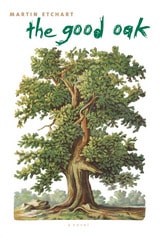
The Good Oak
Martin Etchart
University of Nevada Press, 2005
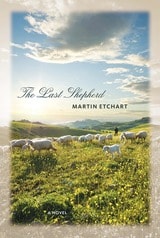
The Last Shepherd
Martin Etchart
University of Nevada Press, 2012
Matt’s journey to manhood takes place in a vividly depicted landscape populated by lively, memorable characters. This is the powerful story of a young man’s search for an identity that encompasses two cultures and one complex, scattered family.
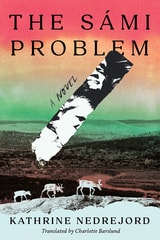
The Sámi Problem
A NovelKathrine Nedrejord
University of Minnesota Press, 2027
An incisive novel illuminating a young mother’s reckoning with her own identity and Sámi lineage through the lives and struggles of her ancestors
As a freelance journalist living in France, Marie Engmo has traveled far and wide to write about languages and local cultures threatened with extinction. But when she returns home to Norway for her áhkku’s (grandmother’s) funeral, she recognizes how far she has strayed from her own sense of self and her Sámi identity. Kathrine Nedrejord’s acclaimed novel—winner of Norway’s national book award—is the lucid and compelling story of Marie’s emotional search through her family’s past for a history and legacy that she might bequeath to her own infant daughter.
In spare and elegant prose, Nedrejord illuminates a young woman’s fierce and clear-eyed reckoning with the sacrifice and oppression that has marked the women and men in her family and generations of Indigenous Sámi communities in the northern reaches of Norway. As Marie awakens to the lengths her mother, grandmother, and great-grandmother traversed to survive discrimination and displacement, she uncovers and embodies their strength and dignity that are her—and her daughter’s—inheritance. What emerges is an unflinching examination of belonging to a minority that can never dominate, that will always have to negotiate and compromise its place in the world. As stirring as it is troubling, The Sámi Problem is itself an awakening and a literary triumph.
Retail e-book files for this title are screen-reader friendly.

The Upside-Down Forest
The Vanished Souls Duology, Book 2Richard Zimler
Tagus Press, 2027
When cruelty is sanctified, betrayal is rewarded as virtue, and the innocent must hide their true identities to survive, seventeen-year-old Isaaque Zarco struggles to preserve the principles he lives by and protect the people he loves in this luminous and deeply moving conclusion to The Vanished Souls duology.
As Isaaque attempts to put his life back together, mysteries and conflicts continue to haunt him, most prominently his father’s inexplicable rejection and the knowledge that his survival depends on concealing his identity and faith.
His world is shaken by a letter saying his grandmother, Flor, has been arrested. Unable to abandon the woman who guided him throughout his childhood, Isaaque crosses into Spain, entering a society ruled by fear and deception, where anonymous accusations carry the force of law and compassion itself has become an act of defiance. Flor has been transferred to a prison in Madrid. She has been physically broken by imprisonment. Isaaque learns that, under torture, she revealed the names of two of his oldest friends as secret Jews. Racing back to his home village, he embarks on a desperate attempt to help them escape before the Inquisition comes for them.
The Upside-Down Forest portrays a society in which slander is revered as truth, mercy is condemned as weakness, and persecution masquerades as justice. Giving voice to victims whose suffering has too often been erased from history, Richard Zimler explores how systems of fear corrupt not only institutions but also the bonds between family, friends, and neighbors. Ultimately, it asks what remains of our humanity when the moral order itself has been turned upside down—and whether a life shaped by love, loyalty, and compassion can still endure when survival itself demands treachery and betrayal.
The Village of Vanished Souls
The Vanished Souls Duology, Book 1Richard Zimler
Tagus Press, 2027
Winner of Book of the Year in Portugal, The Village of Vanished Souls is a sweeping historical tale inspired by authentic records of the Portuguese Inquisition and the real lives of villagers whose stories have long been forgotten.
Portugal, 1671—Nine-year-old Isaaque Zarco lives a peaceful life in the remote mountain village of Castelo Rodrigo, where he helps his mother prepare meals, roams the surrounding forests with his spirited best friend Lena, and learns about nature from the village apothecary, Samuel. But his idyllic childhood is shattered when Lena and her family suddenly vanish, followed by a series of brutal murders that plunge the isolated community into fear.
When Isaaque’s formidable Castilian grandmother visits, she says what no one else dares: the Inquisition is hunting descendants of Jews who continue to secretly practice. Then she entrusts Isaaque with an even more dangerous secret—that he, too, belongs to a secret Jewish family. As she introduces him to the forbidden traditions and sacred writings of their ancestors, Isaaque’s understanding of his parents, his village, and himself is transformed forever.
As Isaaque comes of age, he is drawn into a clandestine network that helps persecuted Jews escape Portugal. Every mission carries the risk of imprisonment, torture, and death, yet this dangerous work gives Isaaque a profound sense of purpose while deepening his commitment to his heritage. When he learns that his beloved grandmother is ill, he embarks on a journey that will expose long-buried family secrets and reveal that learning to embrace his heritage is only the beginning of what will soon be asked of him.
Inspired by the names, arrest records, and testimonies preserved in Inquisitional archives, The Village of Vanished Souls recreates a little-known chapter of history with vivid historical detail and emotional depth. At once an unforgettable coming-of-age story and a moving portrait of resilience, identity, faith, and love, it gives voice to people whose courage endured despite centuries of persecution and forced silence.