Results by title
3 books match the query 'Munby, Jonathan'
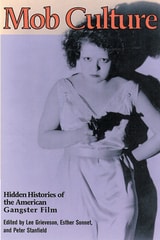
Mob Culture
Hidden Histories of the American Gangster FilmGrieveson, Lee
Rutgers University Press, 2005
Sinister, swaggering, yet often sympathetic, the figure of the gangster has stolen and murdered its way into the hearts of American cinema audiences. Despite the enduring popularity of the gangster film, however, traditional criticism has focused almost entirely on a few canonical movies such as Little Caesar, Public Enemy, and The Godfather trilogy, resulting in a limited and distorted understanding of this diverse and changing genre.
Mob Culture offers a long-awaited, fresh look at the American gangster film, exposing its hidden histories from the Black Hand gangs of the early twentieth century to The Sopranos. Departing from traditional approaches that have typically focused on the "nature" of the gangster, the editors have collected essays that engage the larger question of how the meaning of criminality has changed over time. Grouped into three thematic sections, the essays examine gangster films through the lens of social, gender, and racial/ethnic issues.
Destined to become a classroom favorite, Mob Culture is an indispensable reference for future work in the genre.
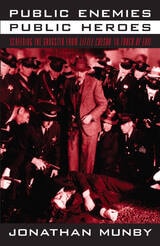
Public Enemies, Public Heroes
Screening the Gangster from Little Caesar to Touch of EvilJonathan Munby
University of Chicago Press, 1999
Beginning in the early 1930s, these films told compelling stories about ethnic urban lower-class desires to "make it" in an America dominated by Anglo-Saxon Protestant ideals and devastated by the Great Depression. By the late 1940s, however, their focus shifted to the problems of a culture maladjusting to a new peacetime sociopolitical order governed by corporate capitalism. The gangster no longer challenged the establishment; the issue was not "making it," but simply "making do."
Combining film analysis with archival material from the Production Code Administration (Hollywood's self-censoring authority), Munby shows how the industry circumvented censure, and how its altered gangsters (influenced by European filmmakers) fueled the infamous inquisitions of Hollywood in the postwar '40s and '50s by the House Committee on Un-American Activities. Ultimately, this provocative study suggests that we rethink our ideas about crime and violence in depictions of Americans fighting against the status quo.
Under a Bad Sign
Criminal Self-Representation in African American Popular CultureJonathan Munby
University of Chicago Press, 2011
What accounts for the persistence of the figure of the black criminal in popular culture created by African Americans? Unearthing the overlooked history of art that has often seemed at odds with the politics of civil rights and racial advancement, Under a Bad Sign explores the rationale behind this tradition of criminal self-representation from the Harlem Renaissance to contemporary gangsta culture.
In this lively exploration, Jonathan Munby takes a uniquely broad view, laying bare the way the criminal appears within and moves among literary, musical, and visual arts. Munby traces the legacy of badness in Rudolph Fisher and Chester Himes’s detective fiction and in Claude McKay, Julian Mayfield, and Donald Goines’s urban experience writing. Ranging from Peetie Wheatstraw’s gangster blues to gangsta rap, he also examines criminals in popular songs. Turning to the screen, the underworld films of Oscar Micheaux and Ralph Cooper, the 1970s blaxploitation cycle, and the 1990s hood movie come under his microscope as well. Ultimately, Munby concludes that this tradition has been a misunderstood aspect of African American civic life and that, rather than undermining black culture, it forms a rich and enduring response to being outcast in America.