Results by title
4 books match the query 'Murals'
Heaven, Hell, and Everything in Between
Murals of the Colonial AndesBy Ananda Cohen-Aponte
University of Texas Press, 2016
Examining the vivid, often apocalyptic church murals of Peru from the early colonial period through the nineteenth century, Heaven, Hell, and Everything in Between explores the sociopolitical situation represented by the artists who generated these murals for rural parishes. Arguing that the murals were embedded in complex networks of trade, commerce, and the exchange of ideas between the Andes and Europe, Ananda Cohen-Aponte also considers the ways in which artists and viewers worked through difficult questions of envisioning sacredness.
This study brings to light the fact that, unlike the murals of New Spain, the murals of the Andes possess few direct visual connections to a pre-Columbian painting tradition; the Incas’ preference for abstracted motifs created a problem for visually translating Catholic doctrine to indigenous congregations, as the Spaniards were unable to read Inca visual culture. Nevertheless, as Cohen Suarez demonstrates, colonial murals of the Andes can be seen as a reformulation of a long-standing artistic practice of adorning architectural spaces with images that command power and contemplation. Drawing on extensive secondary and archival sources, including account books from the churches, as well as on colonial Spanish texts, Cohen Suarez urges us to see the murals not merely as decoration or as tools of missionaries but as visual archives of the complex negotiations among empire, communities, and individuals.
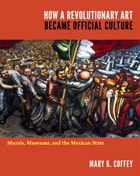
How a Revolutionary Art Became Official Culture
Murals, Museums, and the Mexican StateMary K. Coffey
Duke University Press, 2012
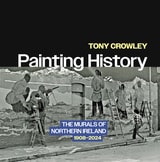
Painting History
The Murals of Northern Ireland, 1908–2024Tony Crowley
Amherst College Press, 2025
In Painting History, Tony Crowley provides a detailed analysis of the complex tradition of muralism in the context of the history that produced it, with particular attention given to the cultural politics of this remarkable form. The book also raises and discusses a series of theoretical questions about murals and muralism that transcend Northern Ireland: issues of propriety and legality, form and content, authority and censorship. The work ends with a consideration of the future of the murals in a still polarized but changing region.

Walls That Speak
The Murals of John Thomas BiggersOlive Jensen Theisen
University of North Texas Press, 2010